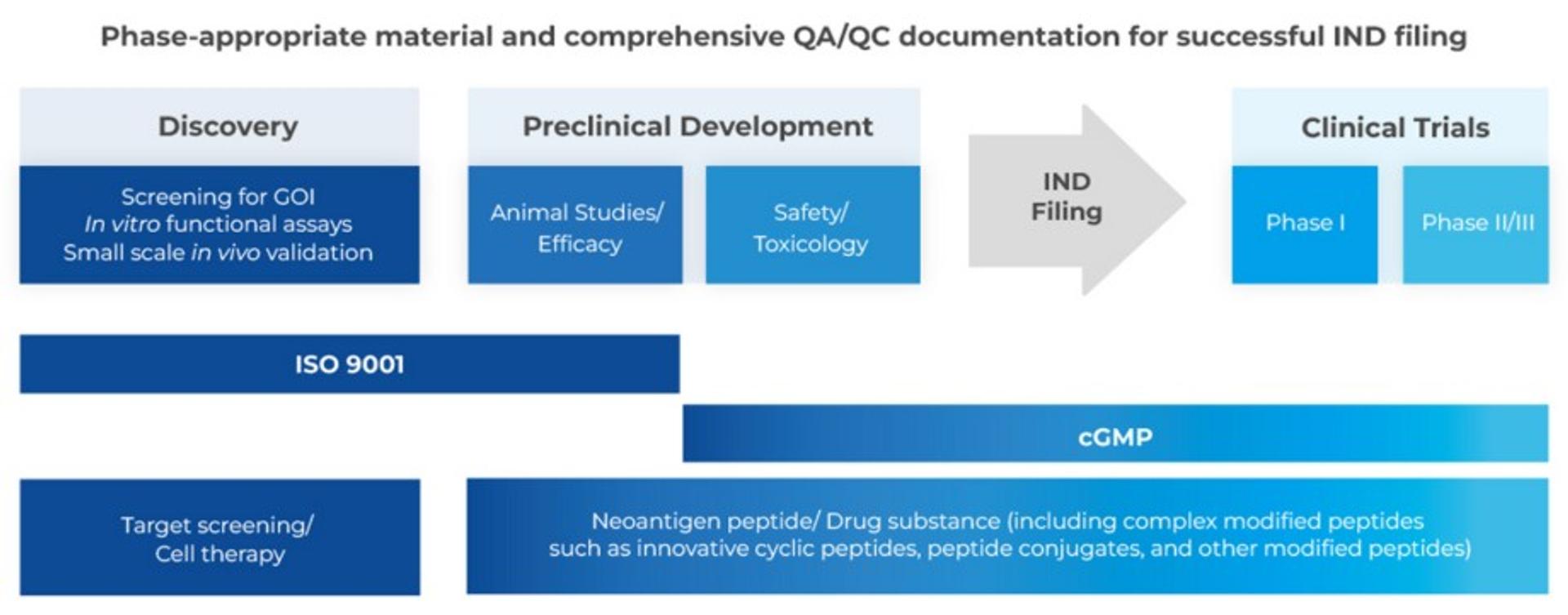
Accelerate your immunotherapy development pipeline with end-to-end solutions

Immunotherapies are transforming medicine. Harnessing the power of our immune system, the next generation of immunotherapies are potential game-changers in conditions such as cancer, autoimmune disease and organ/tissue rejection. Their growing use is evident in the increasing number of approved therapies across different disease areas that improve patient outcomes over conventional treatments and even show potential for a cure, demonstrating durable responses that were impossible in the past.
But these are complex therapeutics that raise significant challenges for researchers and drug developers. Their efficiency can be unpredictable due to issues with low affinity for example, often leading to side-effects, and it can be difficult to identify clinically significant biomarkers. Designing RNA vaccines that sustain a lasting anti-tumor immune response is difficult, and sourcing the essential materials to ensure cell therapy product consistency is also a major challenge, typically requiring the outsourcing of the manufacturing of gene editing components for immunotherapies. And all of which needs to take place against the typical backdrop of tight development timelines and stringent regulatory standards.
For over two decades, GenScript Biotech Corporation has provided comprehensive and reliable tools and services covering the entire drug development pathway, helping laboratories to streamline and simplify their workflows. In this immersive content hub, we explore how GenScript’s latest solutions can address many of the challenges faced by drug developers in achieving breakthroughs in immunotherapies ranging from antibodies to cell therapies and RNA vaccines, supporting research from its early stages through to clinical application.

Antibody drugs
Antibody drugs (or therapeutic antibodies) have transformed medicine since their inception in 1975, with drug approvals now covering a range of previously unmet medical needs in cancer, autoimmune diseases and infectious disease. The US FDA approved 145 antibody drugs between 1986 and 2023, and next-generation products are now entering the drug pipeline. Their versatility, high target specificity and affinity lead to greater efficacy and fewer side-effects than conventional small molecule drugs. The latest advances in antibody drug development offer enhanced target capability and novel mechanisms of action, with at least four new approvals in 2024 for immune checkpoint inhibitors. These include the latest bispecific antibodies that can bind two different targets simultaneously, as well as antibody-drug conjugates and T-cell engagers.
Achieving potency, safety and manufacturability of antibody drugs remain key challenges across the whole drug development pathway. From libraries and reagents for target gene analysis, to antibody sequencing/humanization during lead optimization, or bulk production platforms for preclinical studies, GenScript can provide the solutions needed for successful antibody drug development, testing and manufacturing.
Spotlight on bispecific antibodies (BsAbs)
Bispecific antibodies (bsAbs) offer a wide range of new strategic formatting and targeting applications through their ability to target two different antigens simultaneously. This unique mode of action opens up a much wider range of indications for treatment, from cancer and autoimmune disease to infectious disease, cardiology and ophthalmology. The majority of novel bsAbs are for cancer treatment, since they enable such diverse purposes as overcoming tumor resistance mechanisms, modulating the tumor microenvironment, and reducing side-effects by re-targeting cytokine activity.
The design of bsAbs is especially complex, requiring very careful consideration of target antigens to ensure binding affinity for both targets and desired therapeutic outcomes. They also require a tailored production process that ensures correct assembly of antibody components. For many years, bioprocessing for bulk antibody production has harnessed mammalian cells in the form of Chinese Hamster Ovary (CHO) cells. The advent of bsAbs is leading to a concomitant evolution in CHO cell platforms, and GenScript’s novel and unique TurboCHOTM platform is a ground-breaker for bsAbs design and production.
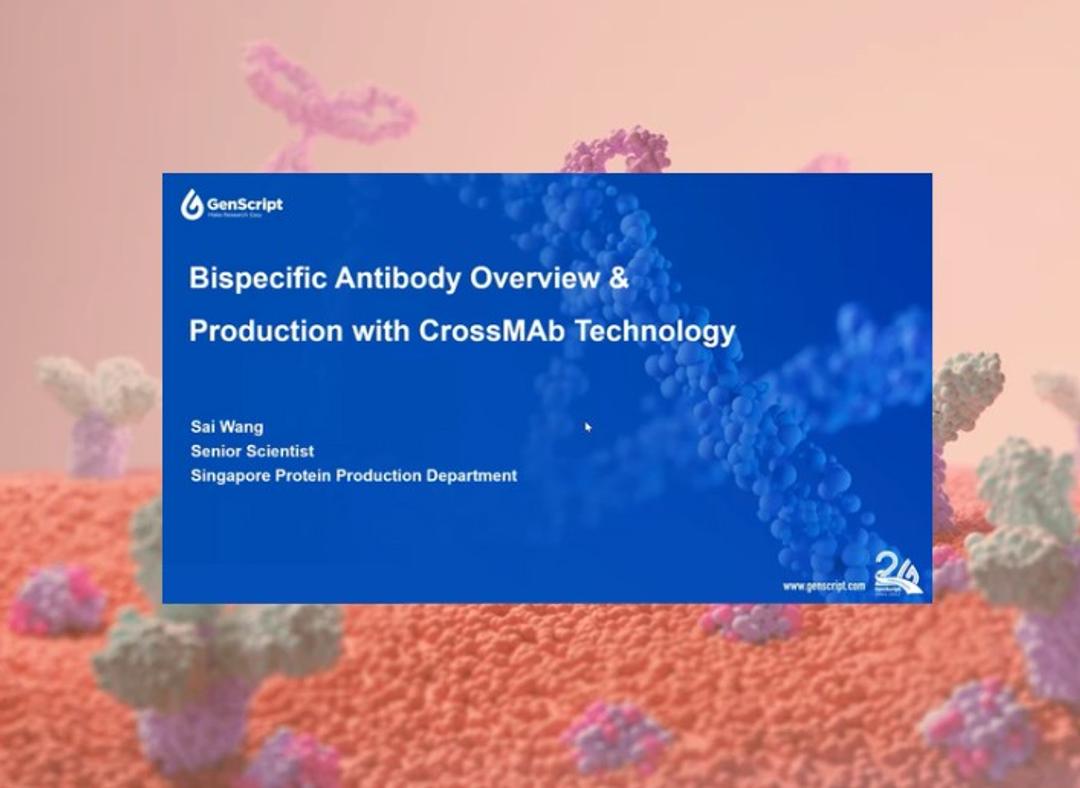
BsAb mechanisms of action and the development history of bsAb platform
Learn from this webinar hosted by GenScript’s senior protein scientist Dr Sai Wang how bsAbs were developed, their advantages and their unique mode of action. Discover also how the CrossMab production method works, and gain practical insights into the optimization of bsAbs manufacturing processes.
Watch webinar
BsAb formats, recombinant antibody production, and emerging trends
Read this comprehensive guide from GenScript’s Jeffery Shi to discover bsAbs drug approvals to date, gain an understanding of the 100 different bsAbs formats available and their therapeutic possibilities, find out about cell expression systems, and learn about future trends and challenges in bsAbs production.
Read article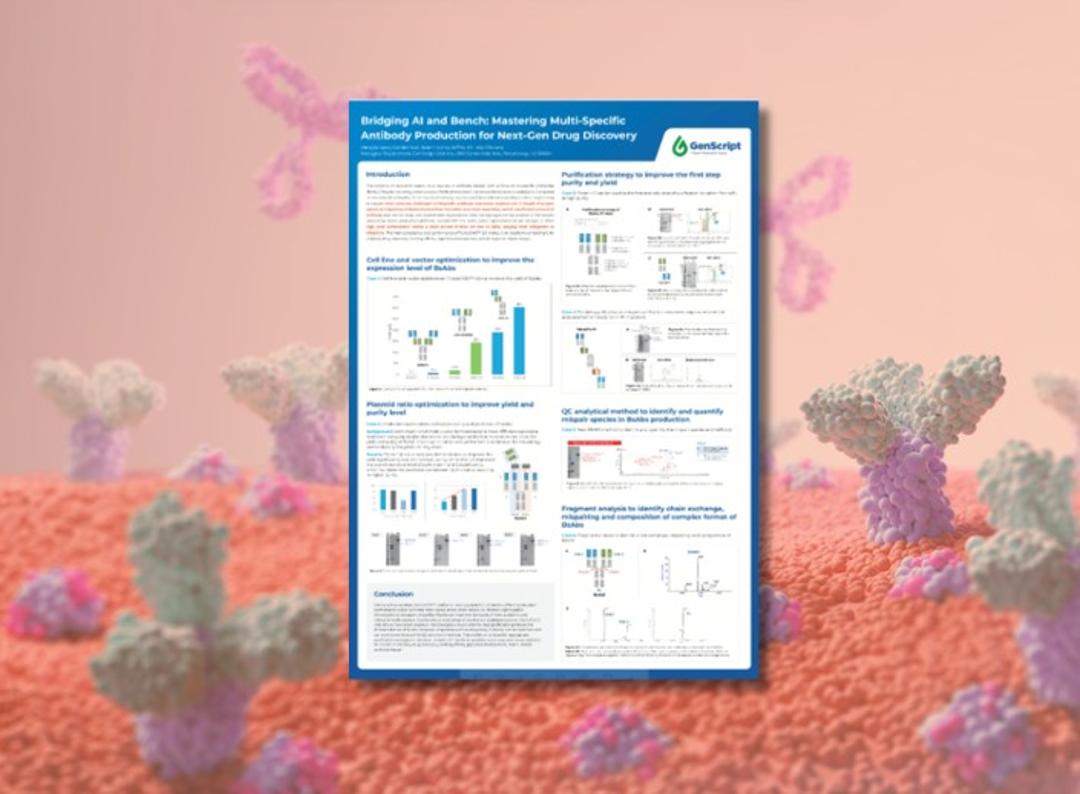
Master BsAb production for next-gen drug discovery with AI
View this poster to gain insight into how artificial intelligence (AI) is assisting next-generation drug discovery in the production of multispecific antibodies.
Download resourceExcellent quality and fast services, with a vast offer of molecular biology and protein/antibody products. The technical support is particularly helpful in finding the best solution for the specific experimental needs.
Dr. Gabriele Casirati Boston Children's Hospital
Cell therapy
Engineered cell therapies continue to make progress following the success of CAR-T cell therapy for melanoma. 2024 marked a transformative phase for cell and gene therapy (CGT) with significant advancements in scientific innovation, regulatory approvals and commercialization milestones. These included innovations in CAR-T therapies, mesenchymal stromal cells (MSCs), gene editing and regenerative medicine, alongside challenges in scalability, regulation and safety. Prominent breakthroughs in CAR-T technology have extended its applications beyond oncology to autoimmune diseases. Gene therapies have also achieved major milestones, with new products for the treatment of hemophilia, sickle cell disease and other genetic diseases.
Key challenges in CGT discovery, development and validation continue to include off-target gene insertions and degradation, difficulties in sourcing the essential materials for ensuring product consistency and understanding the distinction between research-use-only (RUO), preclinical and clinical grade gene editing components. GenScript offers one-stop cell therapy solutions, including its powerful integrated platform supporting both in vivo and ex vivo development. It offers next-generation tools for CGT, scientific and regulatory expertise, and strategic partnership that goes beyond the usual service of a CMO.
CGT remains a complex and fast-moving field with innovations and emerging technologies including CRISPR-guided recombinases, mRNA editing, and epigenome editing.

Accelerate cell & gene therapy success with cGMP gene editing components and regulatory compliance
In this on-demand webinar, explore the key differences between gene editing components used from early discovery through to clinical application, and gain insight into how phase-appropriate components can be used to achieve clinical objectives while balancing quality and cost.
Watch webinarNon-viral gene editing tools & delivery
Non-viral delivery of payload genes into cells harnesses liposomes, lipid nanoparticles (LNPs) and other ‘vehicles’ to avoid the high immunogenicity and increased risk of insertional mutagenesis (off-target effects) that accompany the use of conventional viral vectors. It plays an important role in engineering CAR-T cell therapies, in particular developing the latest allogeneic CAR-T cells that could provide the ‘off-the-shelf’ cell therapies of the future. The combination of optimized LNP delivery systems with cutting-edge CRISPR mRNA technology is leading to the development of safer and more effective CGT, though yield and efficiency may still be limited by toxicity at high dsDNA concentrations.
GenScript offers CRISPR CAR-T knock-in optimization kits to efficiently optimize your CAR insertion process with pre-validated sequences, design and protocols in support of cell therapy development. It also offers high-purity, 100% chemically synthesized CRISPR/Cas9 sgRNA to enable reliable gene editing for cell therapy development, making intelligent design tools available to enable you to order the Cas 9 sgRNA that you require for your CRISPR experiments. Furthermore, GenScript’s ReadyEdit LNP Service combines cutting-edge CRISPR mRNA technology with optimized LNP delivery systems to offer highly efficient, precise, and safe gene editing solutions.

Long hybrid ssDNA HDR templates for non-viral cell therapy manufacturing
Download resource
How to combine base editors and Cas12 for multiple gene editing
Read article
Your comprehensive CRISPR knock-in protocol guide
Visit protocol hubViral gene editing tools & delivery
Viral vectors have long been used as a research tool for delivering genetic modifications into cells, retaining the virus’ ability to enter cells with a designed payload but with most other viral genes removed. A versatile range of viruses exists for this purpose, including for example retrovirus, adenovirus, adeno-associated virus (AAV) and lentivirus. Each viral vector has unique advantages and disadvantages, based around parameters such as immunogenicity, size of gene payload and the stability of gene expression once delivered. Most are useful for a wide range of research purposes, but relatively few for producing drug products that will end up in patients.
Lentiviral vectors (LVVs) are coveted for their ability to facilitate stable gene expression in the target cell and are therefore being used as the preferred platform for the development of CAR-T cell therapies, alongside non-viral vectors. Early (first generation) LVVs presented risks with unwanted off-target effects due to random genomic site integration, but third generation LVVs now include significant safety enhancements.

Lentivirus: The ultimate answer for efficient gene delivery
Read this comprehensive review from GenScript’s R&D Senior Scientist Chuanxin Liu to understand the origins of lentivirus as a vector tool, its core advantages and the various production systems available to suit your application.
Read articleThe people at GenScript have been tremendously helpful in providing materials for our lab. We've been able to test novel CRISPR systems such as prime editing and PASSIGE in a timely manner thanks to their work. I would recommend their services for your editing needs.
Jack Castelli Fred Hutchinson Cancer Center
Cancer vaccines
Therapeutic cancer vaccines are protein, peptide or nucleic acid formulations derived from cancer cells that include an adjuvant to prime a patient’s immune system to destroy cancer cells. There are also preventive cancer vaccines available, such as Human Papillomavirus (HPV) vaccine and Hepatitis B vaccine. Therapeutic cancer vaccines are at an early stage and mainly available as part of clinical trials such as the Cleveland Clinic breast cancer vaccine trial, though the US FDA has approved a single vaccine for Prostate Cancer under specific circumstances.
One of the key challenges in cancer vaccine discovery is identifying tumor-associated antigens that are cancer-specific and therefore do not generate the unwanted side-effects of the immune system’s attack on healthy cells. Cancer vaccines are also less effective in patients with weakened immune systems.
GenScript offers a range of services that can be used to support cancer vaccine research, including gene synthesis of codon-optimized sequences, site-directed mutagenesis and custom peptide synthesis.
The role of mRNA
Messenger RNA (mRNA) vaccines are emerging as the next major advance in the history of drug development, following their successful development and deployment during the COVID-19 pandemic. For cancer, the genes for a tumor-associated protein can be encoded into mRNA which, once delivered into a patient, instructs cells to produce the protein (antigen) and activate a normal immune response. At present, there are three modalities of RNA being explored for therapeutic vaccines – conventional mRNA, circular RNA and self-amplifying RNA. Of these, self-amplifying RNA has the greatest potential due to its higher protein expression, longer-lasting expression and lower required dosage. It is in development for vaccines and can also be applied to other RNA-based applications such as protein replacement therapy.
The production of mRNA is simple though tightly controlled, and manufacturers must control critical quality attributes to ensure consistency. In turn, mRNA vaccine developers must consider a supplier’s approach to plasmid DNA as well as several other key attributes when making RNA sourcing decisions. GenScript offers a GMP-like mRNA manufacturing service to assist developers with vaccine production, alongside its customized Rush mRNA Synthesis service.
Seven critical considerations when sourcing mRNA:

1. Plasmid DNA and mRNA integrity
2. PolyA tail quality
3. mRNA capping
4. Uridine modification
5. Impurities
6. LNP packaging
7. Manufacturing workflow
Explore these in expert detail with this free whitepaperSynthetic peptides
Synthetic peptide-based cancer vaccines work by eliciting a cellular immune response in the patient to neoantigens, components of tumor-specific antigens that are critical biomarkers in distinguishing cancer cells from normal cells. Synthetic peptides are also essential across all cancer vaccine development workflows from neoantigen target discovery to the development of antigen-specific T-cell therapies and immune response monitoring.
GenScript offers a one-stop solution for neoantigen peptide services, from research lab to cGMP compliant manufacturing facility. This is further complemented by its wider PepHTS™ platform offering comprehensive peptide library services integrating AI-guided peptide design to enhance precision and efficiency in general drug discovery.

The essential roles of synthetic peptides
Download resource
Learn all about GenScript's cGMP peptide services
Watch video
Bioinformatics tool for difficult neoantigen peptide synthesis
Download resourceSupport from discovery to clinical trials: GenScript’s end-to-end solutions for cancer vaccines
From screening and validation to synthesis and on to Phase I/II clinical trials, GenScript can provide the validated platforms, manufacturing expertise and capacity that you need to accelerate your neoantigen and API peptide through to clinical application.