Low Input ChIP-seq at Emory University
17 Apr 2017Chromatin Immunoprecipitation sequencing (ChIP-seq) is routinely used to map covalent histone modifications and transcription binding sites. Typically, 1 ng or more of post-ChIP DNA is required to generate a sequencing library. However, as the analysis of epigenomes transitions from cell culture to primary cells and tissues, the amount of post-ChIP DNA is often in the picogram range. Watch this video to hear Dr Chris Scharer of Emory University discuss how to optimize library preparation to overcome this technical limitation.
About the company

Kapa Biosystems, Inc.
Kapa Biosystems is a life science reagents supplier that employs proprietary, directed evolution technologies to optimize enzymes for PCR, real-time PCR, next generation sequencing and molecular diagnostic applications. Kapa Biosystems offers a portfolio of best-in-class products containing novel enzymes that confer significant performance advantages when compared to traditional wild-type enzymes. The company is based in Wilmington, Massachusetts with a research, development and manufacturing facility in Cape Town, South Africa.
Related products
Request Quote for All Products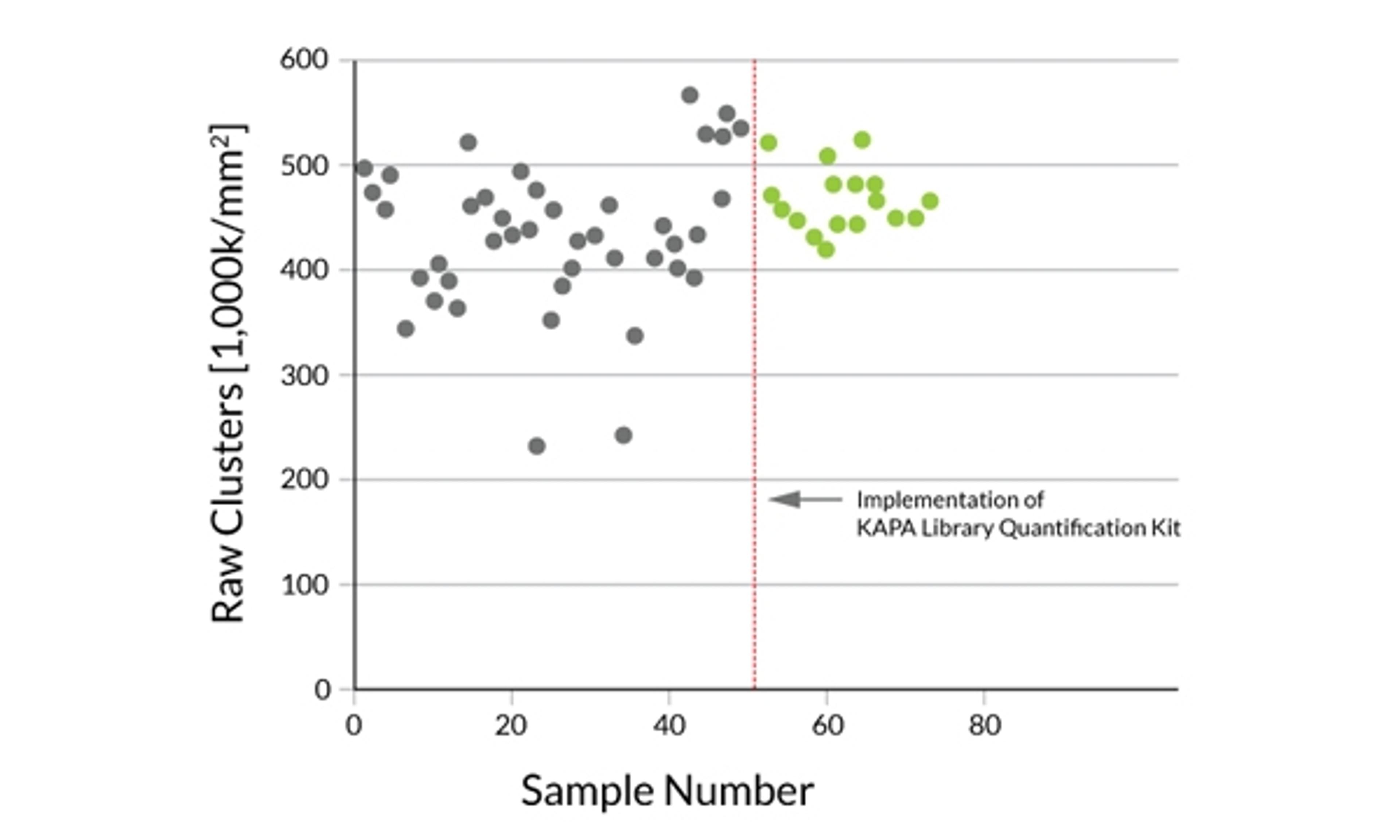
KAPA Library Quantification Kits
Kapa Biosystems, Inc.KAPA Library Quantification Kits contain all the reagents needed for the accurate, reliable and reproducible qPCR-based quantification of NGS libraries prior to pooling for capture or flow cell amplification. Kits contain KAPA SYBR® FAST qPCR Master Mix, optimized for high-performance SYBR Green I-based qPCR. The engineered KAPA SYBR FAST DNA Polymerase contained in the Master Mix amplifies GC- and AT-rich DNA fragments of different lengths with similar efficiency, making it the only qPCR Master Mix capable of accurate qPCR-based quantification of NGS libraries. The pre-diluted set of DNA Standards contained in each kit is carefully quality-controlled to ensure lot-to-lot consistency and avoid data drift over time. Optimized Primer Premixes ensure optimal PCR efficiency. Features: Accurately quantify PCR-competent sequencing templates qPCR only “counts” those library molecules that can be sequenced More consistent cluster densities or template-to-bead ratios enable optimal utilization of sequencing resources Improve pooling for multiplexed sequencing Library concentrations determined by qPCR are more reliable compared to other methods The engineered KAPA SYBR FAST qPCR Master Mix enables accurate pooling of libraries with extreme GC-contents or longer inserts Eliminate drift with carefully quality-controlled DNA Standards Prediluted DNA Standards eliminate quantification errors associated with preparation of standard curves using in-house standards KAPA DNA Standards undergo strict quality control to ensure lot-to-lot consistency and eliminate data drift over time Improve throughput with automation Library quantification assay is compatible with 96- and 384-well format Library dilution, reaction setup and data analysis can be automated for HTP pipelines Applications: Quantification of libraries prior to pooling for multiplexed sequencing Quantification of individual libraries or library pools prior to cluster amplification or emPCR Quantification of libraries prior to and after hybridization capture Quality control, optimization and troubleshooting of library construction processes or workflows