Thermo Scientific™ Heracell™ VIOS™ CO2 Incubators
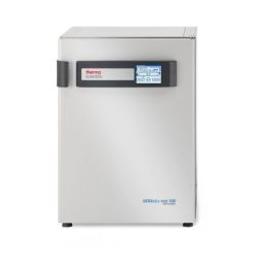
Designed to achieve your next breakthrough. The Thermo Scientific™ Heracell™ VIOS™ 160i and 250i CO2 Incubators deliver the performance reliability, ease of operation, and value required to support a range of culturing needs from basic research to the demanding, leading-edge applications, so you're ready for whatever comes next.


The supplier does not provide quotations for this product through SelectScience. You can search for similar products in our Product Directory.
Nice equipment.
Cell culture for growing FMD Virus
I found it very easy to use. It gives me perfect environmental conditions for mammalian cell culture. After sale service isn't professional but still a good value for money product.
Review Date: 21 Mar 2020 | Thermo Fisher Scientific
Good solid product. Automatic controls.
Cell culture
Very easy to use. Automatic control for everything through control panel. Automatic self sterilizing cycle. Stable temperature and CO2%. Easy to maintain.
Review Date: 6 Mar 2020 | Thermo Fisher Scientific
Usability suffers due to unnecessary complexity
Cell culture incubator
The incubator keeps consistent CO2 and O2 levels, the sterilization cycle works, but the workmanship is extremely poor. First, the inner door handles broke after a month - all of three them - , and it took 6 months for Thermo Fisher to send a replacement. Second, The door-close sensor is set improperly, so it will often say the door is open even when there is a full seal. You have to manually depress the switch then close the door to get it to register the fact. If you are going to add extra doors and sensors to an incubator, at least make sure they are reliable in the field.
Review Date: 19 May 2017 | Thermo Fisher Scientific
Highly recommended!
General cell culture use.
We use these incubators for a variety of critical cell cultures for our work. They are easy to use and extremely functional. The self-cleaning function is great for simple sterilization of the interior (though the need to remove the HEPA filter is a bit annoying). The graphic interface is very intuitive. Great incubator that I've used across many different institutions!
Review Date: 15 May 2017 | Thermo Fisher Scientific
Nice Incubator
Stem cell culture
The incubator has been in constant use for the last year or so, it is in a busy lab with various models of Panasonic incubator and is the favorite one. Compared to our Panasonics the recovery time is better, the shelves do not bow and the display on the front is more user friendly. The Hepa filter needs to be removed before decontamination and the port for monitoring the gas could be improved. The extra-large wheels on the base when stacking them makes the top shelves very high!
Review Date: 4 May 2017 | Thermo Fisher Scientific
The Heracell VIOS incubators offer an advanced incubator design for sensitive cultures like stem and primary cells in leading research, pharmaceutical, and clinical applications. Through a holistic approach to culturing, our newest incubator series provides everything necessary for your most demanding and highly critical applications. By combining our latest technology advances in contamination control and uniform growth conditions with existing proven and reliable features, you are now able to achieve your goals faster, more reliably, and with less effort.
- 165 L (160i model) or 255 L (250i model) capacity
- THRIVE™ Active Airflow technology
- 180 °C sterilization cycle with intuitive electronic lock function
- Condensation-free humidification system
- iCAN™ touchscreen
- Sensors: TC or IR
- Inner Chamber: stainless steel or 100% copper. Cell Locker System option for 160i version available.
- Optional Thermo Scientific™ CultiMaxx™ Shelving Systems to maximize space for large cell culture vessels (250i model)
- Optional O2 control
- Optional OPC UA Gateway Kit to integrate into Distributed Control Systems

Cell culture contamination prevention
Contamination remains a significant challenge in cell culture laboratories worldwide, impacting on time management, financial resources, and even the credibility of research laboratories. Explore the various types of contamination and their potential impact on cell culture. Learn how to minimize the contamination risk in your lab and find out how to select the most suitable lab equipment and consumables throughout the cell culture workflow.
Compliance testing demonstrates a new CO2 incubator merits certification for use in grade A/B environments
In this application note, Thermo Fisher Scientific demonstrates its range of cleanroom-certified CO2 incubators, designed to minimize foreign particle emissions and meet stringent regulatory guidelines.

Designing effective contamination prevention strategy: Crucial factors to consider for cell therapy production
In advanced therapy medicinal products (ATMP) manufacturing, the quality and safety of the product needs to be ensured from the first stages of development. Discover how to design an effective contamination prevention strategy that will minimize risks to cell therapy products and allow you to implement appropriate control measures.
The webinar will outline the types and sources of particulates in a cell therapy production environment and their impact on product quality and safety. It will also explore the role of laboratory equipment in contamination prevention, and provide clarity around regulatory requirements, validation methodology, and the validation process for laboratory equipment.
Key learning objectives
- GMP guidance for ATMP – how to identify risks to cell therapy products and implement appropriate control measures
- The role of laboratory equipment in contamination prevention and what to look for when sourcing suitable equipment
- Types and sources of particulates in the cell therapy production environment and their impact on product quality and safety
- Regulatory requirements and validation methodology for particle emission testing
- The validation process and compatibility of lab equipment with disinfection protocols
- How to evaluate effectiveness of lab equipment, including built-in features designed to control contamination
- How to determine lab equipment suitability for GMP cleanroom environments
Who should attend?
Lab scientists, lead scientists, R&D scientists, principal investigators, engineers and lab or facility managers involved in the cell therapy development journey starting from R&D and pre-clinical / clinical testing (translational institutes, medical institutes, academic incubators, GMP production facilities) through to the later stages of cell therapy development, such as commercialisation / scale up and QC testing, usually taking place in Biotech, Biopharma, Contract Research Organisations (CRO), Contract Manufacturing Organisations (CMO) & Contract Development and Manufacturing Organizations (CDMO).
This webinar will be of interest to principal investigators, lead scientists, research scientists, lab managers, facility managers, process engineers, and others working in this field.
Certificate of attendance
All webinar participants can request a certificate of attendance, including a learning outcomes summary, for continuing education purposes.
Protecting against human error: Why documentation and data are important
Good documentation of lab processes and equipment is essential for safe and efficient projects
Finding new ways to control cell culture contamination
Cell culture applications expert reveals top tips for reducing microbial contaminations in mammalian cell culture labs, how best to protect cell cultures to enhance cell growth, and explores why your lab equipment could have a direct impact on cell health and contamination

Meeting good manufacturing practice guidelines for cell and gene therapy products: Why your equipment matters
Discover the most common challenges faced when implementing new equipment in your manufacturing workflow and what to look for when choosing new equipment