epMotion® 5073
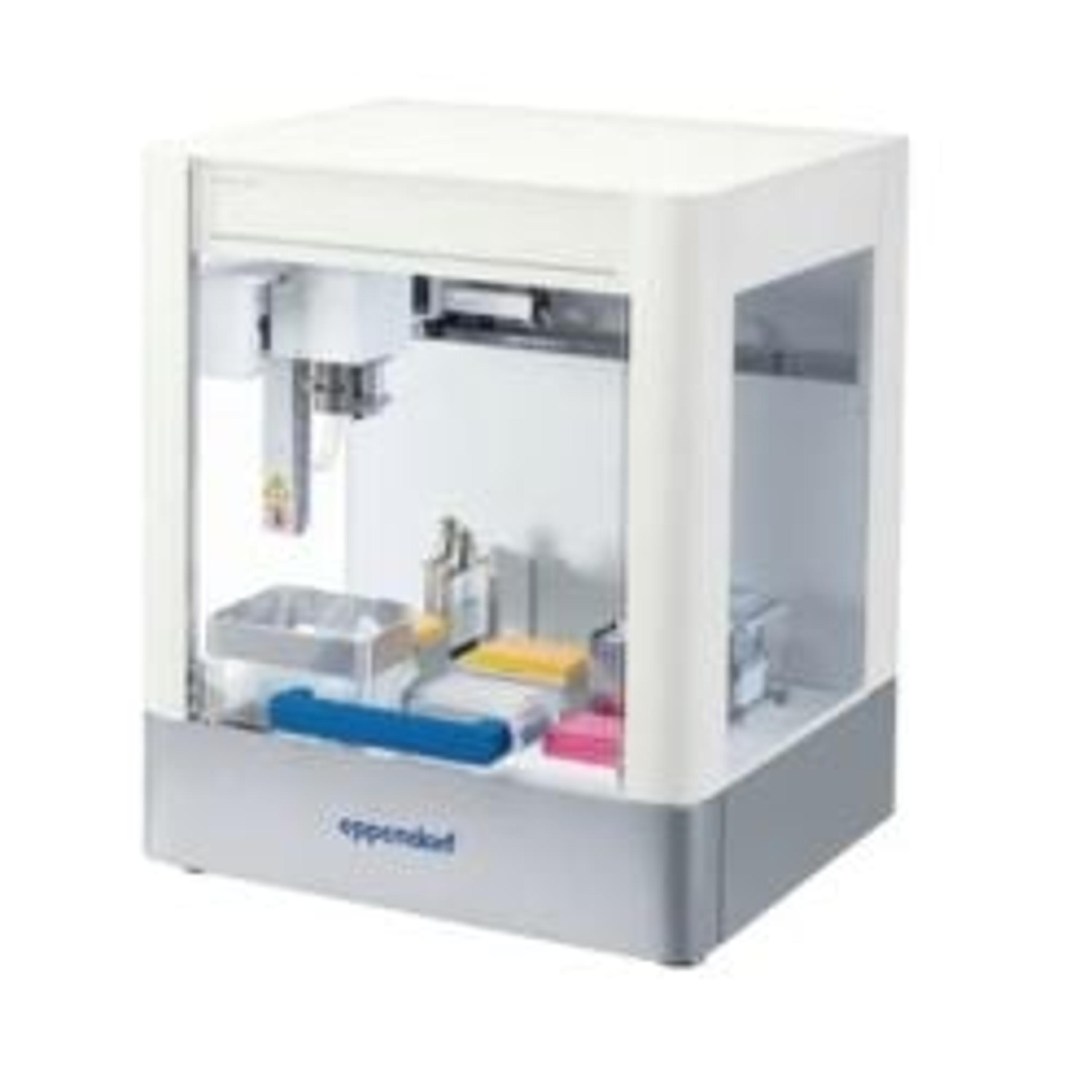
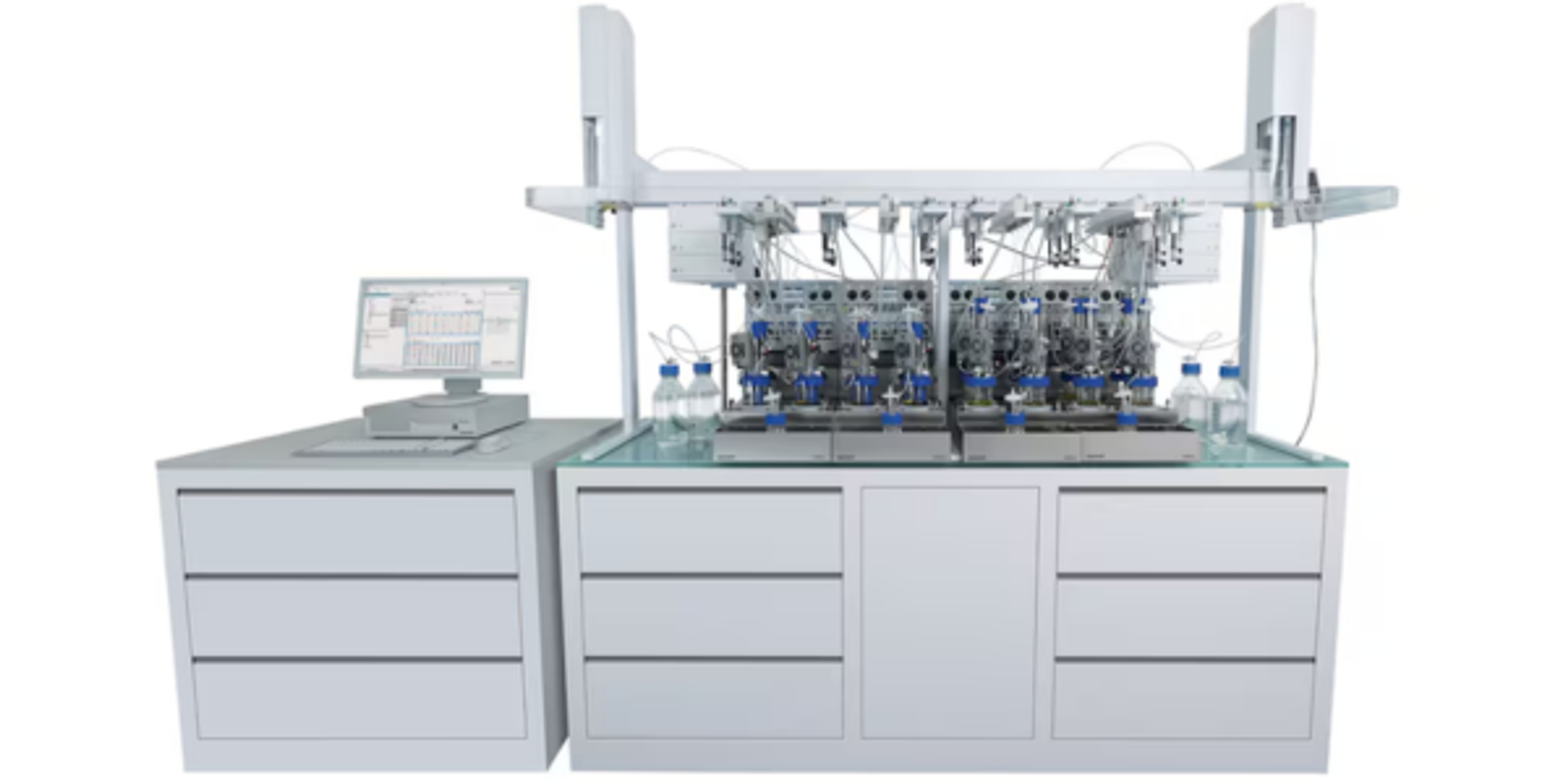
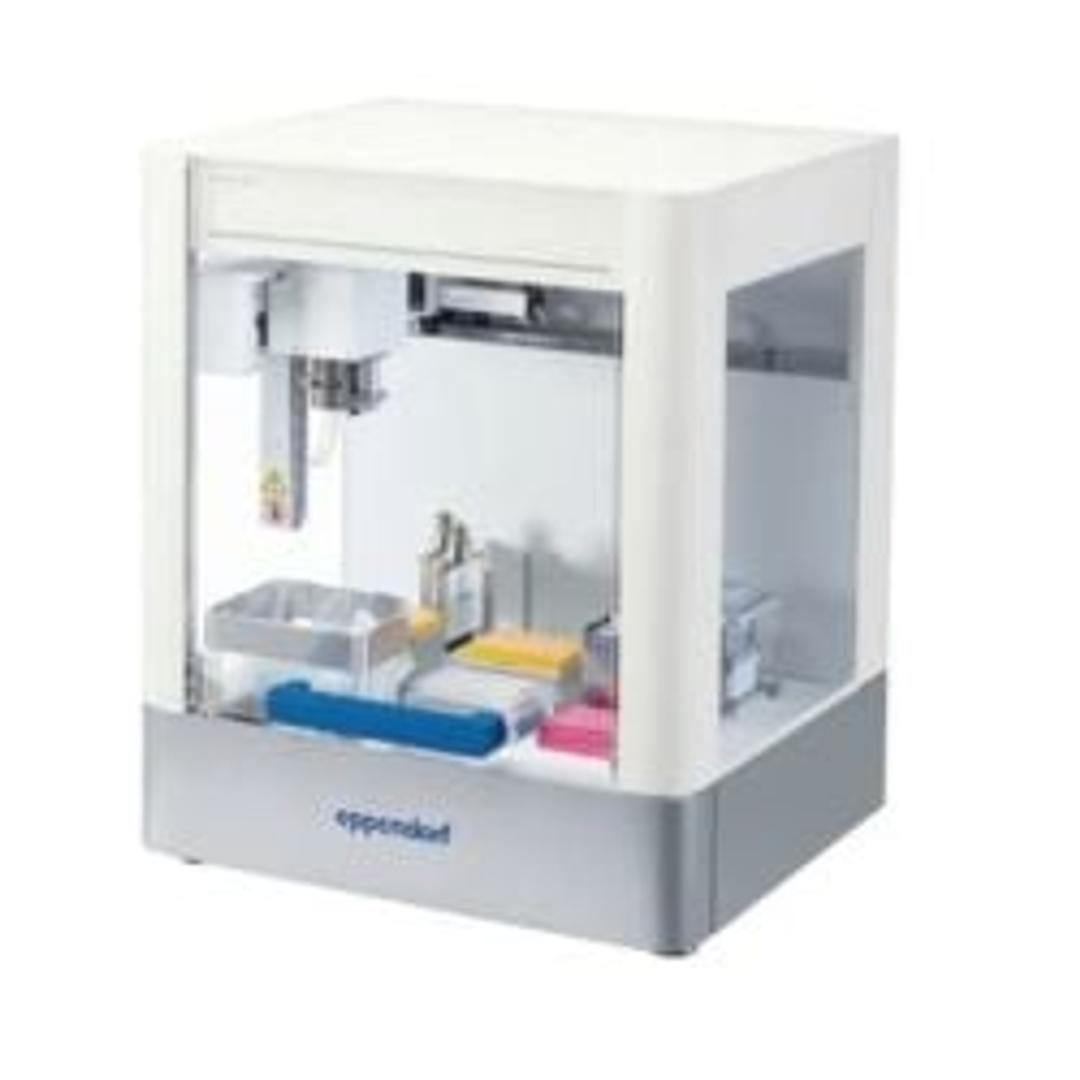
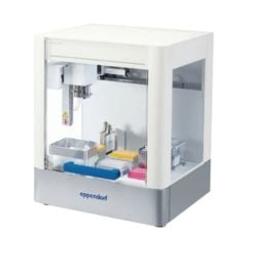
These automated pipetting systems are perfectly suited for PCR and qPCR setup, nucleic acid purification as well as low-throughput NGS library preparation yet they retain the flexibility for use as open platforms for diverse automated liquid handling applications. The epMotion 5073 series automates and simplifies traditionally complex, labor-intensive pipetting tasks, saving time and improving the reliability and reproducibili…


Receive your quote directly from the manufacturer.
It makes our testing /assay very efficient and reproducible.
Pipette saliva samples
It is super accurate and reliable.
Review Date: 16 Dec 2021 | Eppendorf
These automated pipetting systems are perfectly suited for PCR and qPCR setup, nucleic acid purification as well as low-throughput NGS library preparation yet they retain the flexibility for use as open platforms for diverse automated liquid handling applications. The epMotion 5073 series automates and simplifies traditionally complex, labor-intensive pipetting tasks, saving time and improving the reliability and reproducibility of results.

A portal to another world – Automated cell engineering in drug discovery
Tuesday, October 21, 2025
To better suit your schedule and time zone, this webinar will be offered in two separate sessions:
Session 1 broadcasting at 09:00 BST | 10:00 CEST
Session 2 broadcasting at 13:00 EDT | 10:00 PDT
Efficient delivery of biomolecules such as small molecules, proteins, peptides, and intracellular assays remains a critical challenge to both cell engineering and drug discovery across scales. While electroporation is widely used, it has high costs, low cell survival rates, and labor-intensive workflows. Mechanoporation offers a promising alternative, though traditional implementations have struggled to achieve scalability.
Join Dr. Armon Sharei, Portal Bio, and Dennis Condy, Eppendorf, as they discuss how the integration of advanced mechanoporation technology with automated liquid handling enables a cost-effective, high-throughput solution for next-generation cell engineering and drug screening workflows, while also maintaining reproducibility across experiments for greater confidence in results.
Who should attend?
- Discovery and R&D groups across drug discovery and cell therapy
Certificate of attendance
If you attend the live webinar, you will automatically receive a certificate of attendance, including a learning outcomes summary, for continuing education purposes.
If you view the on-demand webinar, you can request a certificate of attendance by emailing editor@selectscience.net.
Webinar details
- Cost: Free to attend
- Location: Online
- Duration: 60 minutes
Registration is required to secure your place. If you register but can’t attend live, you will receive a link to the on‑demand recording once it becomes available.
Third generation liquid handling automation with Eppendorf expertise
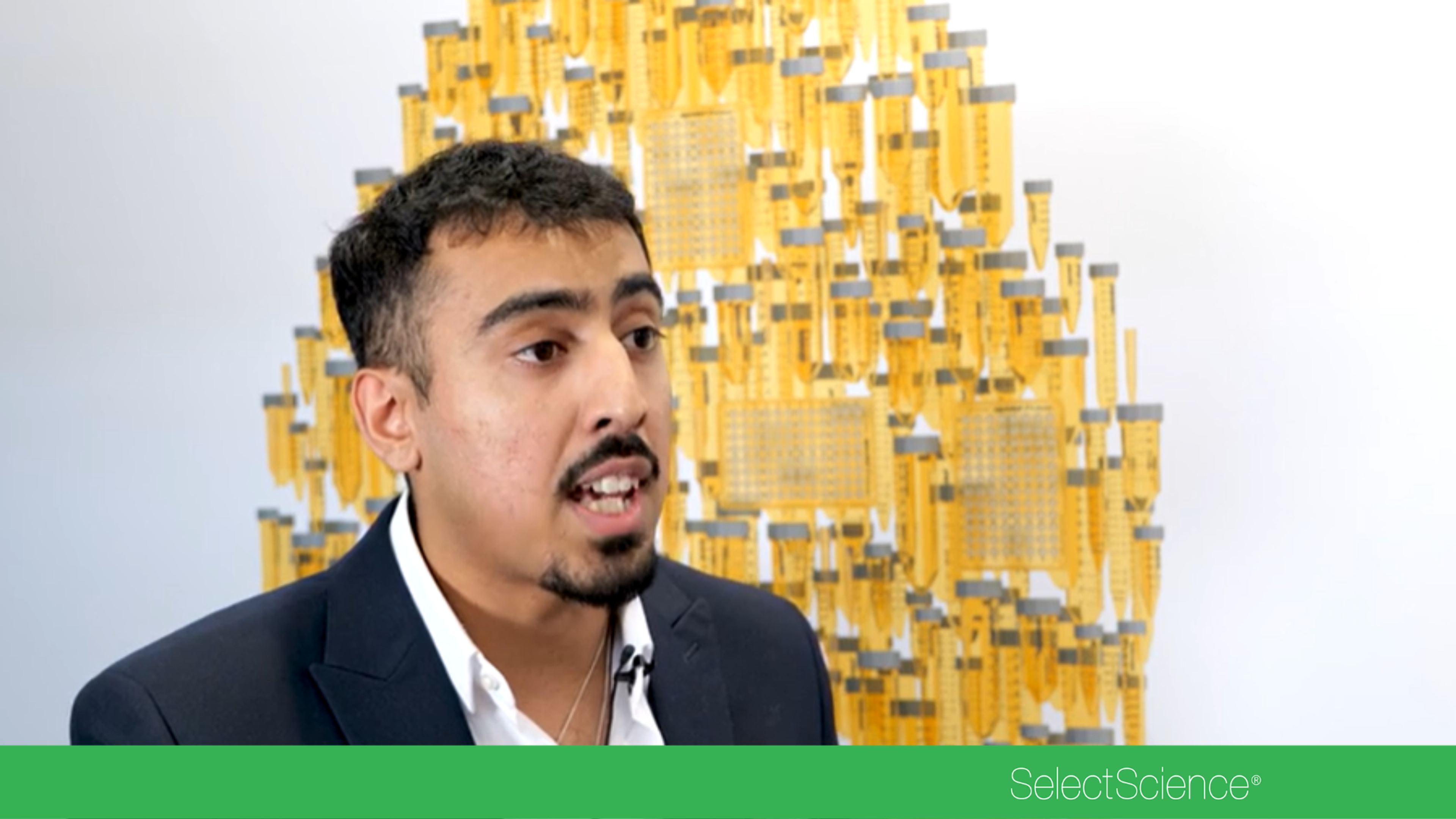
As lab workflows become more complex, automation is helping researchers overcome the limitations of manual pipetting by improving reproducibility, efficiency, and throughput. Imran-Ali Vasi, Commercial Product Manager at Eppendorf, shares how the epMotion 5073 streamlines liquid handling across applications including PCR, NGS, ELISA, and sample preparation, enabling reliable and standardized results while reducing hands-on time. With user-friendly software and flexible modules, the epMotion 5073 delivers end-to-end automation, helping labs transition from manual processes to efficient, high-quality experimental workflows.
This SelectScience interview was recorded at SLAS Europe 2026.
Purification and Extraction of Foreign DNA with Eppendorf
Food & beverage labs often need to verify the absence of foreign DNA (bacteria, GMO, etc.) in food samples. Watch this video to learn about the technology from Eppendorf that allows you to extract and purify DNA for analysis.
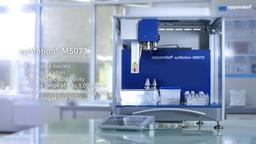
Automated pipetting made easy—epMotion 5073 workstations
These automated liquid handling systems are ideal for PCR set-up, nucleic acids purification or general liquid handling. Automation yields reliable, reproducible results with higher precision than manual pipetting. Benefit from UV/HEPA filter option, re-use of tips and many more new features and an optical sensor verifying all labware, tips and volumes before the run.
New epMotion M5073 from Eppendorf
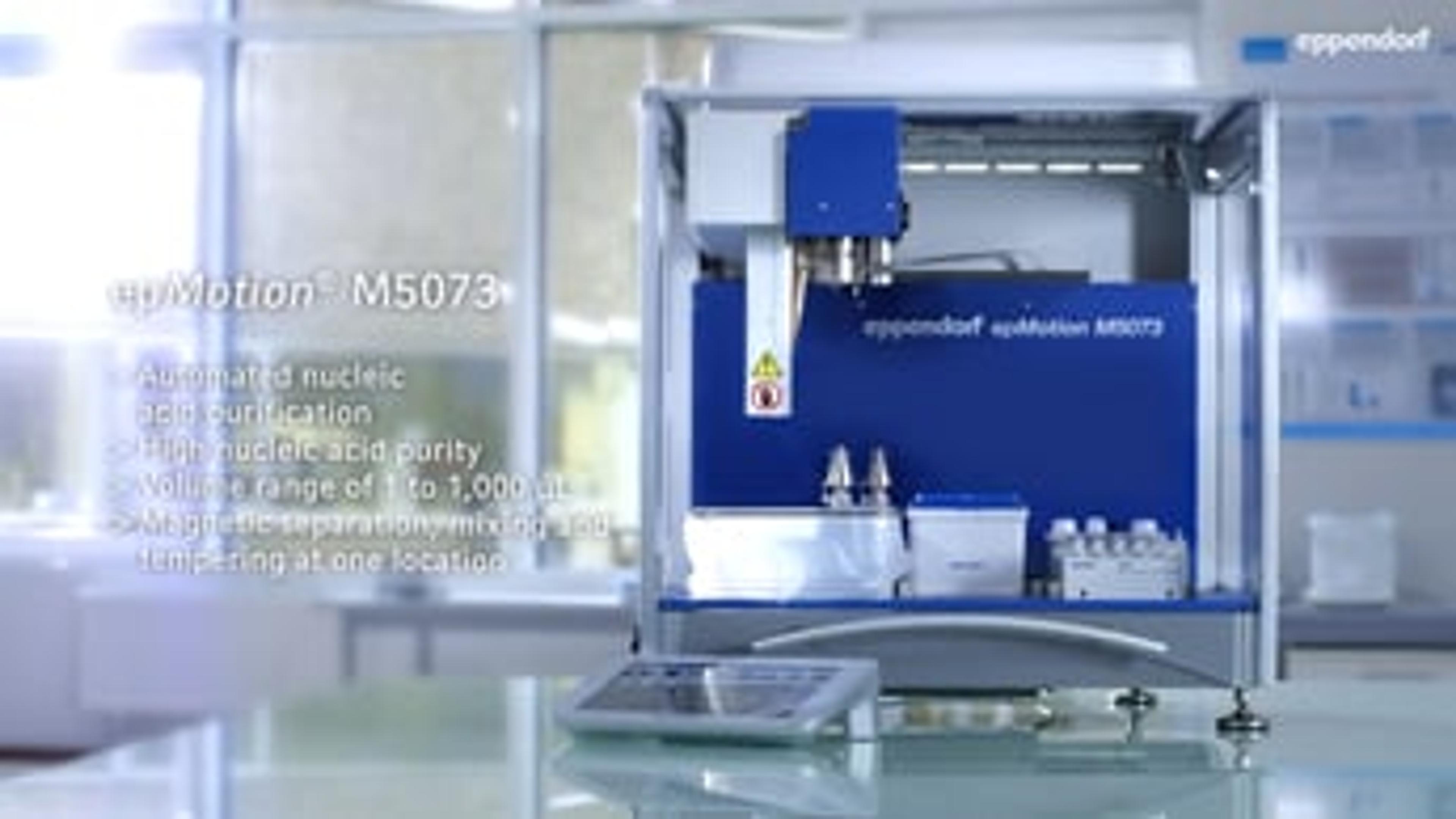
In this video EJ Wenk from Eppendorf North America tells SelectScience how the new epMotion M5073 has been uniquely tailored for PCR setup and nucleic acid purification, but also retains the flexibility that allows it to be used as an open system for diverse automated liquid handling solutions. EJ also discusses the MagSep reagent kits, which have been specifically designed for use with the epMotion M5073. These kits enable nucleic acids to be extracted from a diverse range of sources, such as blood, tissue, cells, bacteria or viruses. Interview filmed by SelectScience at SLAS2013.