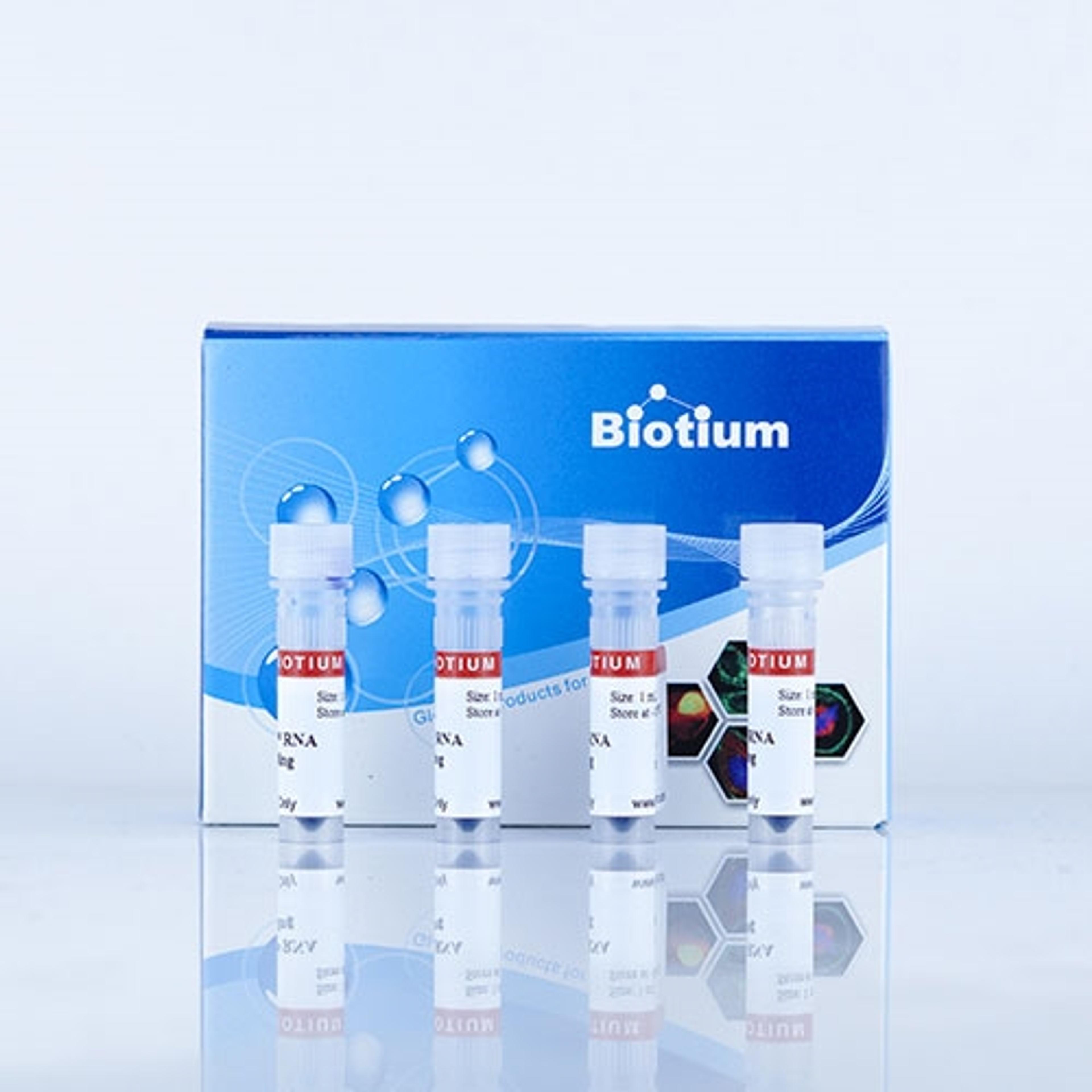
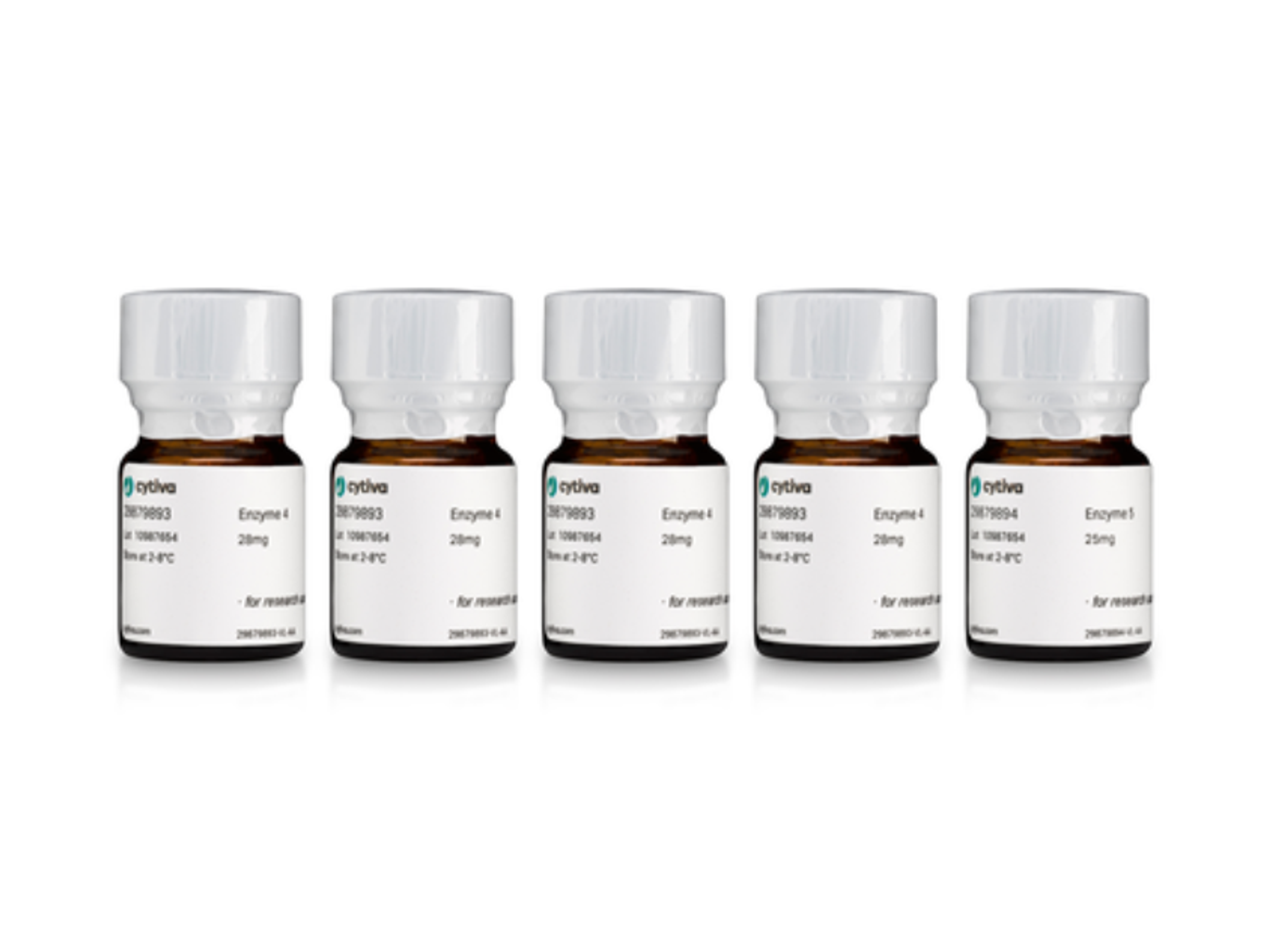
EMBER500 RNA Prestain Loading Dye
Sensitive and easy-to-use RNA prestain loading dye allows RNA to be evaluated on a regular agarose gel.

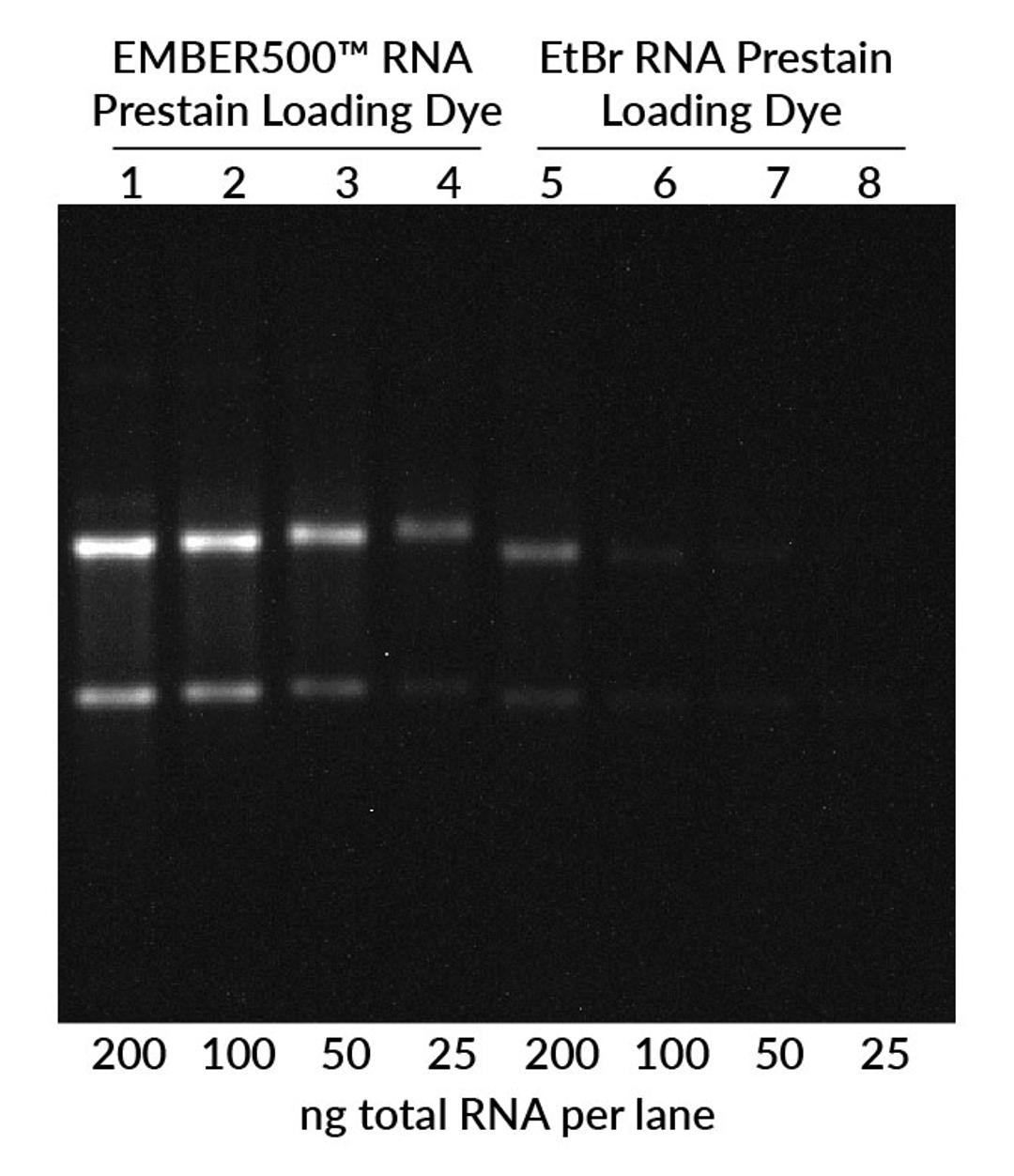
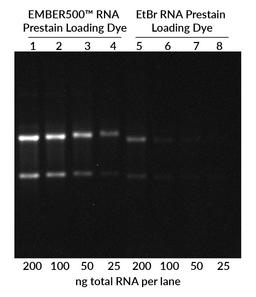
EMBER500 and EtBr comparison
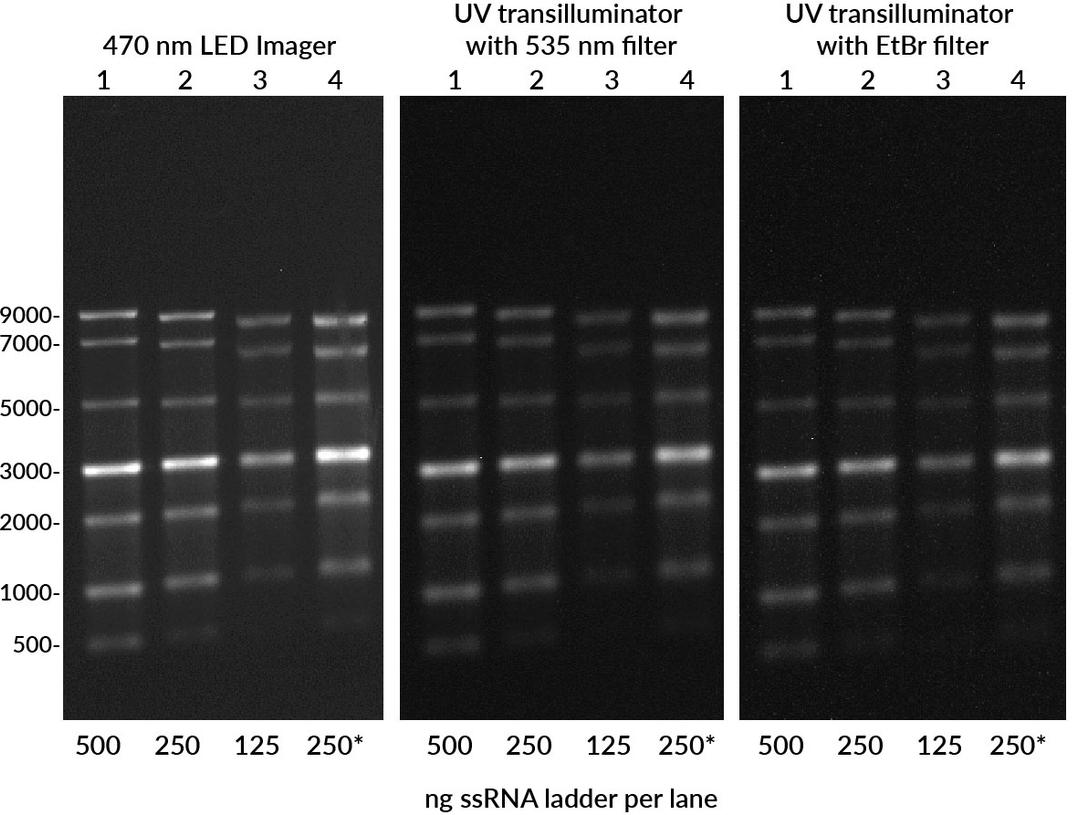
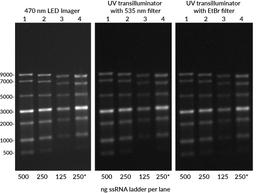
LED, or UV detection


The supplier does not provide quotations for this product through SelectScience. You can search for similar products in our Product Directory.
EMBER500™ RNA Prestain Loading Dye is a convenient reagent for single-step denaturing, staining, and loading of RNA for gel analysis. The loading dye contains EMBER500™, a bright and versatile fluorescent DNA and RNA binding dye with broad instrument compatibility.
- Fast, simple, and super-bright fluorescent RNA prestain
- Denaturing loading dye allows RNA to be run on a regular agarose gel
- Evaluate total RNA integrity and DNA contamination
- Far more sensitive than EtBr prestaining
- Compatible with UV or blue LED gel imagers and commonly used filters
EMBER500™ prestaining gives much brighter signal and higher sensitivity than ethidium bromide prestaining. The dye stains RNA and DNA, allowing the detection of contaminating genomic DNA in purified RNA samples. The prestaining procedure is simpler, faster, and more sensitive than post-electrophoresis gel staining, and allows the use of a native agarose gel instead of a complicated and hazardous denaturing gel. EMBER500™ staining can be imaged using a UV transilluminator with standard filters, and also is compatible with blue LED gel imagers, which eliminate UV exposure hazards.
The loading dye is supplied at 2X concentration. It contains formamide for denaturing RNA, and the electrophoresis tracking dyes bromophenol blue and xylene cyanol, which migrate in agarose gels at ~300 bp and ~3 kb respectively.

CF Dyes for Flow Cytometry Poster
In this application note, Biotium provides a helpful reference guide for building flow cytometry panels using their bright CF® dyes, and other commonly used fluorophores. Flow cytometry is a prolific and powerful analytical tool used for biological research. At its core, flow cytometry enables researchers to obtain highly specific information on individual cells within a sample. Recent advancements in this field have led to the development of spectral flow cytometry, a rapidly growing technology with significantly enhanced multiplexing capabilities over conventional flow cytometry.