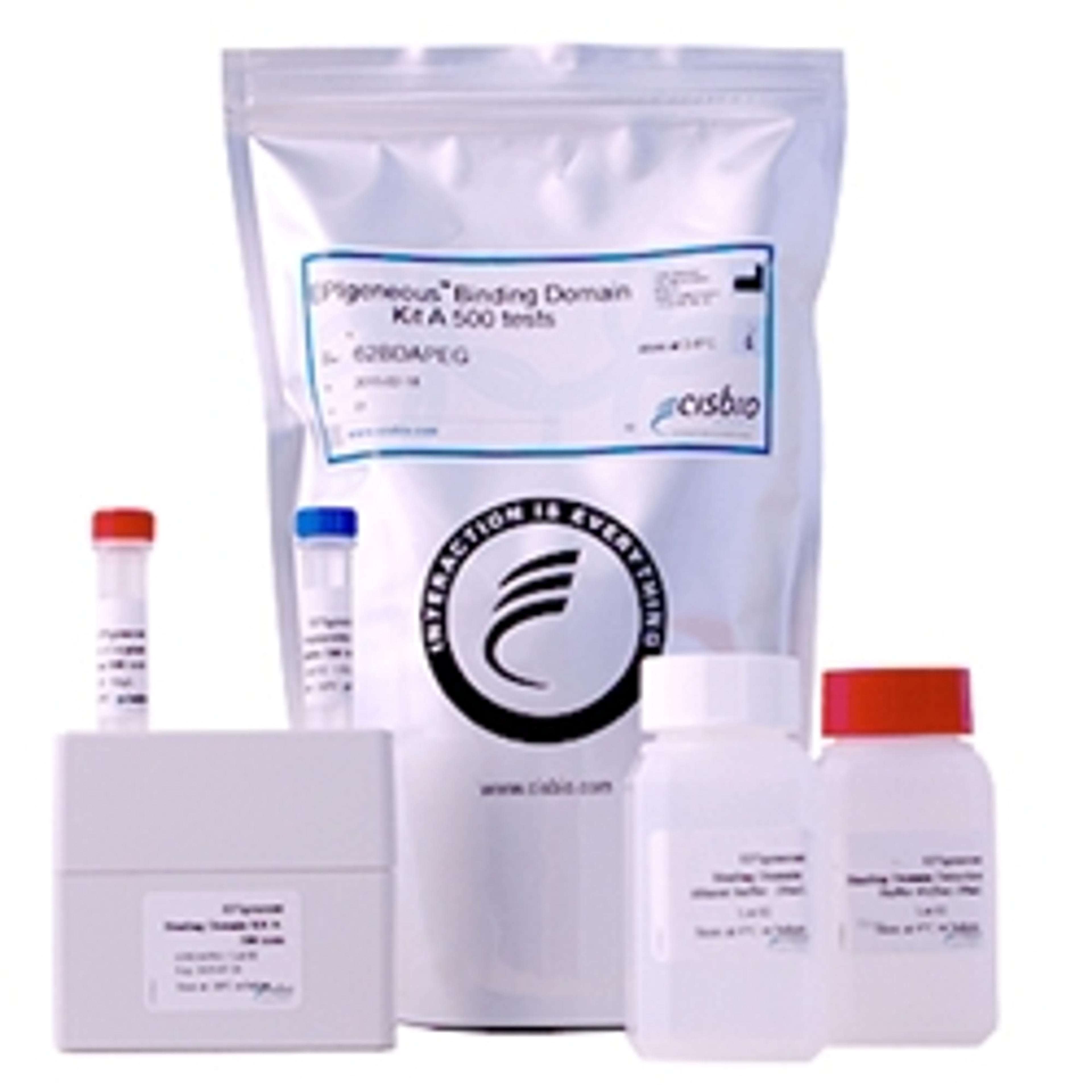
EPIgeneous™ Binding Domain Assays
EPIgeneous™ Binding Domain Assay Kits for studying epigenetic readers. This biochemical assay platform enables a no-wash, sensitive, reliable detection of protein/protein interaction between epigenetic binding domains and histone sequences modified by epigenetic enzymes. Three assay kits (A, B and C) have already been validated and fully optimized on a selection of 28 key binding domains. For non-validated reader domains, a f…

The supplier does not provide quotations for this product through SelectScience. You can search for similar products in our Product Directory.
EPIgeneous™ Binding Domain Assay Kits for studying epigenetic readers.
This biochemical assay platform enables a no-wash, sensitive, reliable detection of protein/protein interaction between epigenetic binding domains and histone sequences modified by epigenetic enzymes. Three assay kits (A, B and C) have already been validated and fully optimized on a selection of 28 key binding domains. For non-validated reader domains, a fourth kit (Discovery) enables you to profile which of the A, B or C kits is the best assay solution. All kits are based on a GST-tagged Binding Domain /biotin-coupled Histone peptide format, and can be run using the same mix-and-read single plate protocol. EPIgeneous™ Binding domain assay kits are ideal assay tools for both primary and secondary screening as well as for further inhibitor studies.
Features:
- Fully optimized on 28 key reader proteins
- High sensitivity and robustness for inhibitor screening
- Good DMSO tolerance
- Low consumption of protein and peptide
Applications:
- Bromodomain, Chromodomain, Tudordomain & MBT domain assays
- High Throughput Screening
- Inhibitor profiling

Enabling Epigenetics Studies from HTS to SAR: a Novel HTRF® Platform to Identify and Characterize Reader Domain Inhibitors
This poster describes a novel assay platform based on HTRF technology which enables the discovery and the characterization of novel reader domain inhibitors. More than 20 different assays have been built up to monitor the interaction of Bromodomain, Tudor domains, MBT domains and Chromodomains with histone peptides.