
New Abbott Test Can Help Doctors Detect the Presence of Two Important Health Issues
28 Mar 2013Abbott has announced that the ARCHITECT AFP test, which may help doctors detect serious birth defects and the progression of testicular cancer, received U.S. Food and Drug Administration (FDA) approval. Biomarkers, such as alpha-fetoprotein (AFP), are substances in the body that physicians can measure to identify the progress of diseases or conditions as well as to evaluate the effectiveness of treatments. AFP has unique traits that help doctors detect two very different health issues: fetal birth defects and the progression of testicular cancer.
AFP and Birth Defects
Neural tube defects (NTDs) are serious fetal birth defects of the brain and spine that occur very early in development. When the neural tube, a structure that develops into the brain and spinal cord, fails to close properly, AFP is thought to leak directly from the fetus into the mother’s amniotic fluid, causing unexpectedly high levels of AFP in the mother’s blood. A blood test that measures AFP can help doctors determine if a woman is carrying a fetus affected with birth defects, such as anencephaly (the absence of a large part of the brain and the skull) and spina bifida (the incomplete closing of the backbone and spinal canal). Treatments for NTDs focus on closing the defect with surgery (including surgery before birth) and treating or addressing related symptoms such as excess fluid in the brain and bladder and bowel problems.
AFP and Testicular Cancer
Men with one type of testicular cancer, called nonseminoma germ cell, have elevated AFP levels present in their bloodstreams. Blood tests to measure AFP can be used to evaluate responses to treatment. By monitoring disease progression and seeking treatment when necessary, testicular cancer can be a highly treatable and usually curable cancer.
"The ARCHITECT AFP assay is a valuable tool that will help physicians obtain reliable measurements of this protein for use in guiding critical patient treatment decisions," said Brian Blaser, executive vice president, Diagnostics Products, Abbott. "Abbott is pleased to offer this important assay to our customers to positively affect patient care."
About the ARCHITECT AFP Assay
The new assay runs on Abbott’s fully-automated ARCHITECT i2000, i2000SR, ci8200, and ci16200 analyzers, and is available in the United States, CE marked, and non-regulated countries.
Intended Use
The ARCHITECT AFP assay is a chemiluminescent microparticle immunoassay (CMIA) for the quantitative determination of alpha-fetoprotein (AFP) in:
1. Human serum or plasma to aid in monitoring disease progression during the course of disease and treatment of patients with nonseminomatous testicular cancer.
2. Human serum, plasma, and amniotic fluid at 15 to 21 weeks gestation to aid in the detection of fetal open neural tube defects (NTD). Test results when used in conjunction with ultrasonography or amniography are a safe and effective aid in the detection of fetal open NTD.
Related products
Request Quote for All Products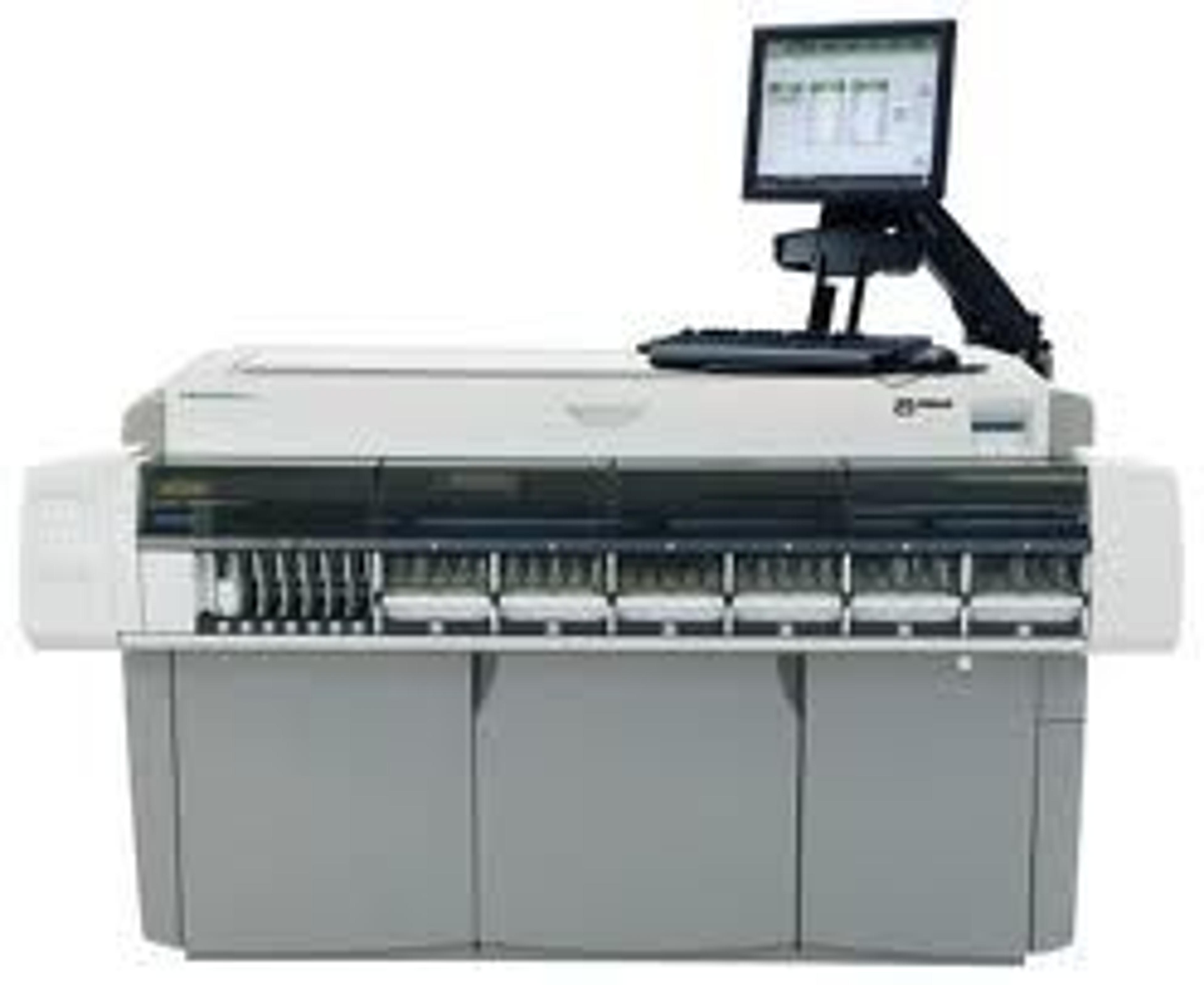
ARCHITECT c16000 Clinical Chemistry Analyzer
AbbottARCHITECT c16000 can be integrated with the ARCHITECT i2000SR to consolidate clinical chemistry and immunoassay on one platform. True Family Commonality Seamless transfer from system to system • Equivalent results across all ARCHITECT c Systems • Identical technology, reagents and assay protocols •Identical software that is intuitive to operate •Universal ARCHITECT sample carrier Integration Without Compromise A unique approach to consolidation • SmartWash technology ensures no clinically significant sample tube to tube carryover (less than 0.1 ppm) •Robotic Sample Handler (RSH) eliminates bottlenecks and prioritizes urgent requests •Immediate STAT processing for fast and consistent turnaround time •Up to 65 refrigerated reagent positions plus patented ISE (Na+, K+, and Cl-) •215 sample load capacity including 35 priority positions •Continuous sample access •Throughput of up to 1,800 clinical chemistry tests per hour Enhanced System and Assay Dynamics The latest in immunochemistry technology •FlexRate methodology extends linearities and avoids repeats •Integrated Chip Technology (ICT) delivers ISE (Na+, K+, and Cl-) analysis with minimal maintenance, low sample volume (15 uL), and within run precision of 1% or less •Liquid level sensing combined with pressure differential technology for enhanced bubble and clot detection monitors sample integrity
ARCHITECT c8000 Clinical Chemistry Analyzer
AbbottARCHITECT c8000 can be integrated with the ARCHITECT i2000SR to consolidate complex workloads of clinical chemistry and immunoassay testing on to one efficient platform. Our innovative integration solution for clinical chemistry testing helps you: •Report STAT results quickly using dedicated positions on a three-dimensional sample handler •Reduce repeats and reruns with FlexRate technology that extends linear ranges of enzymatic assays •Standardize processes through equivalent patient results and common consumables across all ARCHITECT c Systems •Improve workflow efficiency with a large load up capacity for samples and refrigerated reagents See how the ARCHITECT c8000 can increase your lab's performance by contacting your Abbott representative.