
Joint solution provides rapid detection of fatty acid esters in oils and fats
An automated sample management system paired with a triple quadrupole mass spectrometer is said to drastically shorten analysis time
22 Apr 2020
Shimadzu, one of the world leaders in analytical instrumentation, has developed together with Axel Semrau, a solution detecting production-related contaminants in food containing fats and oils. These undesirable substances are MCPD fatty acid ester, glycidyl fatty acid ester and free MCPD (monochloropropane diol). The joint solution consists of a triple quadrupole mass spectrometer and an automated sample management system. It shortens the analysis time from 18 hours to 36 minutes.
Studies have identified the harmful effect of 3-MCPD fatty acid ester, which is known to be a renal toxin, genetically harmful and probably carcinogenic. The substances are unintentionally created through the necessary refining process in the production of oils. As such, they may appear in all refined fats and oils, as well as in all food products in which they are processed. Approx. 95 percent of all vegetable fats and oils are refined.
A real analytical challenge
The analysis of 3-MCPD fatty acid esters and glycidyl fatty acid esters is a real challenge for the food industry. While there are already internationally validated procedures for these substances, an analysis method for processed foods with refined vegetable fats and oils as an ingredient are still in continued development.
The risks of the substances require efficient analysis which can reliably detect the increased content in food products as quickly and simply as possible. For this purpose, the MCPD solution from Shimadzu and Axel Semrau combines a GCMS system with a workstation that automatically conducts the entire sample preparation and analysis process, which is very time-consuming to do manually. It serves as a measurement station for the fully automatic determination of MCPD and glycidol in food products.
High degree of automation ensures efficiency
Since the direct detection of MCPD fatty acid ester is not yet possible due to the unmanageable number of isomers and the lack of suitable standards, the solution from Shimadzu and Semrau uses an indirect method of determining the content of 2-MCPD, 3MCPD and glycidol. This method includes the transesterification of MCPD and glycidyl ester as well as the extraction of the resulting free MCPD and its derivatization.
Users can choose between two triple quadrupoles for the MCPD solution – the GCMSTQ8040 NX or the GCMS-TQ8050 NX:
- the GCMS-TQ8040, with its sensitivity in the ppt range (one trillionth) for ultra-fast analyses combines high throughput with easy operability. Precise and efficient, it sets the standard for routine analytics: Due to its intelligent technologies, it improves productivity, workflow and performance
- the GCMS-TQ8050 NX is a high-end system with the lowest detection limits in ultra-trace analysis. It is highly flexible and enables switching between two capillary column between various applications without prior conversion. Complete databases for food analysis are available for both models.
Axel Semrau automated all steps of sample preparation with this application. It is linked online to Shimadzu’s GC-MS system. The software platform CHRONOS controls the system; it optimizes productivity and enables online data validation. Clean samples for injection and rapid analysis are guaranteed. Sample preparation can be done online or offline.
Axel Semrau has drastically shortened the detection process thanks to intelligent sample management. The initial result is ready after just 36 minutes. The bundling of sample preparation and analysis allows up to 30 sample results to be collected per day.
Do you use Shimadzu products in your lab? Write a review today for your chance to win $400 Amazon gift card>>
Related Products
Request Quote for All Products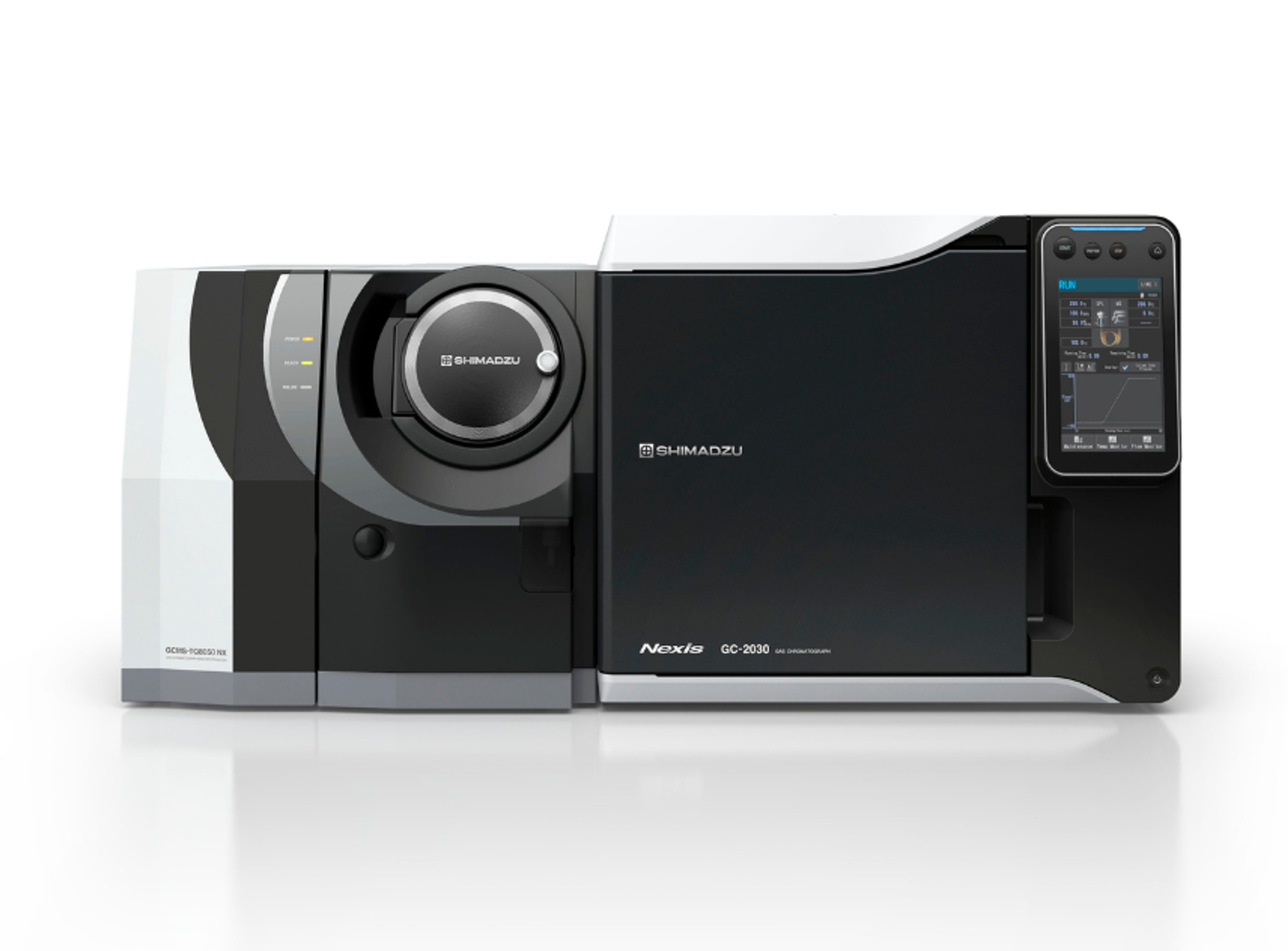
GCMS-TQ8050 NX Triple Quad Mass Spectrometer
Shimadzu CorporationEnhanced Sensitivity and Superior Performance
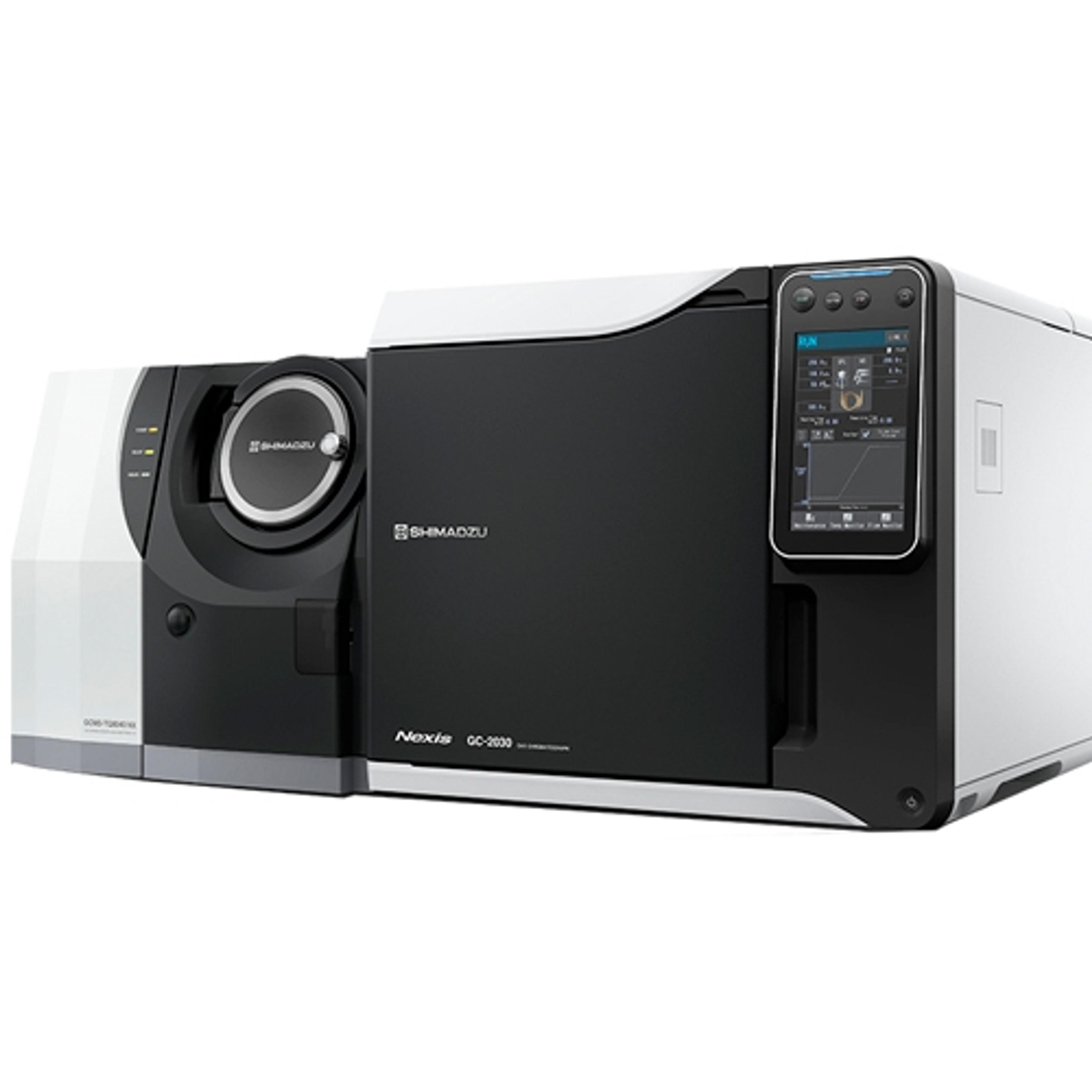
GCMS-TQ8040 NX Triple Quad Gas Chromatograph Mass Spectrometer
Shimadzu CorporationFeaturing Smart Productivity for high-efficiency sample throughput, Smart Operation for quick and easy method development, and Smart Performance for low detection limits and Scan/MRM, the GCMS-TQ8040 NX is a cost-effective, easy-to-use triple quadrupole GCMS for routine analytical work. With over 32,000 MRM transitions in a single run, the GCMS-TQ8040 NX with Smart MRM can combine over 400 compounds into a single MRM method without sacrificing sensitivity or selectivity, doubling or even tripling laboratory productivity. This results in added throughput before routine maintenance is required and faster return on investment. The Shimadzu GCMS-TQ8040 NX MRM Optimization Tool automatically determines optimum transitions and collision energies for all compounds in a single sequence, and seamlessly incorporates them into the Smart Database Series for fully automated MRM method development. Using flexible MS events, the Smart MRM function routinely determines the best dwell and loop times for >400 compounds in a single method, providing optimum precision and sensitivity. The GCMS-TQ8040 NX can acquire data in the classic MRM mode, or in synchronous Scan/MRM mode for simultaneous qualitative and quantitative results. The Scan/MRM mode simultaneously acquires accurate library-searchable mass spectra and low-level MRM quantitation in a single analysis – a critical function when sample volume is limited. Shimadzu’s proprietary UFsweeper™ technology achieves high-speed MRM analysis up to 800 transitions per second. The Advanced Scanning Speed Protocol (ASSP™) provides high-speed scanning control at 20,000 u/second. ASSP and simultaneous Scan/MRM analysis mode provides high-quality library searchable fragmentation spectra, and accurate low-level quantitative data in a single analysis. This efficient design provides optimum performance in all analysis modes: MRM, SIM, Scan, Scan/MRM, Scan/SIM, Neutral Loss, Product Ion Scan, Precursor Ion Scan and combination modes.