
Rigaku allies with JEOL to develop an integrated MicroED platform
2 Jun 2020
Rigaku has entered into an agreement with JEOL for the joint development of a MicroED platform to solve the structures of sub-micron crystals using electron crystallography.
Single crystal X-ray crystallography has long been the primary technique used to determine the 3D molecular structure of inorganic, organic and protein molecules. Rigaku’s latest HPC detector and advancements in X-ray source brilliance have reduced the minimum measurable crystal size to the order of a few microns. However, it is often the case that the crystals that researchers can obtain of new materials are smaller than 100 nm. These nanoscale crystals have traditionally been out of the scope of X-ray crystallography.
Recently, electron crystallography, typically called MicroED, has been in the spotlight as a method to address the need to measure increasingly small nanoscale crystals. The strong matter interactions provided by electrons offer the potential to study these smaller samples. Electron crystallography has a long history, but it has not been commonly used because of the severe radiation damage it causes to organic and protein molecules. The HPC detector addresses this issue with its excellent sensitivity and extremely low noise characteristics, reducing the required exposure to electrons to the level where sample decay can be ignored.
Rigaku has long been at the forefront of advanced analytical X-ray instrumentation and JEOL is a leading company in the field of electron microscopy. Both companies are market leaders in their respective industries. The scope of the joint development includes integration of Rigaku’s high-speed, high-sensitivity HPC detector and state-of-the-art CrysAlisPro structure analysis software platform with JEOL’s high-performance transmission electron microscope technology. The resulting system will provide researchers with a completely integrated solution for performing MicroED experiments. Rigaku and JEOL will synergistically contribute to the scientific research frontier through the introduction of an easy-to-use MicroED platform that greatly reduces the crystalline sample size necessary for 3D structure determination.
Do you use Rigaku or JEOL products in your lab? Write a review today for your chance to win a $400 Amazon gift card>>
Related Products
Request Quote for All Products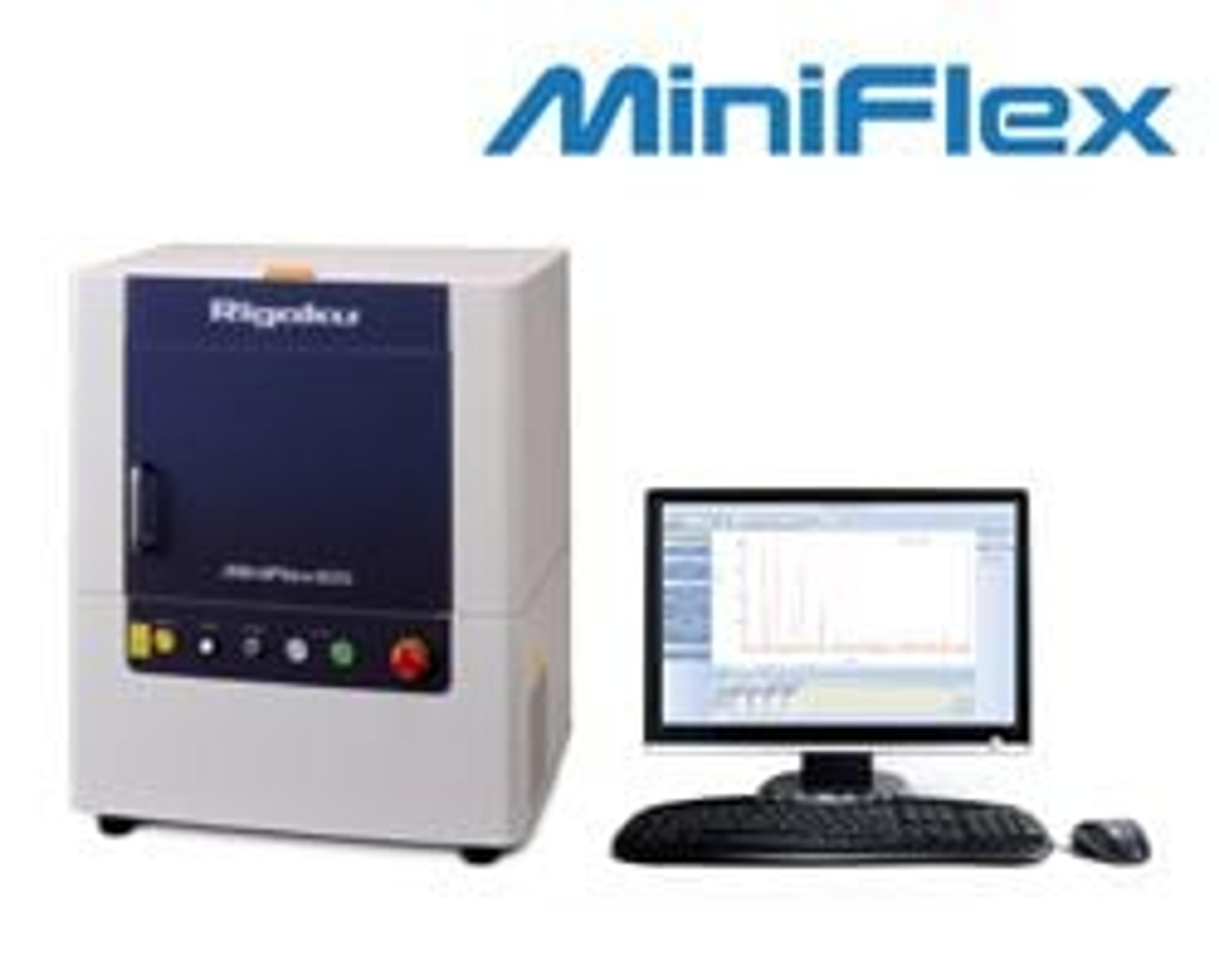
MiniFlex Benchtop XRD
Rigaku CorporationNew 6th-generation general purpose benchtop XRD system for phase identification and phase quantification. New sixth generation MiniFlex X-ray diffractometer (XRD) is a multipurpose analytical instrument that can determine: phase identification and quantification, percent (%) crystallinity, crystallite size and strain, lattice parameter refinement, Rietveld refinement, and molecular structure. It is widely used in research, especially in material science and chemistry, as well as in industry for research and quality control. It is the newest addition to MiniFlex series of benchtop X-ray diffraction analyzers from Rigaku, which began with the introduction of the original MiniFlex system decades ago. Overview: New 6th generation design Compact, fail-safe radiation enclosure Incident beam variable slit Simple installation and user training Factory aligned goniometer system Laptop computer operation Measurements: Phase identification Phase quantification Percent (%) crystallinity Crystallite size and strain Lattice parameter refinement Rietveld refinement Molecular structure Options: 8-position autosampler Graphite monochromator D/teX Ultra: silicon strip detector HyPix-400 MF: 2D HPAD detector Air sensitive sample holder Travel case