
EU Funds Stem Cell Technologies for Heart Repair – Eppendorf is Project Partner
4 Apr 2016Within the EU Research and Innovation Program Horizon 2020 the European Union is now funding the TECHNOBEAT research project with almost 6 million Euro.
The pioneering project “Tools and TECHNOlogies for Breakthrough in Heart Therapies” is coordinated by the Hannover Medical School. It will be processed by a Pan-European and interdisciplinary consortium of eight partners from industry and science, one of them being Eppendorf. The scientists, medical experts, and engineers will cooperatively develop effective tools and innovative methods aiming for the production of cardiac microtissue for regenerative medicine. Primary cell material will be human induced pluripotent stem cells, so called hiPSCs.
Eppendorf is an industry-leading supplier of bioreactors and fermenters for the global biotech, pharmaceutical, and chemical industry as well as academia and research institutions. In the context of this EU project, DASGIP GmbH, an Eppendorf company, and the Eppendorf AG Bioprocess Center (both situated in Juelich, Germany), will develop innovative bioreactor solutions designed especially for the cultivation of hiPSCs in large scales.
“We are pleased to have the Eppendorf Bioprocess Center in the TECHNOBEAT project team. In a long-standing cooperation we already have successfully developed bioreactors for the cultivation of 100 mL hiPSCs”, states Dr. Robert Zweigerdt, Principal Investigator at Hannover Medical School, Germany and TECHNOBEAT coordinator. “Now, the exciting challenge is to adapt the existing product design to the needs of stem cell cultivation in a larger volume of 1 L”, annotates Katharina Kinast, responsible Product Manager Bioprocess at Eppendorf.
Development engineers and product managers at Eppendorf will create novel impeller and vessel designs to optimize hiPSCs culture mixing and shear characteristics. System-integrated filtering technology will be engineered. Holographic microscopy (industry partner Ovizio Imaging Systems NV/SA, Belgium) will be integrated as well. According to Katharina Kinast this will “altogether enable tight control and real-time monitoring of cell aggregate formation”. With its experience in polymer production and bioreactor design, Eppendorf will further contribute to establishing a GMP-conform hiPSC production process using single-use bioreactor technology.
TECHNOBEAT can provide groundbreaking findings and methods that may revolutionize cell-based heart therapies. "In the future, the microtissues may be grown outside the body in bioreactors and then injected into the patients damaged heart as a cell implant for curative treatment”, outlines Robert Zweigerdt. “Hundreds of patients with cardiac diseases waiting for an organ transplant may benefit from this technology.”
The Pan-European TECHNOBEAT project builds an integrated and application-oriented research approach. For the first time, the consortium combines technologies enabling the mass production of stem cells under defined quality criteria, a strategy for growth of implantable microtissue, methods for evaluation of implant success in mammals as well as designated clinical expertise in cardiology, cardiac surgery, and multimodal imaging.
By the cross-border networking of specialists and know-how, TECHNOBEAT supports the expansion and competiveness of the biomedical sector in Europe.
The project is funded for a period of four years. Apart from the Hannover Medical School and Eppendorf the following Institutions and companies are partnering the project: The Medical Centers at the universities of Leiden and Utrecht, the Netherlands, the University of Sheffield, UK, the Paracelsus Medical University, Austria and the industrial partners Ovizio Imaging Systems NV/SA, Belgium and Kadimastem Ltd., Israel.
Related Products
Request Quote for All Products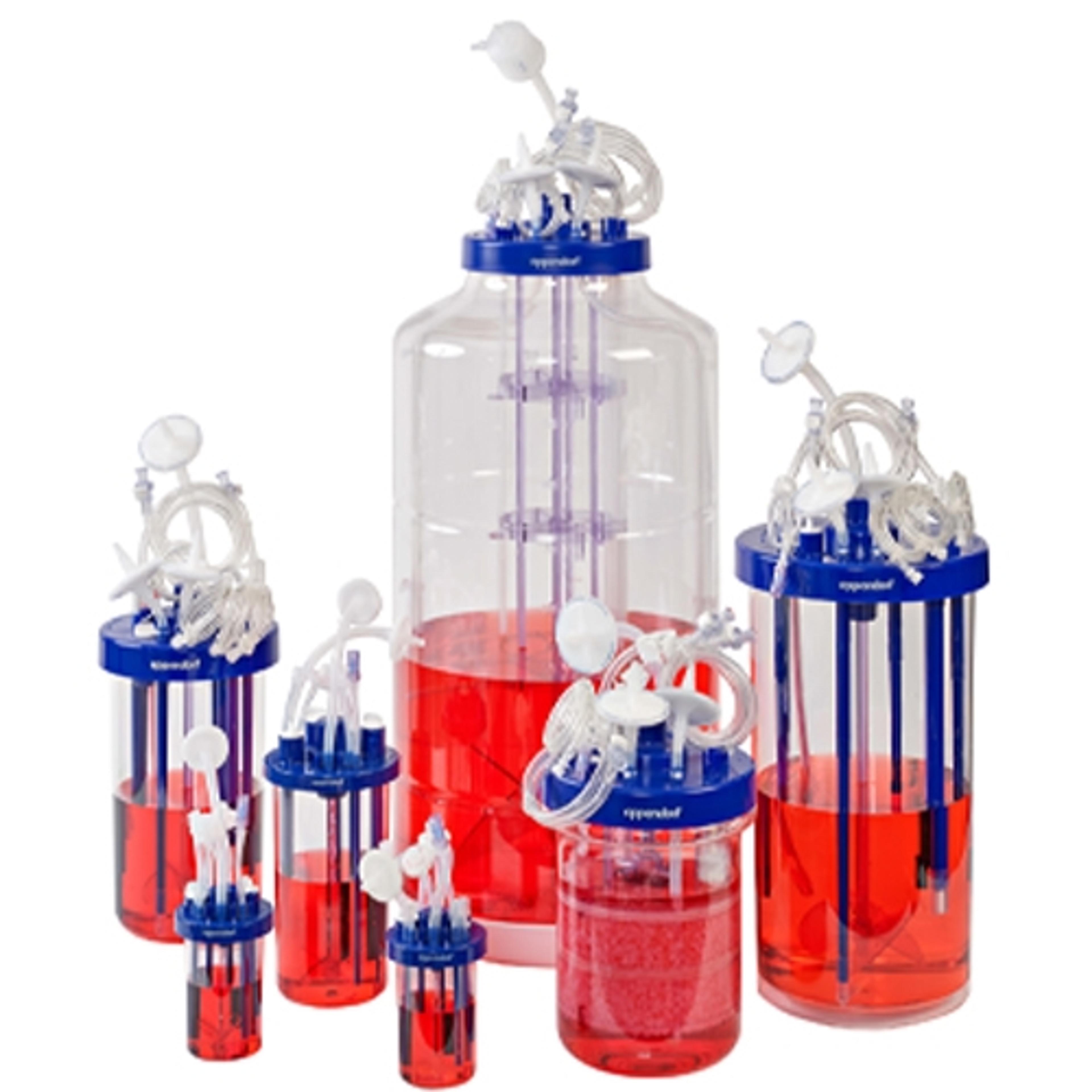
Eppendorf BioBLU® Single-use Vessels
EppendorfEppendorf BioBLU Single-use Vessels combine all the advantages of single-use technology with the trusted performance and scalability of a stirred-tank design.
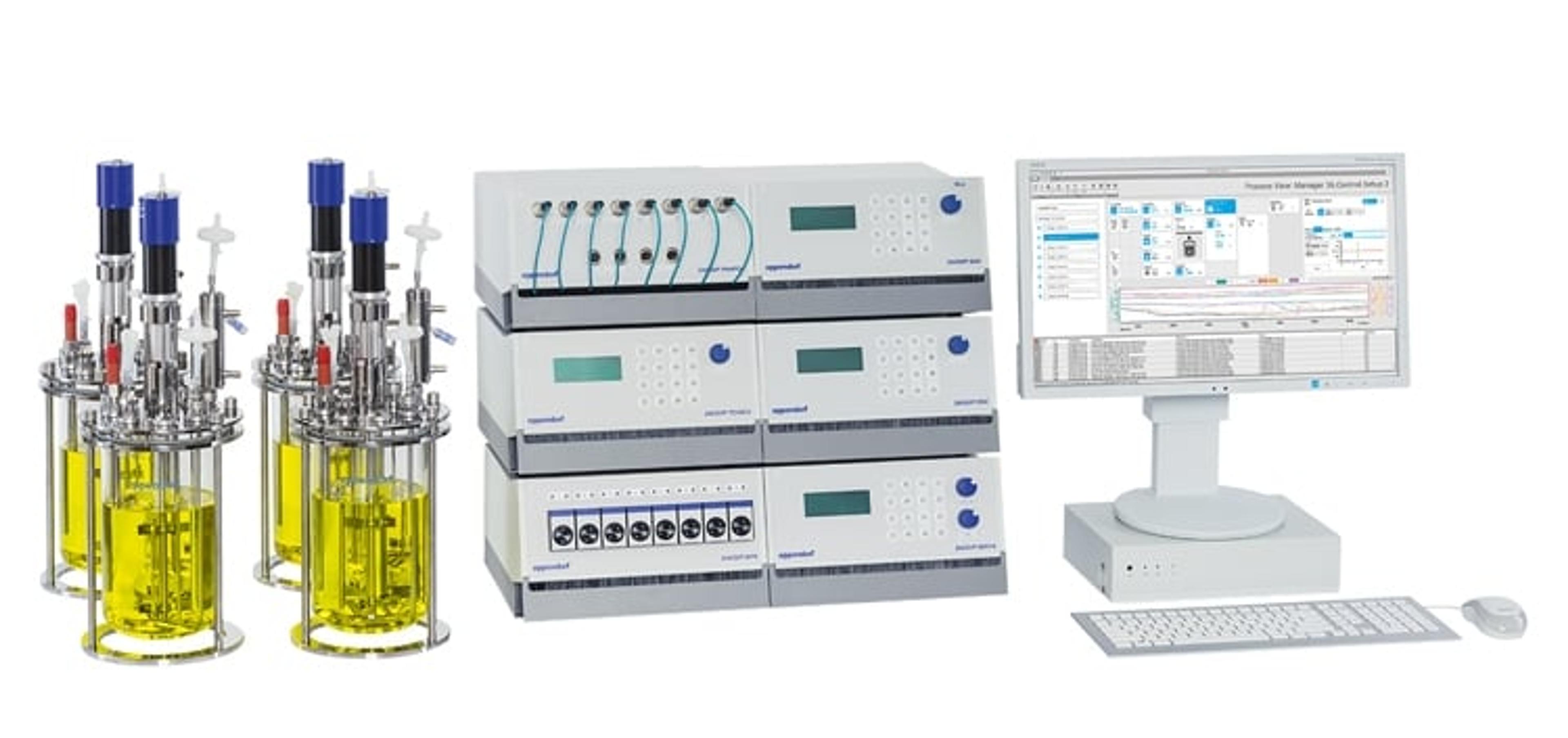
Eppendorf DASGIP® Parallel Bioreactor System
EppendorfDASGIP Parallel Bioreactor Systems for R&D and process development in both cell culture and microbiology allow for advanced bioprocess control and automation. Parallel processing, precise control of all relevant parameters, user-defined profiles and innumerable automation features result in accelerated and highly efficient process development. Our DASware software solutions support DoE, process historians and comprehensive data management. Configurable solutions address the unique requirements of microbial, phototrophic, mammalian and human cells, stem cell applications, as well as biofuel and biopolymer processes. Eppendorf DASGIP® Parallel Bioreactor System Features: Advanced process control and parallel operation of up to 16 glass or single-use bioreactors; DASGIP Bioblock for advanced and user-friendly temperature control; Modular design of control units allows for flexible system configurations that meet the demands of specific applications; Control of agitation, pH, level and DO (including customizable cascade modes) in each bioreactor; Variable speed pumps for accurate liquid addition and operation in batch, fed-batch, continuous and cyclic perfusion mode; Optical absorbance measurement for online calculation of e.g. OD600 or cell dry weight; TMFC individual gas mixing of air, N2, O2 and CO2; Online calculation of OTR, CTR and RQ; DASware control Software for advanced process control; Compatible with DASware Software Suite for interconnectivity and bioprocess information management. Applications: Research and development in cell culture and microbiology as well as phototrophic applications; Lab scale fermentation of aerobe and anaerobe bacteria, yeasts and fungi; Cultivation of mammalian, insect and human cell lines; Special applications such as stem cell culture or biofuel/biopolymer development.
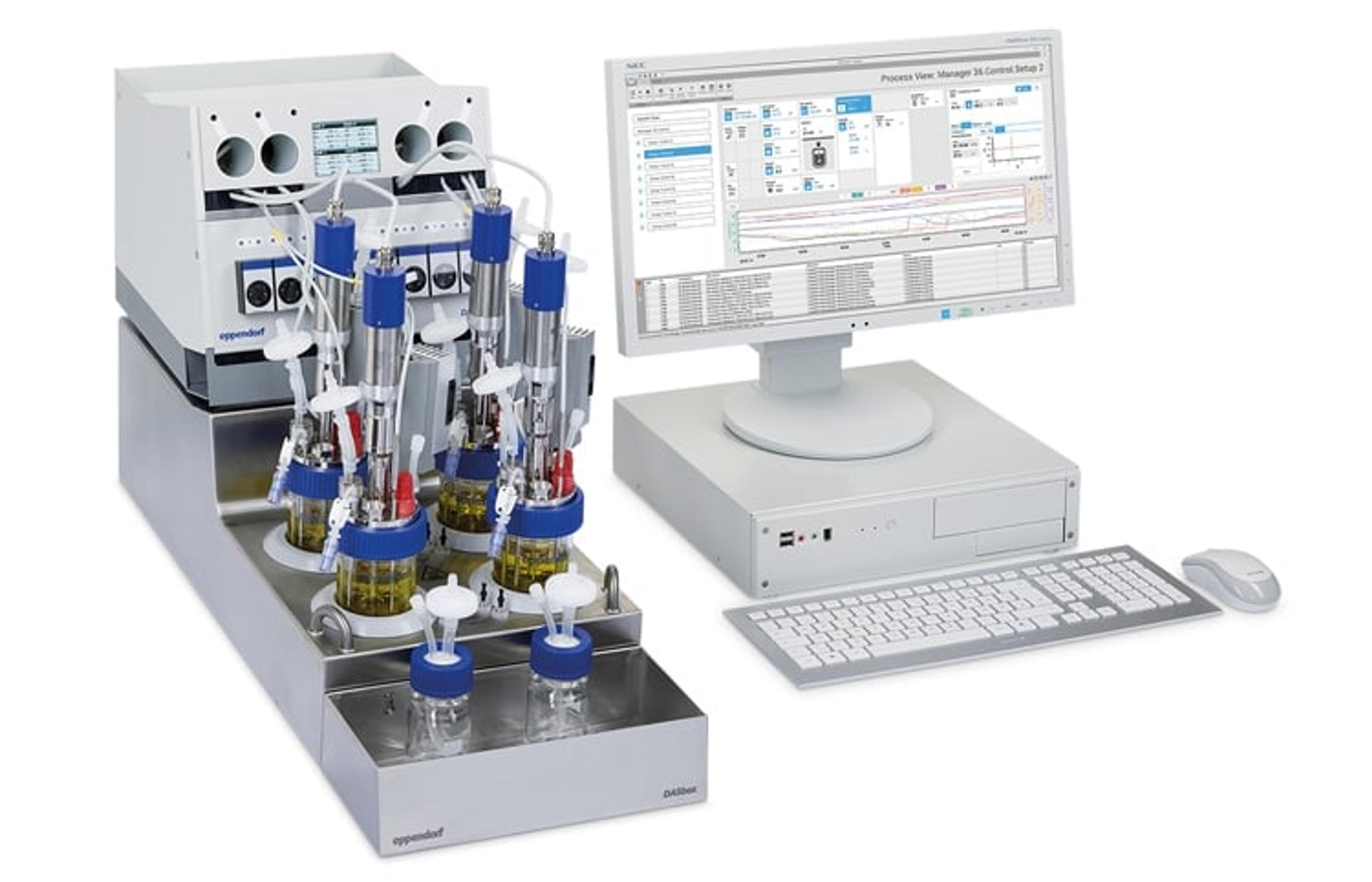
DASbox® Mini Bioreactor System
EppendorfThe DASbox is a unique mini bioreactor system suitable for microbial and cell culture as well as stem cell applications. It is designed as a 4-fold system with up to twenty-four parallel operating bioreactors. With working volumes of 60 – 250 mL the DASbox is the optimal tool for advanced process development and Design of Experiments (DoE) applications. All critical process parameters can be precisely controlled. Liquid-free temperature control and exhaust condensation satisfy users with easy handling. In addition to using industry standard glass bioreactors the DASbox can be equipped with Eppendorf BioBLU® 0.3 vessels, all fully instrumented single-use mini bioreactors. Eppendorf DASbox® Mini Bioreactor System Features: Parallel set-up of up to 24 bioreactors; Excellent scalability and reproducibility in both microbial and cell culture applications; Supports industry standard glass bioreactors (DASbox Mini Bioreactor) as well as the BioBLU 0.3 Single-Use Vessels; Small working volumes save on the amount of cell material, media and supplements required; Extremely compact system with a footprint of only 7.5 cm (3 in) benchspace per vessel; Individual temperature control with liquid-free heating and cooling (Peltier); Liquid-free Peltier exhaust condenser with easy handling by automatic slide in activation and slide out deactivation mode; LC display with key process parameters and integrated alarm function simplifies monitoring; Fully mass flow-controlled gas mixing with individual gas mixture from Air, O2, CO2 and N2, each directable either to headspace or sparger; Standard sensors for precise measurement and control of temperature, pH, DO, level and ORP (redox potential); optical pH sensors available; Precise miniature variable speed pumps, continuous flow rates down to 0.3 mL/h; Sealed magnetic overhead drives for single-use vessels and direct overhead drives for autoclavable vessels; up- or downflow selectable; Optional pull-out system for enhanced accessibility of bioreactors and control unit. Applications: Process development in cell culture and microbiology; Design of Experiments (DoE) Media optimization Clone and cell line screening, strain characterization.