
Beckman Coulter partners with Smart4Diagnostics to close the data gap between blood collection and lab analysis
20 Jun 2022
Beckman Coulter has announced a new partnership with Germany-based company Smart4Diagnostics to close the preanalytical data gap between blood collection and laboratory analysis due to errors that take place before the sample arrives in the laboratory, such as sample collection, patient identification, sample handling, sample transportation, sample loss, etc.
Clinical laboratories are well aware of the pain points encountered in the preanalytical phase of the sample journey, which is when the vast majority of errors take place. These include patient identification and sample collection, handling, and transportation. Up to 75% of the errors in the preanalytical phase take place outside of the lab, meaning that laboratories have very little, if any, control over this part of the process. In European and North American hospitals, a single pre-analytical error costs on average €200, with the estimated costs of such errors totalling approximately 0.7% of all operating costs.
“Beckman Coulter has been automating and digitising medical laboratories throughout the world for over 40 years, and has now turned its attention to digitising the part of the preanalytical phase that happens outside of the laboratory. Thanks to the partnership with Smart4Diagnostics, Beckman Coulter will be able to monitor not only what happens inside the laboratory but the entire sample process, filling the existing gap between sample collection and clinical laboratories,” said Tom Coulson, EU Senior Manager for Workflow & IT Solutions.
Requesting that patients provide new samples due to these errors may result in patient discomfort, reduced trust and, most notably, delayed treatments. Whereas for laboratories, errors mean extra work, increased operating costs and decreased productivity. Smart4Diagnostics created a data-driven preanalytical ecosystem. From sample ordering to sample arrival, Smart4Diagnostics collects all relevant data-points to completely monitor sample workflow and conditions. By doing so, it is able to reduce preanalytical errors in real time while also improving the preanalytical workflow and quality of treatment.
According to Dr Hans Maria Heyn, CEO & Co-Founder of Smart4Diagnostics, “As many as three in four medical decisions are based on diagnostic results – often blood samples. Currently, the first part of this process is being managed manually, which can lead to errors and cause issues, including slow diagnosis, repeated tests on the patient, and wasted resources. This partnership with Beckman Coulter seeks to revolutionise this crucial but underdeveloped area of the healthcare value chain to bring innovation where it can have an instant and substantial impact.”
Want the latest science news straight to your inbox? Become a SelectScience member for free today>>
Related Products
Request Quote for All Products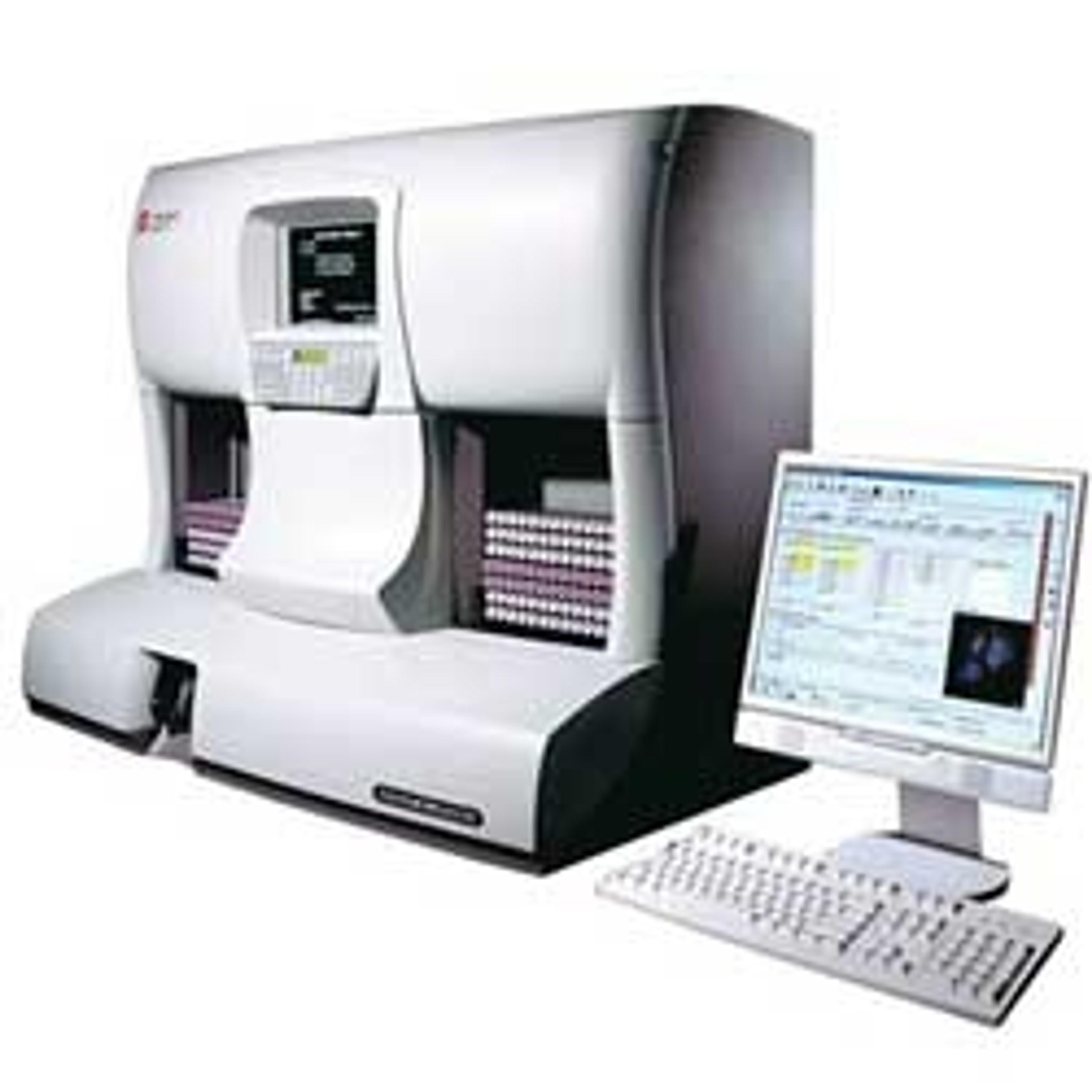
Coulter LH 780 Hematology Analyzer
Beckman Coulter DiagnosticsImprove accuracy with the Coulter LH 780 hematology analyzer, equipped with automated nucleated red blood cell (NRBC) enumeration, random access capabilities and AccuCount Technology. This product is supported by Beckman Coulter but may not be available in your country at this time. Please contact your Beckman Coulter sales representative or distributor for more information. Improve cell enumeration accuracy with AccuCount Technology Improve productivity with WBC linearity that extends from zero to 400,000 and platelet linearity that extends from zero to 3,000,000 Increase clinician confidence at clinical decision thresholds without additional costly testing protocols Enhance productivity with a reduction in false positive results and confirmatory tests Reduce aspiration volume with the uniquely designed Sample Aspiration Module, ideal for pediatric sampling Simplify and automate NRBC enumeration Eliminate the use of additional reagents since NRBCs are automatically enumerated with every CBC/diff Identify and enumerate NRBCs without manual intervention Improve productivity by reducing the need for technologist intervention and sample reruns Optimize workflow with intelligent workload distribution that delivers rapid TATs and quick STAT and ED results Streamline data management with improved decision support Standardize laboratory processes across all shifts with user-defined decision rules Customize the system to meet the needs of your lab and its specific patient population with flexible differential flagging Receive unparalleled service and support Increase uptime and productivity with onboard diagnostics and troubleshooting assistance, or with remote diagnostics support PROService Receive top-quality customer support through our telephone, online and on-site services Streamline workflow with advanced barcode reading Enhance efficiency and patient safety Read even low-resolution barcode labels with innovative imaging technology Maximize reliability by eliminating moving mechanical parts Expand your insights with the RDW-SD parameter Determine the size of red cell dispersion with the standard deviation of the width of the red cell population (RDW-SD) Possibly differentiate the cause of anemia Identify possible iron deficiency with elevated RDW-SD Identify possible heterozygous thalassemia with normal or decreased RDW-SD Extend your quality control Obtain an exponentially weighted moving average of CBC, 5-Part Diff and NRBC, as well as reticulocyte parameters, with the XM quality control package Process user-configurable batch sizes for two to 1,000 runs, for up to 20 batches Implement medically based performance standards and user-enabled rules with extended QC Rules package Make your consumables environmentally friendly Optimize both workflow and performance with unique LH 780 consumables Reduce formaldehyde processing with Coulter LH Series Cleaner Extend the reportable range for WBC, RBC, HGB and PLT with Coulter LIN-C Linearity Control Select from available cyanide-free reagents Simplify training with the intuitive user interface Shorten the learning curve and facilitate use Expand laboratory staff’s capabilities to access and control information