
How Canada’s first accredited cannabis testing lab meets the strict requirements for analysis of edibles
Supra Research CEO Dr. Rob O’Brien gives insight on its analytical processes, current challenges and a breakthrough method for cannabis testing in chocolate for the Canadian market
2 Mar 2020
Once a university professor in analytical chemistry, now a pioneer setting up multiple cannabis testing laboratories across Canada.
After gaining a Ph.D. in analytical chemistry from Carleton University, under the supervision of Dr. K.W. Michael Siu at the Chemical Metrology group of National Research Council, Dr. Rob O’Brien held a number of academic and teaching roles and is currently an adjunct professor at both The University of British Columbia and Thompson Rivers University. Dr. O'Brien has also held leadership roles in a variety of companies, including being the Chief Science Officer of Valens GroWorks and Senior Executive for Scientific Affairs at ISURA. He is currently the CEO and CSO of Supra Research and Development which holds a series of Health Canada licenses including an Industrial Hemp Cultivation License and a Cannabis Testing License.
In an exclusive interview with SelectScience Editor, Dr. Lois Manton O’Byrne, O’Brien offers a behind-the-scenes look at this innovative organization, sharing details of its analytical lab and its current challenges in testing cannabis foodstuffs, as well as presenting a new solution for removing unwanted waxes and other fats from chocolate samples to improve testing efficiency.
SS: Tell us about Supra Research and Development and some of its key focuses.
RO’B: Our facility on Leckie Road here in Kelowna, British Columbia, is an industrial space that is divided into two different sections. We have our analytical lab section where we'll do testing of natural health products and cannabis, we'll also conduct research on cannabis and natural health products at that site. There's a separate compartmentalized lease where we have the production and processing of cannabis products. In those products, we're looking to make reference materials to use in the sector - key things like validation kits and quality control materials that other labs and processors will use in order to make sure that their analytical testing is valid. We will also supply proficiency testing materials.
SS: Why is your work important to Canada’s cannabis science industry?
RO’B: In Canada, we now have edibles as a legal category. So, people can buy foodstuffs that contain cannabinoid extracts or cannabis material. There's a whole new set of regulations and testing protocols we're going to need for those products. For things like pesticides, residual solvents and mycotoxins, the analysis really isn't much different than in the foodstuffs right now. However, when you start adding the cannabinoids, these are a very fatty material that are going into a very fatty product category. The ones that are common are chocolates, gummies and those types of candies that are very, very, viscous, very difficult to make homogeneous.
SS: How are you working to overcome this challenge in homogeneity to improve your testing process?
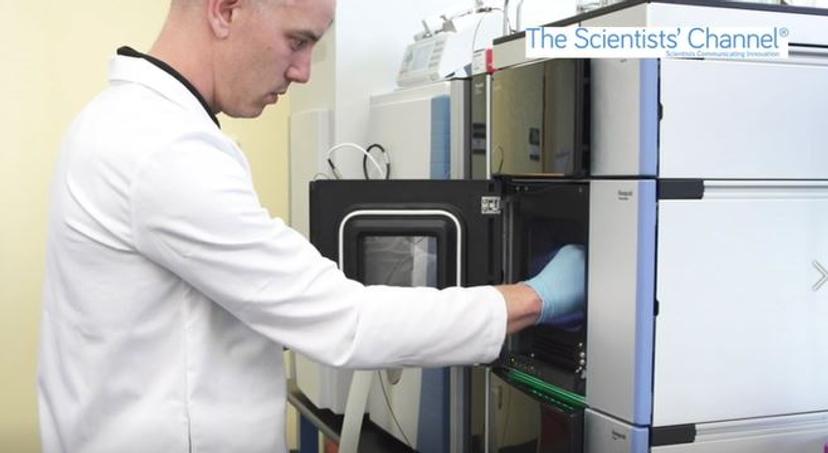
RO’B: We have developed a method for chocolates — what we do is we extract it hot with acetonitrile in an ultrasonic bath. Then, when we move the cannabinoids out, we also draw those waxes and other fats out. These components are very difficult to use with the columns that we want to use afterwards. If you direct this directly onto UHPLC, they will literally clog up the front end.
In order to get rid of these waxes and other fats, we've developed a new cryogenic-focusing method where we take the material and freeze it out at -20°C to remove these prior to UHPLC. That method has worked quite well to allow us to get both high extraction efficiency, reproducibility and accuracy.
SS: What’s the next step in streamlining your research? Are there any products that would help you to improve this method even further?
RO’B: So, in addition to the suite of instrumentation that we already have, we're looking to buy the new Thermo Fisher TSQ Altis Triple Quadrupole Mass Spectrometer with the Thermo Fisher Vanquish HPLC and the FAIMS interface from Thermo Fisher Scientific. This will allow us not only to do the routine pesticide testing that's required in foodstuff and plant material, as well as test for mycotoxins, but it will also ensure with the FAIMS front end that we can discriminate if there's a false positive or not. Sometimes, you can get a signal that looks like a positive result that is simply an interference. So, the ion mobility in the front end and in the form of FAIMS will allow us to separate that out.
For more information, watch the full video here >>
To stay up to date with all the latest developments, bookmark our Cannabis Testing community >>
Related products
Request Quote for All Products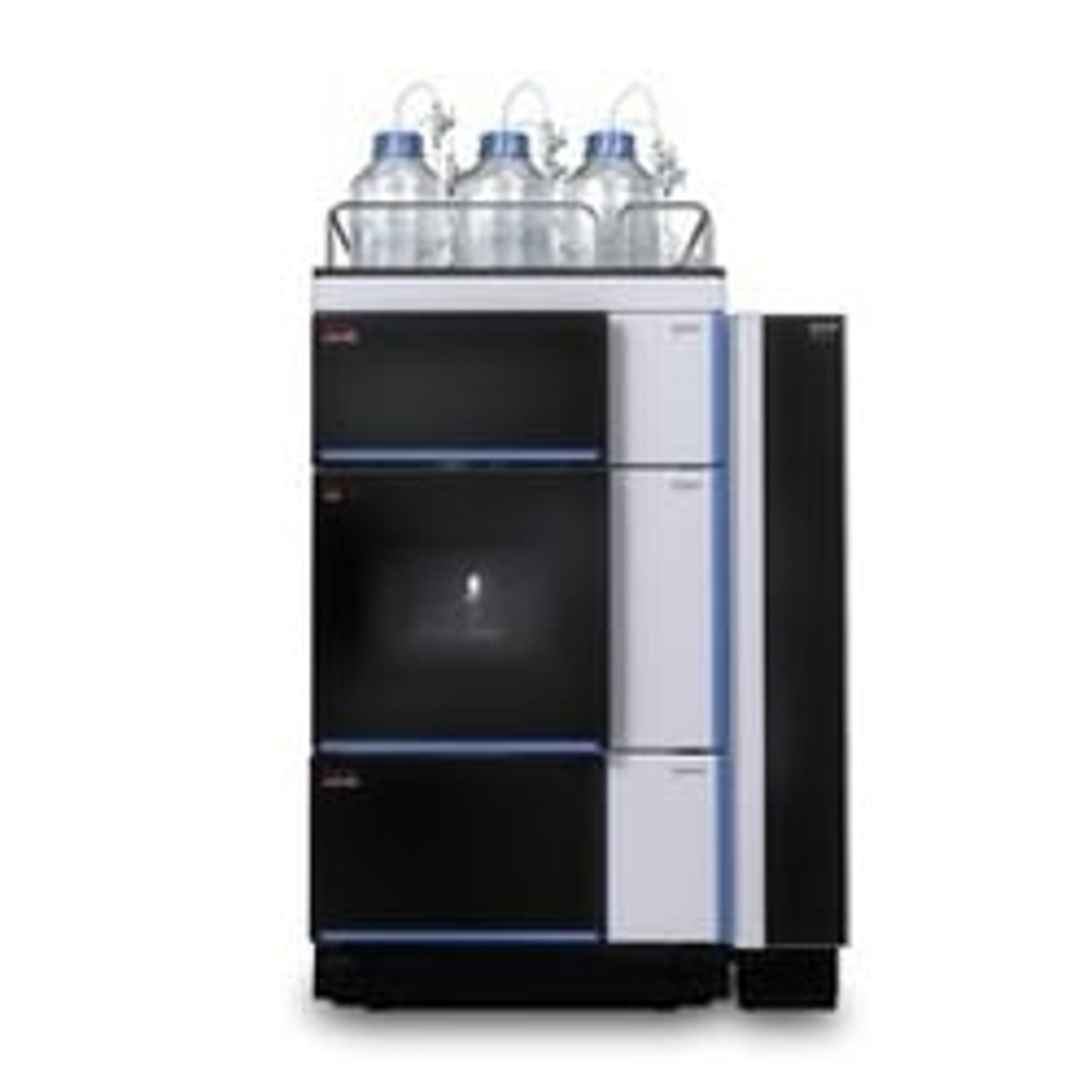
Thermo Scientific™ Vanquish™ Duo UHPLC System for Dual LC
Thermo Fisher ScientificImprove your productivity and sample knowledge for a faster return on investment with the Thermo Scientific™ Vanquish™ Duo UHPLC systems. Vanquish Duo UHPLC systems use a separate second flow path in one integrated system. With the Thermo Scientific™ Vanquish™ Duo UHPLC system for Dual LC, double your throughput or deepen your sample knowledge. Run the same method on both flow paths or two different methods simultaneously on one instrument, improving your lab productivity, sample knowledge, bench space usage and overall return on investment. The Vanquish Duo system for Dual LC helps you: Improve return on investment by reducing cost per sampleIncrease sample throughput without changing validated methodsIncrease output without sacrificing bench spaceAnalyze the same set of samples with multiple methods reducing sample preparation time and maximizing sample information
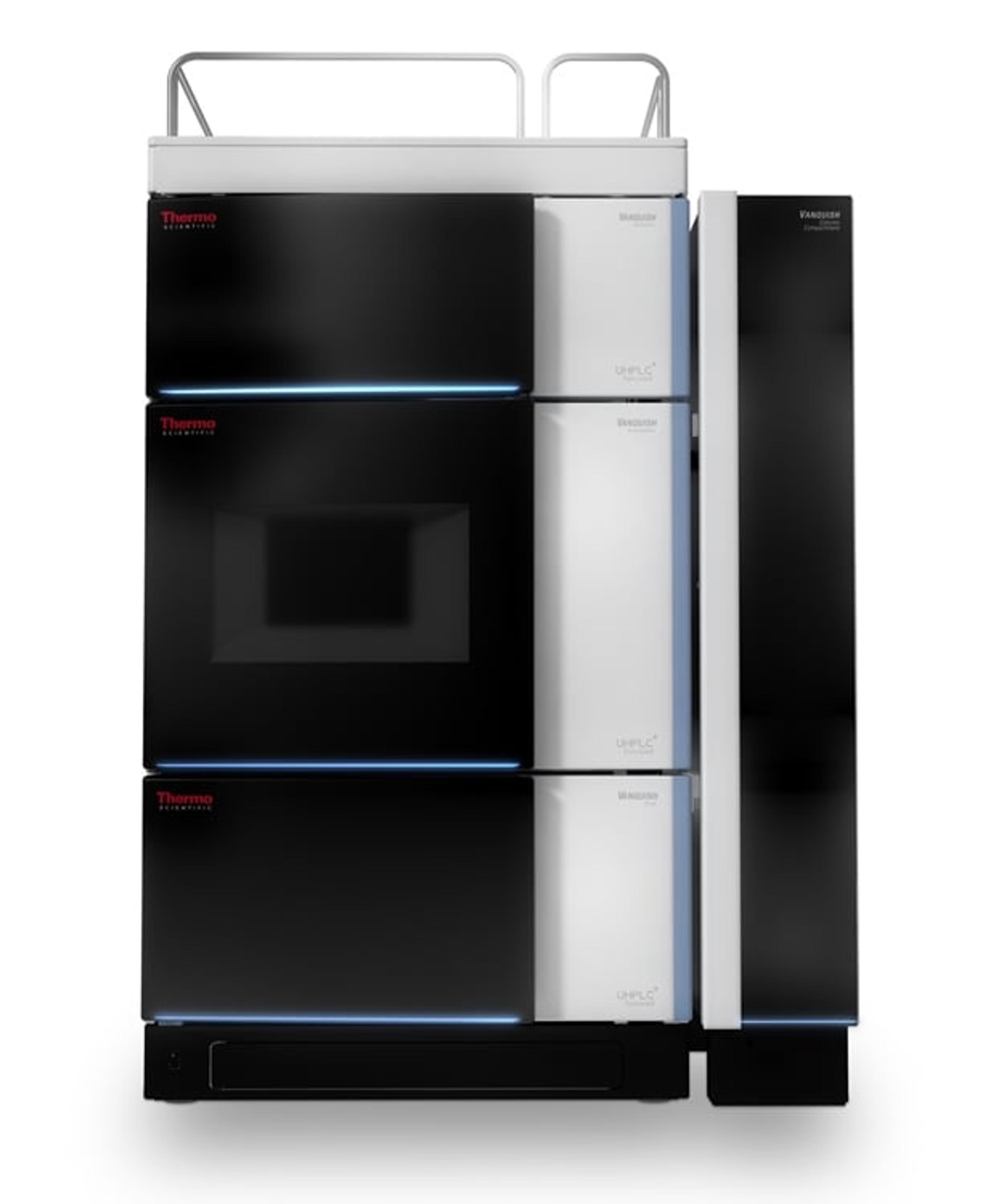
Thermo Scientific™ Vanquish™ Flex Quaternary UHPLC System
Thermo Fisher ScientificThe Thermo Scientific™ Vanquish™ Flex Binary UHPLC system is biocompatible with a state-of-the-art binary high-pressure pump and state-of-the-art binary solvent blending. This ultra high performance liquid chromatography system shares all Vanquish values, such as a design focused on uptime, robustness and reliability. Multiple detection options as well as Thermo Scientific™ Viper™ fingertight connections throughout the system will give you the performance you need with the ease of use you want. Our SmartFlow™ pumping technology with automatic compensation for changing eluent compressibility ensures excellent flow and gradient precision, independent of eluent composition and backpressures. This gives you unrivaled retention time precision and highest data confidence, even for ternary and quaternary gradients, and for more freedom in method development and application switching. Detection capabilities include high sensitivity and linearity Diode Array Detection with LightPipe technology, selective and sensitive Fluorescence Detection and near-universal detection capabilities with the Vanquish Charged Aerosol Detector. Key Features: Integrated modularity design concept to offer uncompromising UHPLC State-of-the-art quaternary solvent blending 1000 bar of pump pressure and flow rates up to 8 mL/min Industry-leading flow and gradient precision Multiple detection options including DAD, FLD and CAD Relevant Applications: Separations of Intact mAbs Analysis of labeled glycans Ternary gradient impurity profiling Efficient, reliable peptide mapping