

Unlocking new frontiers in clinical mass spectrometry
CLINICAL24
Clinical mass spectrometry (MS) is redefining laboratory medicine by delivering highly precise, ultra‑sensitive, and multiplexed detection of clinically relevant molecules directly from patient samples. This analytical powerhouse enables simultaneous quantification of biomarkers, metabolites, therapeutic drugs, and even endogenous hormones, offering unparalleled specificity compared to traditional immunoassays.
By leveraging techniques such as liquid chromatography–mass spectrometry (LC‑MS) and tandem mass spectrometry (MS/MS), clinicians and clinical researchers can achieve:
- Earlier disease detection through low‑abundance biomarker measurement.
- Personalized drug dosing via therapeutic drug monitoring (TDM).
- Dynamic treatment response tracking for oncology, endocrinology, and infectious disease.
- Comprehensive metabolic profiling for precision medicine initiatives.
Clinical MS is increasingly applied in newborn screening programs, infectious disease identification (including antimicrobial resistance surveillance), toxicology panels, endocrine disorder diagnostics, and cancer biomarker discovery. These applications highlight its role in bridging research and clinical practice, though it is important to note that the technologies featured here are intended for clinical research use only, unless explicitly cleared by the manufacturer for diagnostic purposes.
As innovation accelerates, mass spectrometry is unlocking new frontiers in personalized medicine, enabling laboratories to move beyond conventional testing toward data‑rich, patient‑centric workflows that improve outcomes and support evidence‑based care. Explore this SelectScience® CLINICAL24 feature, ideal for Biomedical Scientists, Medical Laboratory Scientists, clinical chemists, clinical researchers and mass spectrometry specialists working in the NHS, and healthcare facilities around the world.

Dr. Benjamin Lilienfeld discusses Roche mass spectrometry solution launch
Dr. Benjamin Lilienfeld, Lifecycle Leader Serum Work Area Systems, Senior Vice President, Roche tells SelectScience more about the exciting launch of the cobas Mass Spec solution for clinical diagnostic laboratories.
Read Roche interview
The impact of automated mass spectrometry on laboratory medicine
In this exclusive interview with Dr. Joe El-Khoury, Yale School of Medicine, discover how automated mass spectrometry is reshaping laboratory medicine, boosting efficiency and precision while balancing the need for manual methods in complex diagnostic testing.
Watch Yale School of Medicine interview
MSACL notions on the evolution and future of clinical mass spectrometry
Hear from four experts in the clinical space as they share their views on clinical mass spectrometry and how it is transforming laboratory practice. Gain insights into its evolution, key challenges, and the role of automation in improving diagnostic accuracy and efficiency.
Read MSACL article
Rapid chromatography-free quantification by DART-MS/MS
Reduce solvent and gas use with Direct Analysis in Real Time (DART), a rapid, chromatography-free technique that quantifies multiple drug panels in plasma and serum in under 30 seconds, maximizing throughput and efficiency.
Watch Bruker video
The automated clinical mass spectrometry revolution
Mass spectrometry expert Profesor Joe El-Khoury shares how automation is reshaping clinical diagnostics to boost throughput, reduce manual steps and expand access to advanced testing.
Watch clinical expert interview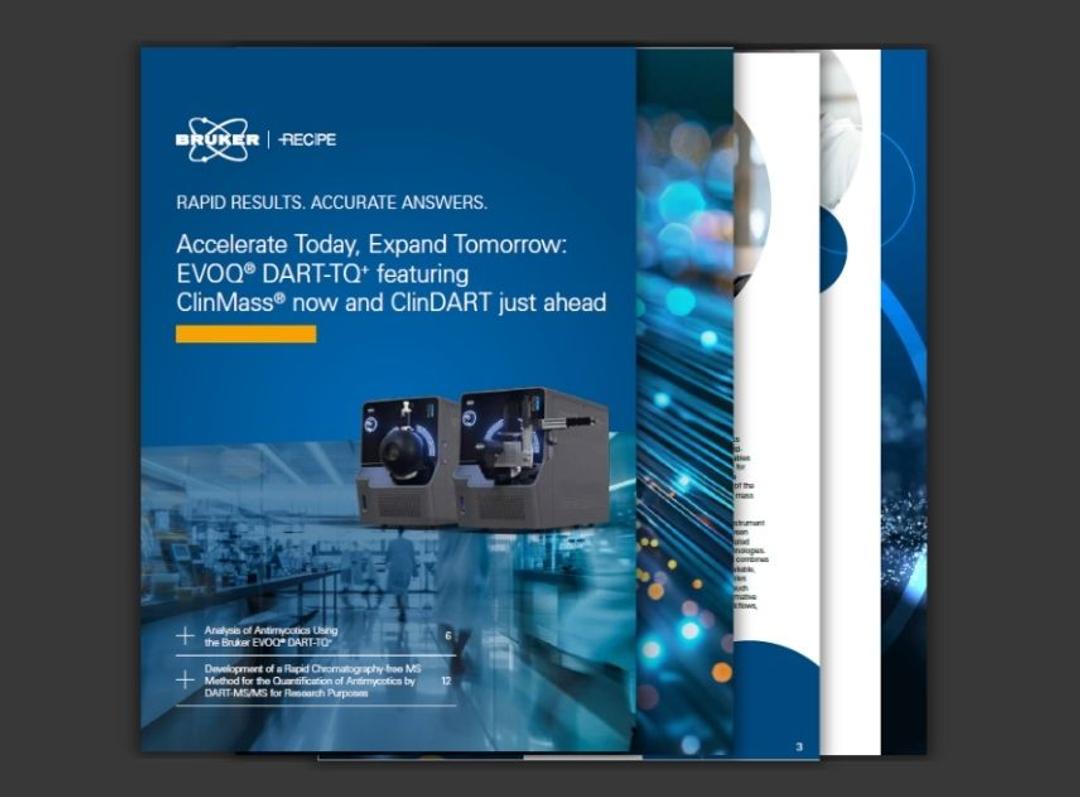
EVOQ DART-TQ+ featuring ClinMass now and ClinDART just ahead
In this application note, discover the EVOQ® DART-TQ+, the only instrument that can switch fast and easily between conventional LC-MS and fully integrated chromatography-free DART-MS technologies. Download this resource to learn more.
Download Bruker application noteRelated resources




Frequently Asked Questions (FAQ)
What is clinical mass spectrometry?
Clinical mass spectrometry (MS) is an advanced analytical technique that measures the mass-to-charge ratio of molecules, enabling highly precise and sensitive detection of biomarkers, metabolites, and therapeutic drugs directly from patient samples.
Why is mass spectrometry important in clinical research?
Clinical mass spectrometry provides unparalleled specificity and accuracy compared to traditional immunoassays, supporting applications such as early disease detection, therapeutic drug monitoring (TDM), and personalized medicine.
What types of mass spectrometry are used in clinical laboratories?
Common clinical mass spectrometry approaches include liquid chromatography–mass spectrometry (LC-MS) and tandem mass spectrometry (MS/MS), which allow multiplexed analysis of complex biological samples.
Which clinical applications benefit most from MS technology?
Key areas benefitting from clinical mass spectrometry include newborn screening, infectious disease identification, endocrinology, toxicology, and cancer biomarker discovery.
How does mass spectrometry support personalized medicine?
By enabling precise quantification of drug levels and biomarkers, MS helps tailor treatments to individual patient needs, improving efficacy and reducing adverse effects.
Are these clinical mass spectrometry technologies approved for diagnostic use?
Unless explicitly stated by the manufacturer, the mass spectrometry solutions featured are intended for clinical research use only, not for routine diagnostic purposes. Mass spectrometers suitable for diagnostic use are FDA approved and/or CE marked and this is clearly stated on the relevant product and product information pages.
What are the main challenges in adopting MS in clinical labs?
Challenges adopting clinical mass spectrometry include instrument cost, workflow complexity, and the need for specialized training. However, automation and integrated platforms are helping overcome these barriers.