
Thermo Fisher Scientific opens cryo-EM center in South San Francisco to speed drug discovery
By offering shared access to instrumentation and experienced cryo-EM scientists, the center allows companies to evaluate and incorporate the technology into existing workflows without building the infrastructure in-house
23 Mar 2026
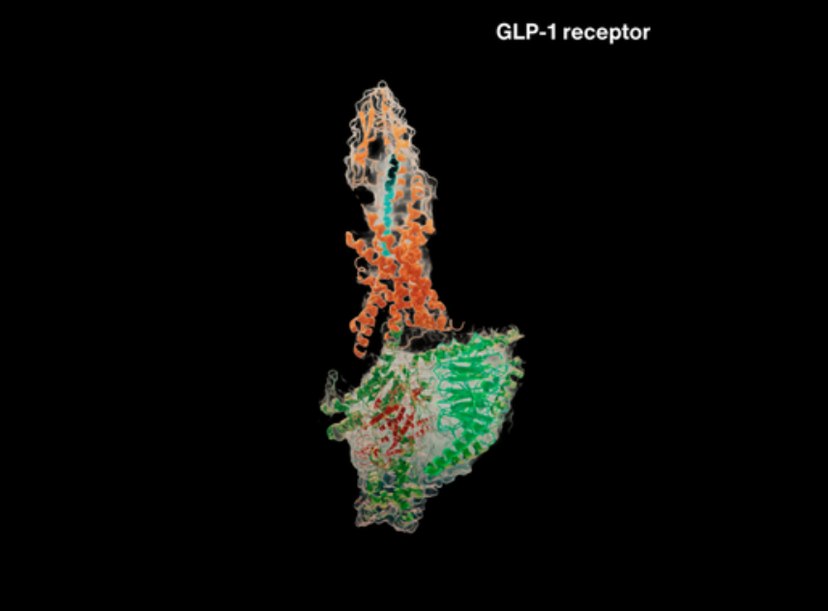
Cryo-EM allows scientists to visualize the three-dimensional structure of biological molecules, including proteins such as this GLP-1 receptor, at near-atomic resolution to accelerate therapeutic development
Thermo Fisher Scientific has opened a Cryo-Electron Microscopy Drug Discovery Center in South San Francisco aimed at helping pharmaceutical and biotechnology companies develop new medicines faster and with greater confidence by integrating high-resolution structural biology into their research programs.
Located in Oyster Point, the heart of the Bay Area’s biotech corridor, the center will provide drug developers with access to advanced cryo-EM instrumentation and scientific expertise, including hands-on support from experienced cryo-EM scientists in a collaborative setting.
It is Thermo Fisher’s second shared-access cryo-EM facility, following the 2016 opening of the UK Pharmaceutical Cryo-EM Consortium in Cambridge, England. The intent of both facilities is to lower the barrier to adopting the powerful but technically demanding technology, according to Thermo Fisher.
Cryo-EM allows scientists to visualize the three-dimensional structure of biological molecules, including proteins, at near-atomic resolution. Cryo-EM is increasingly used in structure-based drug design, a method that relies on detailed molecular maps to guide the development of targeted therapies. Because most drugs work by binding to specific proteins, detailed structural maps can enable researchers to design therapies with greater precision.
According to Thermo Fisher, structure-guided drugs have more than twice the rate of clinical success and reach key preclinical milestones in about half the time and at roughly half the cost compared with industry averages. The company also said cryo-EM expands the range of biological targets that can be studied, including complex or previously intractable proteins.
By offering shared access to instrumentation and experienced cryo-EM scientists, the center allows companies to evaluate and incorporate the technology into existing workflows without building the infrastructure in-house, the company said. The center will include founding customer members as part of a collaborative model previously used in the United Kingdom.
At Thermo Fisher, so much of what we do is grounded in helping our customers bring life-saving medicines to patients faster and more effectively,” said Glyn Davies, president of Materials & Structural Analysis at Thermo Fisher. “The opening of our Cryo-EM Drug Discovery Center creates a collaborative environment where scientists can directly harness the power of cryo-EM to better understand disease at the molecular level and accelerate therapeutic development.”