
Roche receives CE mark for the first IVD immunoassay blood test to identify carriers of ApoE4
The Elecsys ApoE4 test eliminates the need for confirmatory genetic testing in the significant proportion of Alzheimer’s patients who do not carry the ApoE4 variant
18 Mar 2026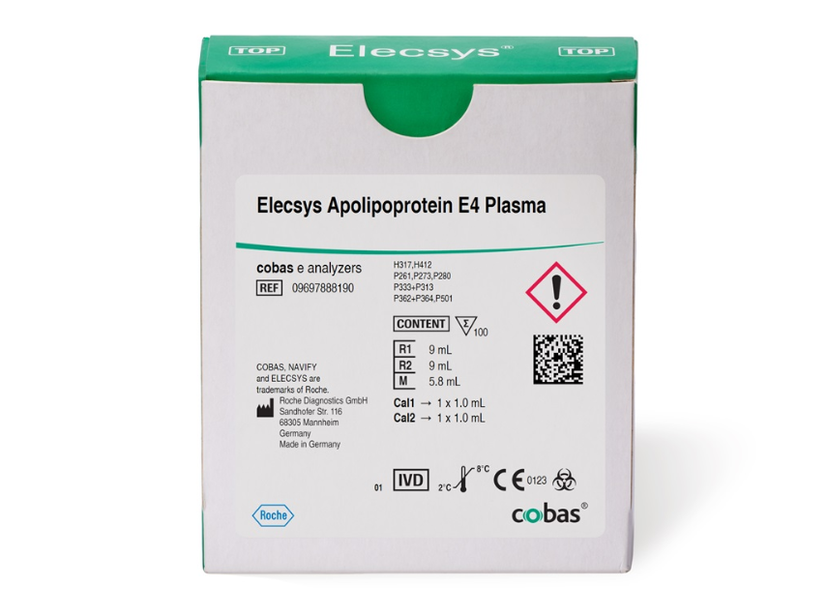
Elecsys® Apolipoprotein E4 biomarker test
Roche has received CE Mark approval for its Elecsys® Apolipoprotein E4 biomarker test – the first in vitro diagnostic (IVD) immunoassay to identify the presence of the ApoE4 gene variant in the bloodstream.
The ApoE4 gene variant is associated with an increased risk of late-onset Alzheimer’s disease, and is present in approximately 40–60% of Alzheimer’s patients1. Until now, confirming ApoE4 carrier status in Alzheimer’s patients has relied on molecular DNA testing.
The Elecsys ApoE4 test offers a simple, fast and reliable option, using a minimally-invasive blood sample, to identify whether an individual carries the ApoE4 variant. This allows reliable and efficient filtering of non-carriers, reserving genetic testing for patients who need it most.
For those identified as carriers, follow-up genetic testing can confirm their status and provide more detailed insights. This will be essential as the use of current disease-modifying therapies (DMTs) is influenced by a patient’s genetic profile.
The Elecsys ApoE4 test works alongside Roche’s other blood-based Alzheimer’s disease biomarkers, including the recently CE-marked Elecsys pTau181 test, which is designed to assess the presence of key proteins associated with Alzheimer’s disease. Together, these biomarkers provide valuable insights across the diagnostic journey, helping clinicians detect the disease earlier and make informed decisions about patient care after diagnosis.
With only a single blood sample needed, the Elecsys ApoE4 can be integrated seamlessly and efficiently into the diagnostic process. Broad access to testing will exist through the large number of Roche instruments currently available in countries accepting the CE mark, providing a scalable plasma-based solution to support the Alzheimer’s diagnostic pathway.
“The approval of the Elecsys ApoE4 biomarker test is an important step forward in providing clinicians with a simple, accessible tool to identify genetic risk and guide Alzheimer’s treatment decisions,” said Matt Sause, CEO of Roche Diagnostics.
“By helping clinicians quickly identify and triage ApoE4 carriers among patients with cognitive decline, the test simplifies the diagnostic process as well as patient management.”
References
1. Crean S., Ward A., Mercaldi C.J., et al. Apolipoprotein E epsilon4 prevalence in Alzheimer's disease patients varies across global populations: a systematic literature review and meta-analysis. Dement Geriatr Cogn Disord. 2011;31(1):20-30. doi:10.1159/000321984 - Accessed in March 2026.