
Optoscan monochromator - The epi-illumination device of choice
10 Feb 2006The Optoscan monochromator is the epi-illumination device of choice for researchers requiring speed and flexibility. It is still the only instrument of its type to offer real-time (<2msec) control of wavelength and bandwidth.
Although most of the core elements of the design have remained unchanged, we have recently refined it further to improve the usability, price and performance. Most obviously we have introduced a model with a holographic 2000 lines/mm diffraction grating which gives greater throughput and lower scatter when selecting relatively narrow bandwidths. This particular grating is optimised for GFP wavelengths, but also has excellent performance for ultraviolet probes such as Fura 2, and longer wavelength markers like Rhodamine. If used in conjunction with a our mercury or mercury / xenon Optoscource light source it is particularly suitable for FRET work as it combines fast (<2msec) switching speed with a useful spectral peak at 436nm, which is ideal for CFP excitation. On the control side we have added a USB interface which is now implemented in several software environments. This reduces cost, by preventing the need to fit a Digital-to-Analogue Control (DAC) card into the host computer, and enables the monochromator to autoconfigure.
Related products
Request Quote for All Products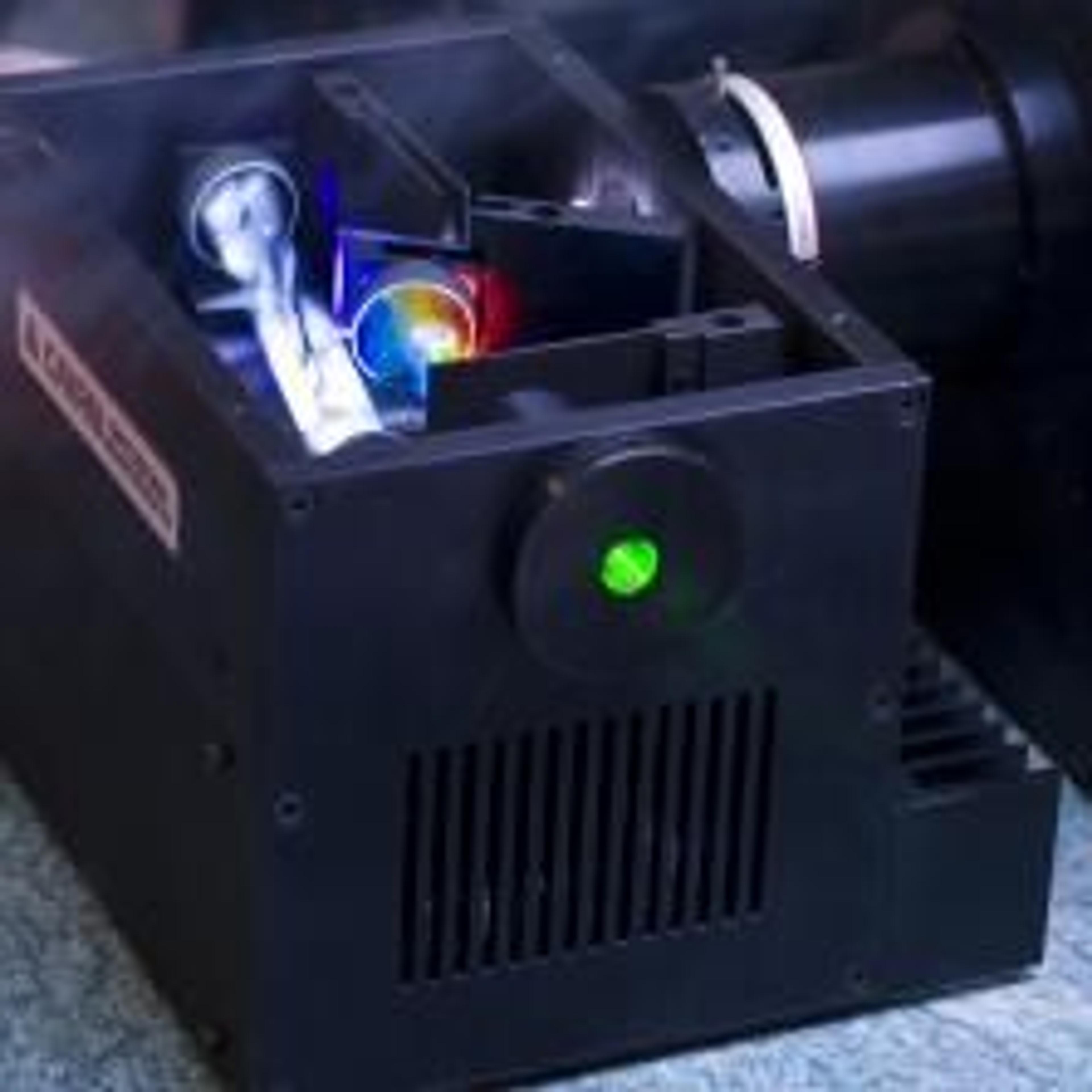
OptoScan Monochromator
Cairn Research LtdThe Optoscan monochromator from Cairn Research is the only instrument of its type to offer control of both centre-wavelength and bandwidth with millisecond time resolution. Combined with Cairn signal processing modules and optical hardware it forms the heart of a powerful and flexible microfluorescence system. Alternatively it can be readily integrated into commercial imaging systems, or custom controlled for bespoke applications. This instrument has been designed specifically with real-time biological fluorescence measurements in mind, but has evolved into a truly versatile laboratory tool. If your application requires fast, flexible and automated illumination control then the Cairn Optoscan may well be the instrument of choice. Other commercial monochromators include the facility to change bandwidth between experiments using a manual control. This is sufficient for many purposes, but is not ideal for complex protocols especially those involving multiple fluorescence markers. Only by controlling bandwidth in real-time during experiments can each excitation wavelength be optimised independently. This means that where Stoke's shifts are large or where fluorescence intensities are weak then a relatively large bandwidth can be selected to maximise signal-to-noise. Conversely if there is a small Stoke's shift or if the fluorescence intensity is high then the slit width can be minimised to reduce bleed through and optimise dynamic range.