
Multiresidue Pesticide Detection in Fruits and Vegetables
Discover how cutting edge new technologies can help with screening foods for pesticides
9 Feb 2017

The European Reference Laboratory for Pesticide Residues in Fruits and Vegetables, a cooperation linking laboratories across Europe, aims to improve pesticide residue analysis Copyright PigginFoto/Shutterstock
In a presentation filmed during NACRW 2016, Professor Amadeo Fernández-Alba, University of Almeria, evaluated the Thermo Scientific™ Q Exactive™ GC Orbitrap GC-MS/MS System for the multiresidue analysis of pesticides in fruits and vegetables. Professor Fernández-Alba heads the European Reference Laboratory for Pesticide Residues in Fruits and Vegetables, a cooperation linking laboratories across Europe, which aims to improve pesticide residue analysis.
Using optimized GC-MS conditions, his team evaluated 210 different pesticides in in easy and difficult SANTE 11945/2015 guidelines, including tomato, orange and leek. The list of pesticides included all of the GC-amenable pesticides in the Multiannual Control Programme in Europe. The electron ionization, full scan, data acquired at 60,000 resolving power, 1-2 ppm mass accuracy, provided quantitation and identification performance similar and in some cases better than GC- triple quadrupole MS systems. Amadeo commented that the Orbitrap GC-MS system routinely achieved detection limits of 10 ppb over a linear range up to 500 ppb, with precision of 20% RSD or less, for the majority of pesticide-commodity combinations, so that the data are essentially in full compliance with the SANTE 11945/2015 guidelines.
Professor Fernández-Alba stated that another benefit to using full-scan acquisition workflows is that the acquired data can be used for both target and non-target data processing. The decision is made after acquisition and is dependent on the software, libraries, and databases used for data processing. Users can either create their own databases using theoretical masses, or use existing libraries such as the NIST library. Non-targeted acquisition allows retrospective analysis and also screening for obsolete pesticides and pesticides for which standard reference materials are extremely expensive or not commercially available. Even pesticide transformation products that are produced by the analytical method can be detected. He concluded that overall the Exactive™ GC Orbitrap™ GC-MS was a robust system and should provide improved efficiency and accuracy of screening workflows in routine laboratories.
Watch the full video or visit the NACRW special feature to learn more.
Leave a product review today to be entered into a prize draw for the chance to win an iPad or $400 Amazon voucher (or equivalent currency).
Related products
Request Quote for All Products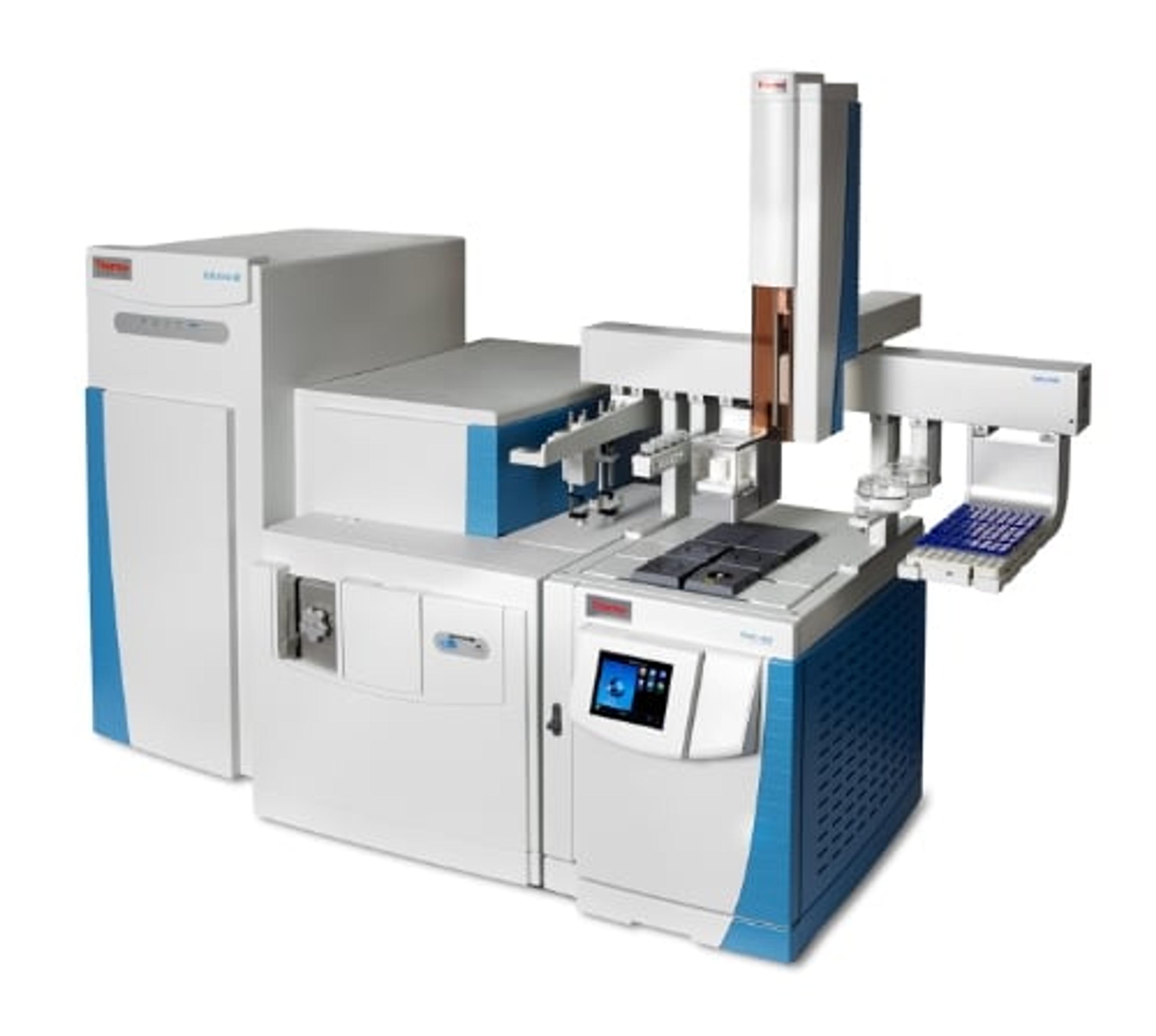
Thermo Scientific™ Q Exactive™ GC Orbitrap™ GC-MS/MS System
Thermo Fisher ScientificThe Thermo Scientific™ Q Exactive™ GC system is the first-ever combination of high resolution gas chromatography with high-resolution/accurate-mass (HR/AM) Orbitrap detection for the most comprehensive sample characterization. This easy-to-use system provides the most comprehensive characterization of samples in a single analysis for the highest confidence in compound discovery, identification, and quantitation. Building upon the flexible modularity of the Thermo Scientific™ TRACE™ 1300 Series GC, including user-exchangeable injectors and detectors, the Q Exactive GC system has the quantitative power of a GC triple quadrupole MS combined with the high precision, full scan high-resolution/accurate-mass capability that only Orbitrap technology can offer. Key Features: Advanced quadrupole technology (AQT) for high transmission of selected masses Resolving power up to 120,000 at m/z 200 Part-per-trillion-level sensitivity Thermo Scientific™ Extractabrite™ ion source for robust, rugged electron impact (EI) and chemical ionization (CI) performance Curved linear C-trap for precise ion injection HCD collision cell for higher energy collisional dissociation provides MS/MS ion characterization Intelligent identification software elucidates the nature of each injected sample. Applications: Untargeted and targeted metabolomics Food and beverage Industrial analyses Environmental Pharmaceutical Clinical and toxicology