
Most Read Articles of 2015
Have you read them all?
12 Jan 2016

Have you read them all?
2015 was an exciting year for SelectScience® – we unveiled our brand new website in March and held the hugely successful Scientists’ Choice Awards®, including the first Reviewers’ Choice Award. From liquid biopsies and ground-breaking drug discovery, it was also a big year for scientific research. Read on for our count-down of the 10 most read articles on SelectScience.net in 2015.
10. Webinar Highlights: Strategies for the Separation and Characterization of Protein Biopharmaceuticals
Protein biopharmaceuticals are being developed at an explosive rate and have attracted great interest from both smaller biotech firms and big pharma. From an analytical perspective, handling biomolecules presents new challenges for chromatographers, and the field of bio-chromatography is advancing rapidly as new and higher resolution techniques for characterizing proteins are evaluated and better understood. In this webinar, Dr Koen Sandra, of the Research Institute for Chromatography discussed the recent analytical work his team have done to evaluate both innovator biopharmaceuticals and biosimilars. Read the highlights from the webinar Q&A session or watch the webinar on-demand here.
9. Revolutionary Open-Access Laboratory Facilitating Innovative Research
At the University of Southampton, UK, Dr John Langley, Associate Professor in Mass Spectrometry, has to keep his lab at the forefront of separation science. In this exclusive interview, he explained why he made the change from HPLC to UPLC, and how open access analysis has improved research.
8. The Advantages of Reaction Monitoring by NMR at Pfizer
NMR has been a standard analytical technique in academia for many years, enabling scientists to confidently understand reactions at a molecular level. But while reaction monitoring is a traditional technique, it has significantly gained popularity in the pharmaceutical industry due to initiatives such as process analytical technology (PAT). SelectScience spoke to David Foley, Principal Scientist at Pfizer, about how he uses NMR to enable reaction understanding in the pharmaceutical industry.
7. Detecting Autologous Blood Transfusion with Clinical Biomarkers
Blood doping refers to the methods, such as autologous blood transfusion, used by athletes to increase the amount of oxygen in their blood stream, leading to enhanced performance. However, legitimate autologous transfusion is also used by patients awaiting elective surgical procedures as a way of reducing the risks associated with receiving blood from someone else. Nicolas Leuenberger, Certifying Scientist at The Swiss Laboratory for Doping Analyses (LAD), a WADA-accredited lab in Lausanne, Switzerland, spoke to SelectScience on a research study on methods of identifying illicit use of autologous transfusions.
6. New Infectious Disease Assay Could Improve Patient Management and Reduce Antibiotic Resistance
MeMed recently announced publication of the results of a large multicenter prospective clinical study that validates the ability of its ImmunoXpert™ in vitro diagnostic blood test to determine whether a patient has an acute bacterial or viral infection. Sonia Nicholas, SelectScience's Clinical Editor, spoke to MeMed co-founder, Eran Eden, to find out more.
5. The Changing Face of the Clinical Microbiology Lab: Introducing IRIDICA
If there is one area of infectious disease diagnostic science that has been largely overlooked in recent decades, then it has to be clinical microbiology. Blood culture and manual processing still reign in many microbiology labs around the world. However, the modern diagnostic era is ushering in a new age for infectious disease laboratories. SelectScience spoke to Dr Rangarajan Sampath, Senior Director of R&D, Ibis Biosciences, Abbott, about IRIDICA, the new infectious disease diagnostics platform from Abbott.
4. Steve Rees, of AstraZeneca, Discusses Cutting-edge Technologies for Drug Target Validation
As the Vice-President of Screening Sciences and Sample Management at AstraZeneca, Steve Rees has global responsibility for Compound Management, the human tissue Biobank and High Throughput Screening. He spoke to SelectScience’s Editor-in-Chief, Kerry Parker, about the industry’s approach to target validation and the current challenges and opportunities for new technology.
3. My Lab Essentials: ‘The Swimming Professor’ Andreas Fath
My Lab Essentials, the ‘Swimming Professor’, Prof Dr Andreas Fath, from the University of Furtwangen, Germany, spoke to SelectScience about his novel research into the electrochemical degradation of water contaminants and the equipment that is vital to his work. You can also read the rest of our My Lab Essentials series here.
2. Parts 1 and 2: MALDI-TOF and the Clinical Microbiology Laboratory
SelectScience spoke to Dr. Robert Jerris, Director of Clinical Microbiology at the Children’s Healthcare of Atlanta Pediatric Hospital, who discussed his experiences in implementing and using the MALDI Biotyper for clinical diagnostics use. In part one of this interview, Dr Jerris explained how this technology is a ‘game changer’ for the clinical laboratory, revolutionizing the microbiology lab and enhancing patient care. In part two, Dr Jerris talked about the challenges and hurdles of integrating MALDI-TOF, and its impact on patient care.
And finally, our most read article of 2015 is….
Researchers from the Medical University of Vienna presented a scientific poster at the American Association of Cancer Research Annual meeting, detailing a protocol combining the novel microfluidic Parsortix™ technology with qPCR, enabling molecular analysis of circulating tumor cells (CTCs) implicated in ovarian and breast cancer and allowing the implementation of ‘liquid biopsies’ in cancer detection studies and as a companion diagnostic in clinical trials. Prof. Robert Zeillinger, Head of the Molecular Oncology Group, Medical University of Vienna, met Kerry Parker of SelectScience to explain more.
Look out for more exclusive interviews and articles from our expert editors coming in 2016!
Related products
Request Quote for All Products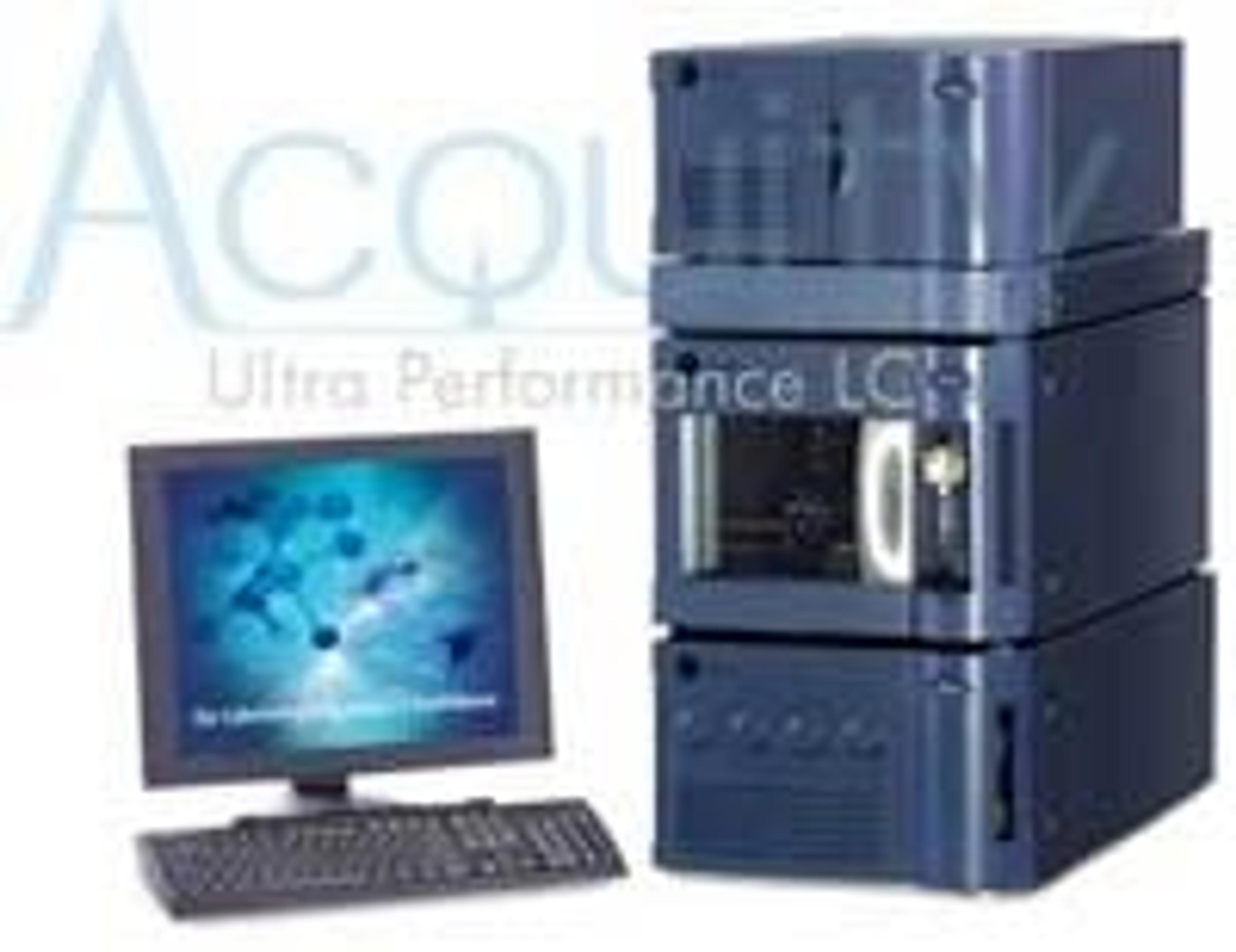
ACQUITY UPLC System
WatersWaters ACQUITY UPLC - Dramatic Improvements in Speed, Sensitivity and Resolution Whether you work in methods development or quality assurance, in drug discovery and development or testing for safety in food supplies, you seek a productivity edge. With the ACQUITY UPLC® System, now you can get more information in a single, short run than you've ever seen with HPLC. Waters ACQUITY UPLC System UltraPerformance LC® (UPLC®) technology starts with unique 1.7 μm small-particle chemistries. Chromatographers no longer need to choose between speed and resolution–with UPLC you get both. Instrument Designed for Chemistry; Chemistry Designed for the Instrument The ACQUITY UPLC System has been holistically designed to match the performance needs of our innovative column chemistries with robust hardware, easy-to-use software and specialized support services. Small, pressure-tolerant particles High-pressure fluidic modules Minimized system volume Negligible carryover Reduced cycle times Fast response detectors Integrated system software and diagnostics With UPLC you have the ability to work more efficiently with higher speed, sensitivity and resolution at a much wider range of linear velocities, flow rates and backpressures to obtain superior results. The Waters ACQUITY UPLC System's high-pressure fluidics optimizes flow rates to make the most of small particle technology. The ACQUITY UPLC System's sample-handling design is designed to ensure exceptionally low carryover and reduced cycle time. And when interfaced with the Sample Organizer, it increases unattended sample capacity by ten times. High-speed detectors, both optical and mass, contribute to increased sensitivity and help manage the heightened speed and resolution requirements of UPLC. ACQUITY UPLC Systems are easily controlled, diagnosed, and monitored via a graphical system console interface. The console offers: Quick and easy access to critical instrument parameters Simple system start-up, elegant system status monitoring and predictive performance indicators to ensure maximum productivity Data management capabilities that are supported by both MassLynx™ and Empower™ software The ACQUITY UPLC System is also supported by Intelligent Device Management technology with our Connections® INSIGHT™ service, providing instrument diagnostics.
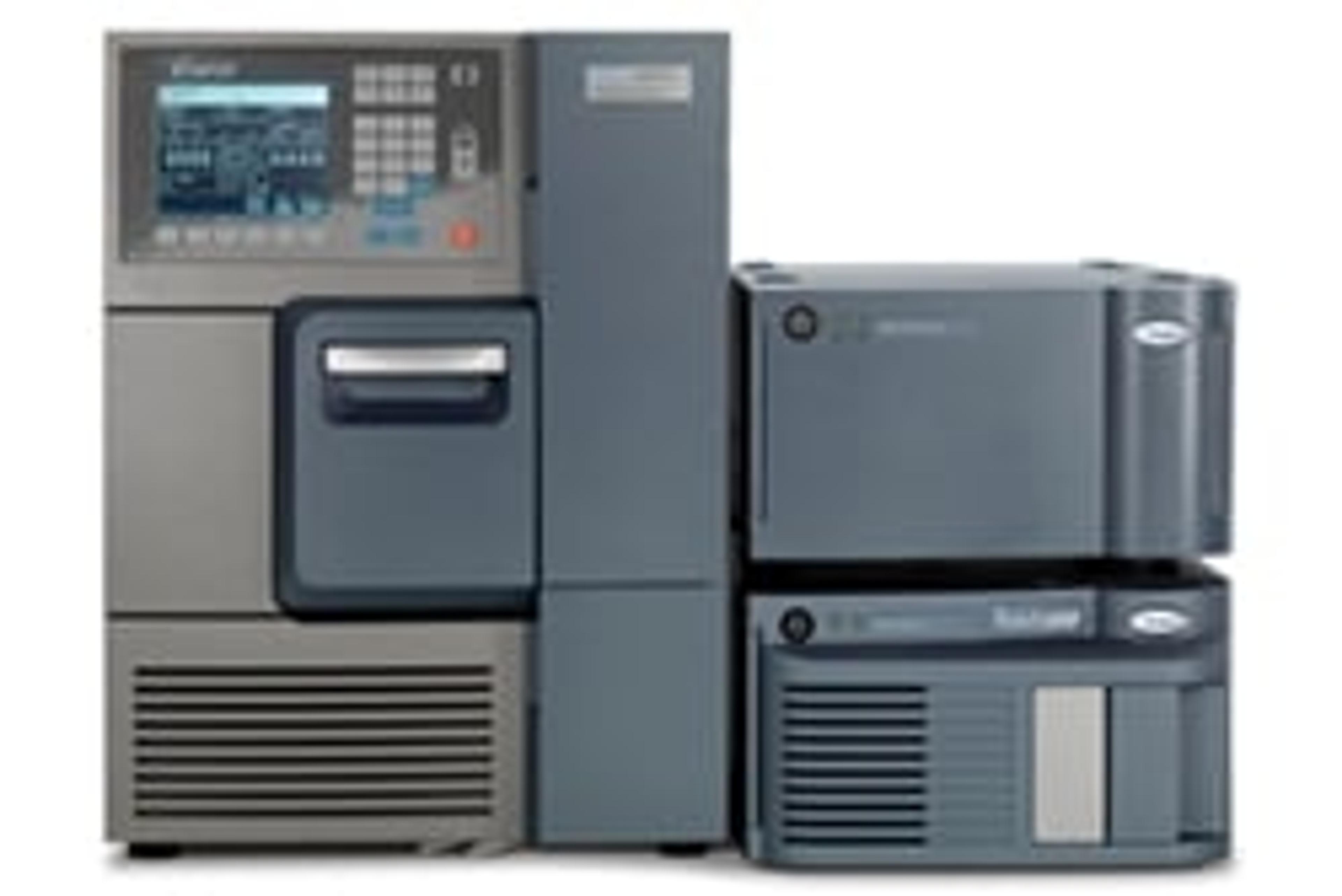
Waters Alliance™ HPLC System
WatersAn integrated HPLC system that works as hard as you do, available with push-button mass detection for the chromatographer. The Alliance™ HPLC System is the flexible and reliable workhorse that meets your fundamental HPLC separation requirements. The system has been continually expanded and perfected to accommodate an enormous range of real-world analytical challenges, culminating in today’s new industrial design which signifies Waters’ commitment to HPLC and our HPLC line. Today, users can extend the Alliance HPLC System’s performance with XP 2.5 µm Columns. XP Columns are compatible with both HPLC and UPLC technology and are designed to not only improve our HPLC productivity, but also facilitate a transfer to UPLC Technology platforms as well. Directly scalable between UPLC and HPLC particle sizes, these new 2.5 um XP Columns bridge the gap between HPLC and UPLC performance. Whether your lab analyzes samples in the pharmaceutical, chemical, food safety, environmental, or quality control arenas, the Alliance HPLC system offers you a field-proven solution. Integrated solvent and sample management to ensure consistent system-to-system performance and high reproducibility. Waters Alliance™ HPLC System Features: Full integration with either Empower® or MassLynx® Software for instrument control and data processing A large, intuitive LCD-based user interface allows rapid system set-up through SystemPREP routines that streamline daily start-ups Easy, tool-free maintenance resulting in maximized uptime Waters complete line of detection technologies – from routine UV/Vis detectors, to the ACQUITY QDa Detector to single, tandem and triple quadrupole mass spectrometers - extend your application capabilities