Microbiological risk in complex food supply chains

Navigating the complexities of food safety in a global supply chain

21 Feb 2024

Will Thompson
Editorial Assistant

Industry news

sewardlogo2024

Microbiological food safety relies on the skill and vigilance of producers at every stage of the supply chain. The food industry supply chain reaches back to the farms that are the primary producers of food through to the development labs, processing factories and retailers. Within this chain are critical control points providing the opportunity to catch contamination with processes in place that prevent these issues reaching our dinner tables. But the food supply chain is a complex web often crossing international borders.

Food microbiologists must invest in the latest technologies and techniques, and a key aspect of this the need for a decent representative sample. If the sample is not representative then the result is going to be flawed.

Seward Limited, the manufacturer of the Stomacher® lab blenders, is involved in several development projects for existing and new techniques in food microbiology. The viability of the sample is protected by the blending process of the Stomacher lab blenders. The machines operate at a maximum of 600 paddle strikes per minute, imparting a powerful blending action to the sample ensuring maximum homogeneity is achieved. This action prevents damage to the bacteria contained within, compared to other blending methods.

Offering a volume sample range from 250 µL to 4500 mL, Stomacher lab blenders, in particular the 400, 400EVO and 3500 can be used daily in food safety testing, producing accurate, repeatable results.

Stomacher® is a registered trademark of FermionX Ltd.

Want the latest science news straight to your inbox? Become a SelectScience member for free today>>

Seward Stomacher® 400 EVO Eco blender bags

Seward Ltd

Reduce your laboratory's plastic usage and waste disposal costs with our Seward Stomacher® Eco sample bags. Smaller bags (30% smaller than standard sample blender bags), same results, same Seward quality of sample preparation. Suitable for volume sample sizes 80ml – 400ml and for use exclusively with the Seward Stomacher® 400 EVO blender.  
(0)

Seward Stomacher® 400 Circulator lab blender

Seward Ltd

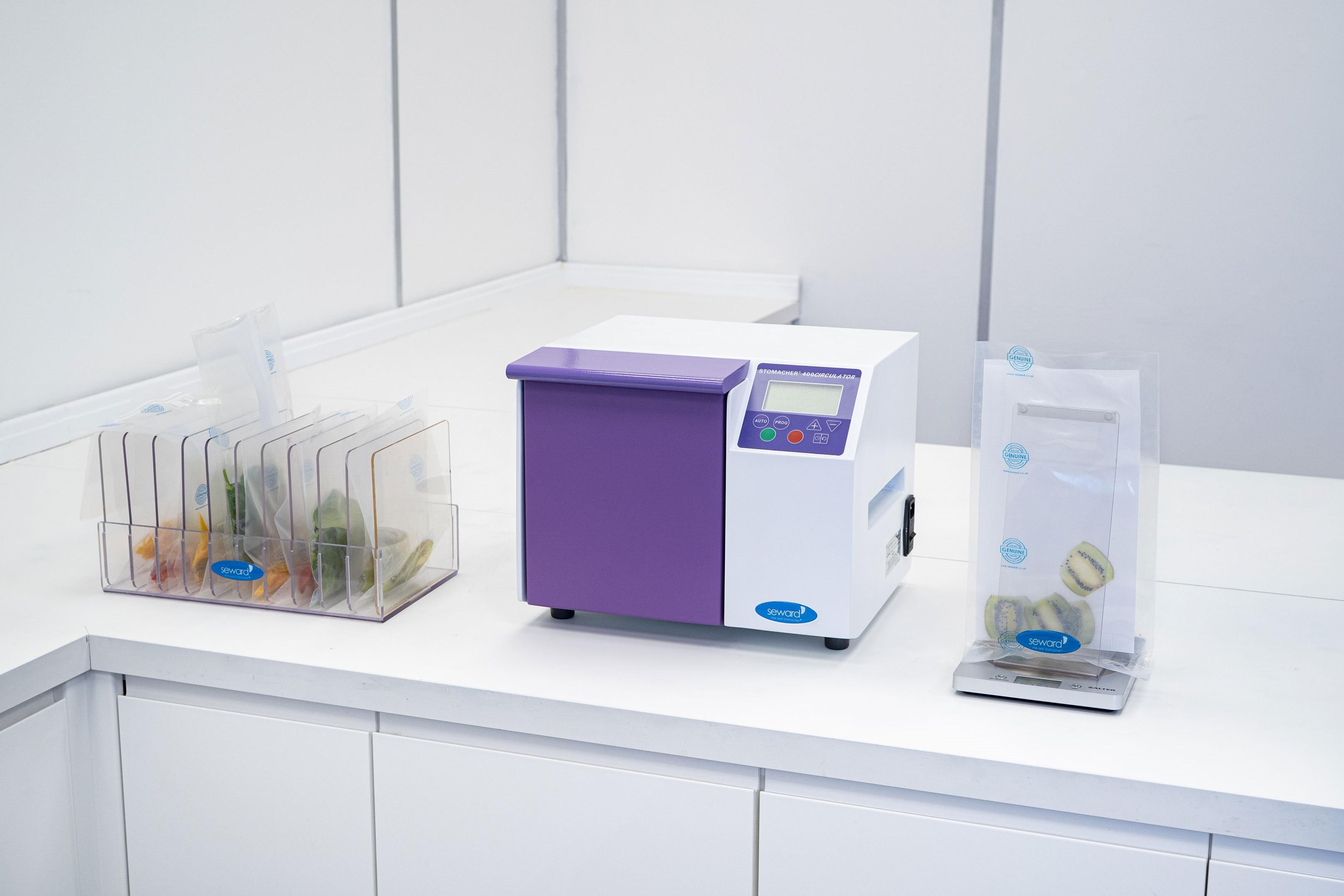
 The Seward Stomacher® 400 Circulator is the gold standard in laboratory blenders.  Used daily in food safety testing, producing accurate, repeatable results, the Stomacher® 400 Circulator has been at the forefront of food testing protocols for 50 years. Recognised as the ‘work horse’ of the lab, it is the most commonly used model in food microbiology and has continued to establish a reputation in the fields of life sciences and healthcare.

(1)

Links

Tags

PCR and Thermal CyclingPolymerase chain reaction (PCR) kits and thermal cyclers are used for the in vitro amplification of DNA permitting subsequent analysis and experimental procedures. Explore a range of high-quality polymerase, primers and nucleotides or simplify your workflow with a PCR mastermix. Find reverse transcription PCR (RT-PCR) and cDNA synthesis kits for RNA products and libraries. Quantitatively measure the amplification of DNA with real-time PCR (qPCR) and droplet digital PCR (ddPCR) kits and systems, and discover automated PCR setup solutions to increase throughput. Alternative DNA amplification methods also include recombinase polymerase amplification (RPA) kits. Find the best PCR kits and thermal cyclers and purification equipment in our peer-reviewed product directory: compare products, check customer reviews and receive pricing direct from manufacturers.MicrobiologyMicrobiology is the study of microorganisms including protists, prokaryotes, fungi, and, often, viruses. Microorganisms are a useful research tool as genetic vectors and, in immunology, for antibiotic susceptibility testing, cellular biology and genetics. Microorganisms commonly grow readily in incubators with microbial culture media; this can contain chromogenic supplements to differentiate between cell lines. Estimate your culture’s density of microorganisms with colony counters, or screen and select colonies for desirable clones with automated colony pickers. Additionally, equipment is available to monitor environments for the presence of microbes and identify with microbial identification instruments. Find the best microbiology products in our peer-reviewed product directory: compare products, check customer reviews and receive pricing direct from manufacturers.Food and Beverage AnalyzersFood and Beverage Analyzers are commonly used to provide information about the chemical composition, structure and physical properties of food materials.Food and Beverage ProcessingFood and Beverage Processing involves the preparation of food products for further analysis. Typical instrumentation includes blanchers, color sorters, cookers, grinders, and refrigeration. These are used to replicate the processes commonly used in the commercial preparation of food and beverages.Homogenizers and BlendersHomogenizers and blenders are used to homogenize various types of material, including tissue, cells, plants, food, soil, biological and chemical samples for subsequent analysis. Lab equipment for sample homogenization includes handheld and benchtop homogenizers, bead mill, ultrasonic and multiple sample homogenizers, high shear homogenizers and blenders. Homogenizer bead and probe multipacks are available to avoid cross contamination of samples, as well as cooling systems for homogenizing temperature-sensitive samples. Homogenizers are often used in the first step of extraction of DNA, RNA and proteins from tissue and cell samples. Find the best homogenizers and blenders in our peer-reviewed product directory: compare products, check customer reviews and receive pricing direct from manufacturers.Food SafetyFood safety describes the prevention of food-borne illnesses. Contamination with a variety of pathogens can be prevented with adequate temperature control, hygiene and labeling. Food samples can be tested using GC/MS, HPLC, SPE, and qPCR to ensure their adherence to regulations.MicrobiologyLab EssentialsLab essentials include laboratory consumables that are vital to the operation of all laboratories.Food QualityFood quality refers to the attributes of food that influence its safety, nutrition, and taste. Monitoring and ensuring food quality are essential in production to meet health regulations and consumer expectations. Techniques like spectroscopy, chromatography, and microbial testing are used to assess food properties and detect contaminants. Browse our peer-reviewed product directory to find food quality testing solutions; compare products, check reviews, and get pricing directly from manufacturers.