
Lunsumio data shows potential in indolent and aggressive lymphomas
Results highlight the potential of innovative Lunsumio combination regimens to offer improved outcomes for more people with lymphoma earlier in their disease
29 Dec 2025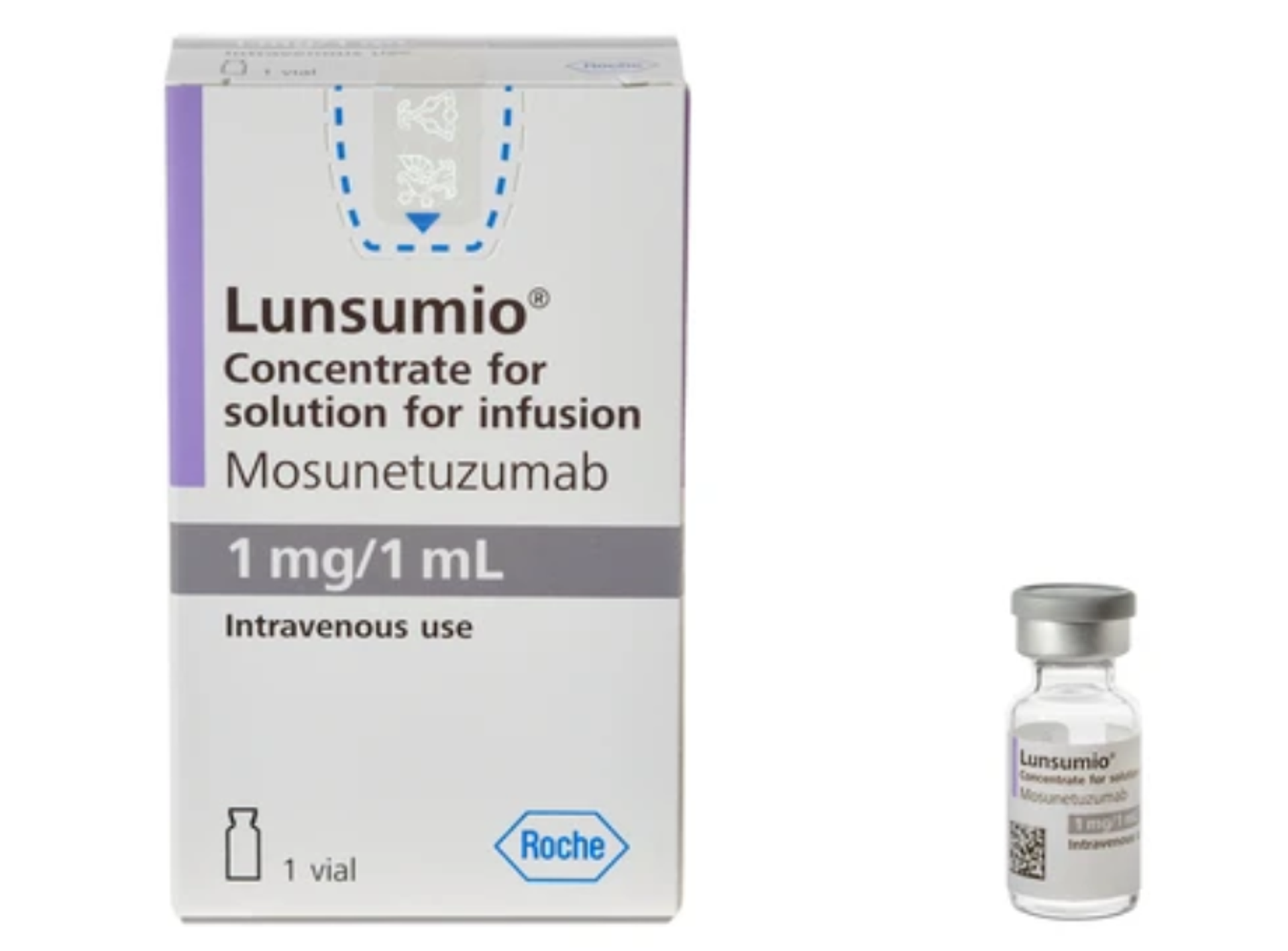
Lunsumio (mosunetuzumab), a CD20xCD3 T-cell engaging bispecific antibody
Roche has announced new data highlighting the potential of Lunsumio® (mosunetuzumab) in earlier treatment lines for people living with different types of lymphoma, presented at the 67th American Society of Hematology Annual Meeting and Exposition 2025 in Orlando, Florida, US.
Preliminary data support the potential for Lunsumio in combination with lenalidomide in relapsed or refractory (R/R) follicular lymphoma (FL)1. First data from the single-arm US extension of the phase III CELESTIMO study, in 54 patients, demonstrated promising efficacy with this two-drug regimen in people with second-line or later (2L+) FL, including a complete response (CR) rate of 87.0% (95% confidence interval [CI]: 75.1–94.6)1.
Cytokine release syndrome (CRS) events were reported in 27.8% of patients, and were predominantly low grade (Grade (Gr) 1: 22.2%; Gr 2: 3.7%; Gr 3: 1.9%), with all CRS events resolved1. Neutropenia occurred in 40.7% of patients, and infections occurred in 57.4% of patients1.
These results indicate the potential of this combination to deliver meaningful outcomes earlier in the disease course. Primary analysis of the pivotal phase III CELESTIMO study is anticipated in 2026.
Lunsumio plus Polivy® (polatuzumab vedotin) data demonstrate meaningful improvements for people with R/R large B-cell lymphoma (LBCL)2,3. Long term follow-up data from the phase Ib/II GO40516 study demonstrated sustained improvements in patients treated with Lunsumio subcutaneous (SC) in combination with Polivy compared to those treated with MabThera®/Rituxan® (rituximab) and Polivy in people with 2L+ LBCL2.
The overall response rate (ORR) was 77.5% (95% CI: 61.6–89.2) vs 50.0% (95% CI: 33.8–66.2) and median progression-free survival was 25.4 (95% CI: 9.2–not evaluable) vs 6.4 months (95% CI:4.7–18.6)2. No new safety signals were identified. AEs included neutrophil count decreased/neutropenia (40%), febrile neutropenia (2.5%), infections (45%), and peripheral neuropathy (10%)2.
Patient-reported outcomes from the phase III SUNMO study investigating the same combination, demonstrated benefits across multiple aspects of health-related quality of life measures in comparison to MabThera/Rituxan with gemcitabine and oxaliplatin particularly in maintaining or improving physical functioning, fatigue, lymphoma symptoms and peripheral neuropathy3.
Results from these studies highlight the potential of this outpatient combination to prolong remission and improve outcomes for people living with this aggressive disease, without the need for conventional chemotherapy2,3.
Long-term follow-up data show sustained responses with fixed-duration Lunsumio SC and intravenous (IV) in third line or later (3L+) FL4,5. Five-year follow-up data from the pivotal phase II GO29781 study, the longest reported follow-up for a CD20xCD3 bispecific in R/R FL, showed durable remissions with Lunsumio IV, with a 5-year overall survival rate of 78.5% (95% CI: 69.6–87.4) and 54-month duration of CR rate (DOCR) of 52.0% (95% CI: 36.1-67.9)4.
Furthermore, three-year follow-up data demonstrated durable responses with Lunsumio SC with an ORR of 74.5%, CR rate of 62.8%, and 30-month DOCR of 53.0% (95% CI: 38.7-67.4)5. No new safety signals were observed in either study.
Lunsumio monotherapy is approved in over 60 countries for people with FL who have received at least two prior systemic therapies, with ongoing discussions with additional health authorities worldwide.
Lunsumio SC was recently approved by the European Commission for FL after two or more lines of systemic therapy. A decision from the US Food and Drug Administration is expected soon.
Lunsumio, along with Columvi® (glofitamab), is part of Roche’s industry-leading CD20xCD3 bispecific antibody portfolio. Continuing to explore new formulations and combinations of these medicines across different disease areas and lines of treatment is part of Roche’s commitment to improve the patient experience and provide more choice to suit diverse patient and healthcare system needs.
“These data underscore the potential of Lunsumio to support more people living with lymphoma, building on the clinical benefit observed in later-stage follicular lymphoma,” said Levi Garraway, MD, PhD, Roche’s Chief Medical Officer and Head of Global Product Development.
“Moreover, the combinatorial potential of Lunsumio is evident in the two-drug regimens presented, which may enable outpatient treatment while preserving deep and durable efficacy,” he added.
References
1. Sano D, et al. Promising response rates and manageable safety with mosunetuzumab plus lenalidomide (Mosun-Len) in patients with relapsed/refractory (R/R) follicular lymphoma (FL): US extension cohort from the Phase III CELESTIMO study. Presented at: ASH Annual Meeting 2025, USA. Abstract #1800.
2. Ghosh N, et al. Long-term follow-up with sustained progression-free survival (PFS) benefit after subcutaneous (SC) mosunetuzumab in combination with polatuzumab vedotin compared with rituximab plus polatuzumab vedotin in patients with relapsed or refractory (R/R) B-cell non-Hodgkin lymphoma. Presented at: ASH Annual Meeting 2025, USA. Abstract #1020.
3. Budde E, et al. Improvements in health-related quality of life (HRQoL) in the SUNMO study: Subcutaneous (SC) mosunetuzumab plus polatuzumab vedotin (Mosun-Pola) vs rituximab, gemcitabine and oxaliplatin (R-GemOx) in patients with relapsed/refractory (R/R) large B-cell lymphoma (LBCL) after at least one prior therapy. Presented at: ASH Annual Meeting 2025, USA. Abstract #5509.
4. Budde E, et al. Fixed treatment duration mosunetuzumab continues to demonstrate clinically meaningful outcomes in patients with relapsed/refractory (R/R) follicular lymphoma (FL) after ≥2 prior therapies: 5-year follow-up of a pivotal Phase II study. Presented at: ASH Annual Meeting; 2025, USA. Abstract #5352.
5. Assouline S, et al. Fixed-duration subcutaneous mosunetuzumab continues to demonstrate high rates of durable responses in patients with relapsed/refractory follicular lymphoma after ≥2 prior therapies: 3-year follow-up from a pivotal Phase II study. Presented at: ASH Annual Meeting 2025, USA. Abstract #5353.