
Latest Mass Spectrometry News and Interviews
A round up of the latest mass spectrometry related news, interviews and videos from around the world
12 Oct 2016
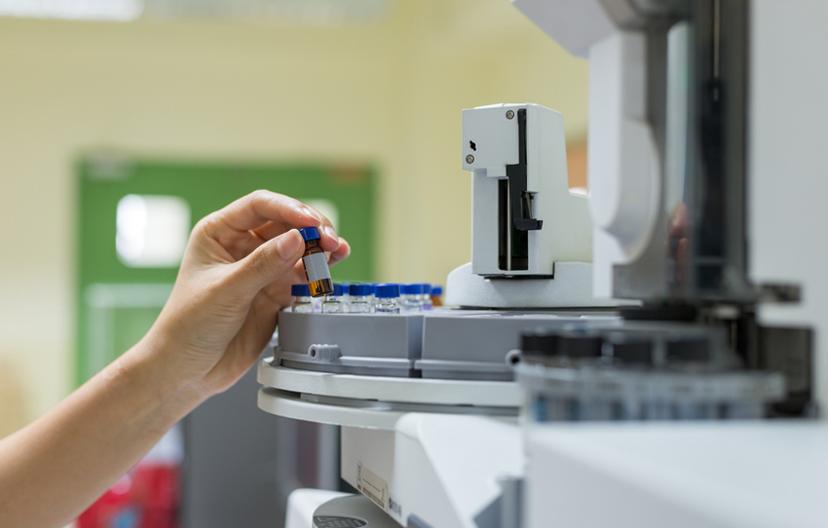
Image:Shutterstock/Pratchaya.Lee
Our exclusive Clinical Mass Spectrometry Special Feature is now live! This article is a round-up of some of the most recent news and interviews published recently on SelectScience®. Learn about the most advanced technologies available and read exclusive interviews with mass spectrometry experts.
1. NEWS: Thermo Fisher Scientific Showcased Advanced Proteomics Research Solutions at HUPO 2016
At the Human Proteome Organization World Congress (HUPO) 2016 in Taiwan, Thermo Fisher Scientific Inc., showcased a range of solutions designed to accelerate innovation and discovery in the most demanding proteomics research applications. The featured technologies were presented at the 15th HUPO World Congress, September 18-22, Taipei International Convention Center.
2. NEWS: GCMS-TQ8050 Triple Quadrupole GC-MS: One of the Highest Sensitivity Levels Worldwide
Shimadzu has released the GCMS-TQ8050 Triple Quadrupole GC-MS. This ultra-high-sensitivity GC-MS/MS system offers both robustness and one of the highest sensitivity levels in the world.
Nicholas Manicke is a mass spectrometry expert and Professor of Chemistry at the Indiana University-Purdue University Indianapolis (IUPUI), U.S. In this interview with SelectScience’s Associate Clinical Editor, Sonia Nicholas, Nicholas discusses the very latest, state-of-the-art technology available for mass spectrometry sample preparation.
4. EXCLUSIVE ARTICLE: Gas Generators Power State-of-the-Art Olympic Technology
Mass spectrometry (MS) analysis is absolutely essential for the accurate and reliable identification of prohibited drugs in the anti-doping fight. But while knowledge of the advantages of MS over immunoassay analysis is increasing, many laboratories remain unaware of the importance of the use of laboratory gas generators.
5. NEWS: Waters Announces New Reference Library for Metabolite Profiling
Waters Corporation has introduced a new metabolic profiling reference library for use during ion mobility mass spectrometry-based research. The Metabolic Profiling CCS Library includes more than 900 measurements of collision cross-section values, which measure the gas phase three-dimensional shape of a molecule for an additional identification coordinate used to confirm analytical results.
6. VIDEO: Mass Spectrometry Enables Top WADA Lab to Beat the Cheats
Professor Francisco Radler, Head of the Brazilian Doping Control Laboratory - LADETEC – UFRJ, discusses the use of state-of-the-art mass spectrometry in the fight against doping. Watch the video to find out how this important laboratory is able to provide the highest quality results and detect the use of prohibited substances in sporting events.
Lewis Couchman, Clinical Scientist at Viapath, based at Kings College Hospital, London, and currently completing a part-time PhD looking at the clinical applications of mass spectrometry, discusses advances in mass spectrometry workflow automation for clinical analysis. Read the interview to learn how evolving technology and advances in sample preparation and separation are enabling clinical laboratories to benefit from the improved efficiency and higher quality results that mass spectrometry can provide.
Related products
Request Quote for All Products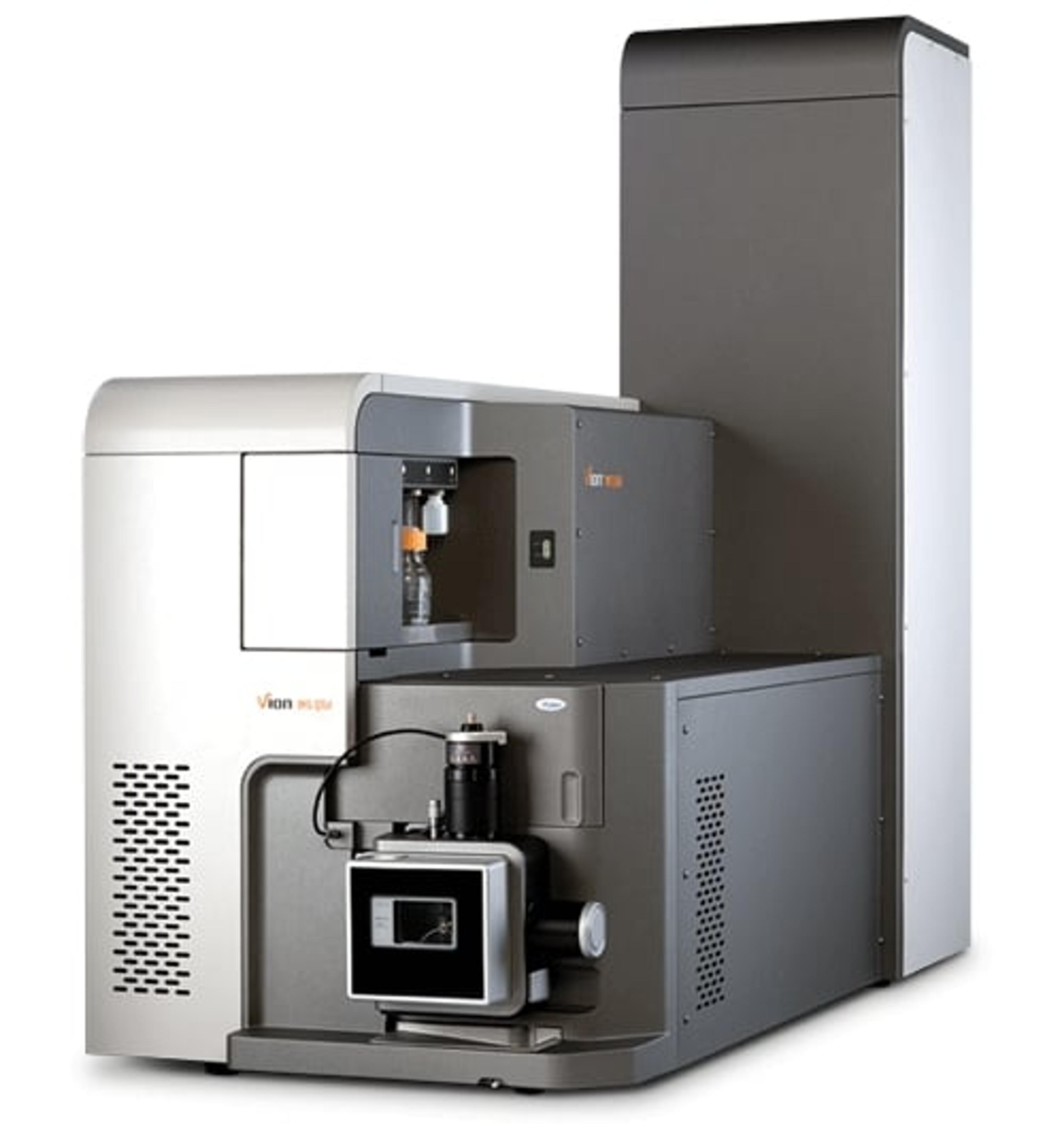
Vion IMS QTof
WatersVion IMS QTof is a high resolution QTof mass spectrometer that delivers the selectivity of ion mobility to every scientist, for every analysis. Does high resolution, accurate mass data always lead to the correct answer first time? Avoid additional confirmatory experiments by utilizing the selectivity of ion mobility. Featuring new geometry and including XS Ion Optics and the QuanTof2 detection system, the Vion IMS QTof has the sensitivity and dynamic range to make ion mobility quantitative and routinely usable, enabling: Easier data interpretation as ion mobility cleans up and simplifies every spectrum Confident identification and quantification of analytes Faster method development and higher sample throughput Greater selectivity than conventional MS/MS with HDMSE With Vion IMS QTof you can use the selectivity of ion mobility to quickly refine spectra and discount chromatographically co-eluting compounds and background interferences. Enabling you to characterize your compounds with confidence. The ability to gather and process CCS data for every ion gives you more confidence in your data than ever before. Vion IMS QTof is driven by UNIFI scientific information system to deliver the most comprehensive analytical workflow, enabling you to target, identify, and review results in a single software platform. Make more informed decisions, faster. CCS provides chromatographic retention time independent data points, enabling confident identification of your analytes and reducing the risk of false positives and false negatives. Even during initial sample analysis, without any retention time knowledge, you can use theoretical exact mass and CCS library values to identify unknown and unexpected components. Applications: Screening - Meeting legislative and regulatory demands requires the utmost confidence in your data. UNIFI informatics workflows integrate the value of CCS, reducing false positives and false negatives driving laboratory efficiency. Pharma - The combination of UNIFI and Vion IMS QTof brings ion mobility to your drug discovery experiments while maintaing ease and efficiency you need for your routine Met ID processes. Omics - A recurring challenge for omics studies is the identification and structural elucidation of metabolites, lipids, and peptides of interest. Incorporating Vion IMS QTof into your workflow gives you not only CSS data from every component, but also increase analytical space and resolution.