
Kuraray launches new PVA (Polyvinyl Alcohol) hydrogel microcarriers for cell cultures
The new scaffolding material promises to be damage-resistant, not generate debris, and enable the safe and efficient culturing of cells
16 Apr 2024
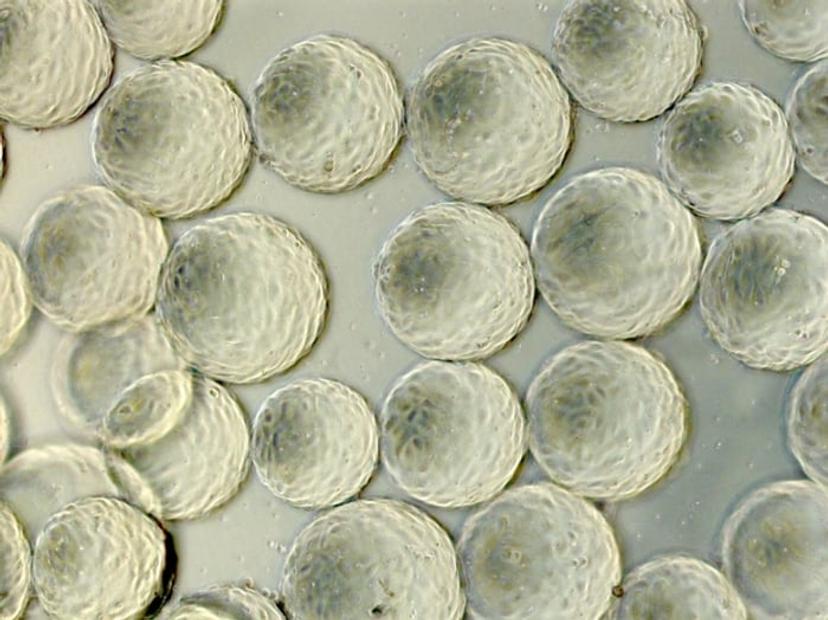
Microscopic image of cells adhered to the PVA hydrogel microcarriers
Kuraray Co., Ltd. has developed PVA (Polyvinyl Alcohol) hydrogel microcarriers for cell cultures used in regenerative medicine. The product was launched in January 2024 in Japan and overseas, beginning in the United States. When the PVA hydrogel microcarriers are introduced into bioreactors used for mass cell culture, cells adhere and proliferate on their surface, enabling the efficient detachment and recovery of the cells. Kuraray's microcarriers have been verified for safety, exhibit higher cell culture efficiency, and promise to resist damage even when stirred in bioreactors.
In recent years, mass cellular culture technologies have been garnering attention amid projections of an expanding market for regenerative medicine and biopharmaceuticals, including vaccines. Because existing microcarriers are mainly used in the manufacturing of biopharmaceuticals, there are few products suitable for regenerative medicine applications, which require strict exclusion of foreign matter and proliferation of stem cells.
Product characteristics
High robustness and safety: Because the material is made of a highly elastic PVA hydrogel, the microcarriers are not damaged even when vigorously stirred in a bioreactor and, as a result, do not generate microscopic fragments. They have cleared quality assurance and safety tests based on good manufacturing practices (GMPs: pharmaceutical manufacturing management and quality assurance standards).
Highly efficient culture: The cells cultured on the PVA microcarriers exhibit high proliferation rates and can be recovered
without enzyme treatment. Therefore, cells for regenerative medicine can be cultured more efficiently than with conventional microcarriers. In addition, because the PVA hydrogel absorbs culture medium and swells, providing a large surface area, the number of microcarriers used can be reduced compared to polystyrene microcarriers.
Excellent cell observability: Because the material is transparent and has a high rate of light transmission, it is easy to observe cells under a microscope.
Want the latest science news straight to your inbox? Become a SelectScience member for free today>>
Related products
Request Quote for All Products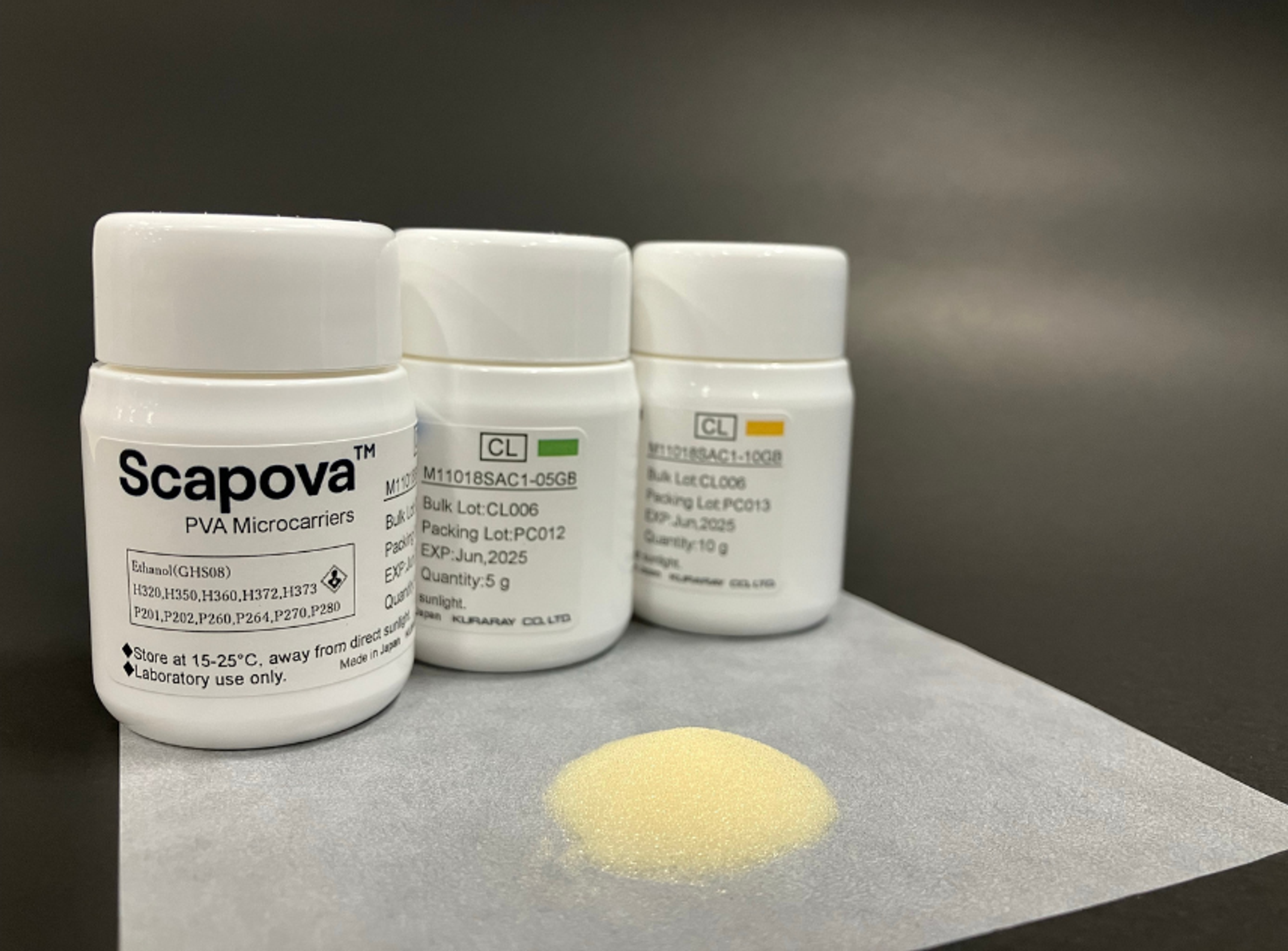
Scapova™ CL PVA Microcarriers 1g
Kuraray Life Innovation Promotion GroupSCAPOVA™ is the brand name of PVA microcarriers that is manufactured by Kuraray. SCAPOVA™ CL has a collagen coated surface. SCAPOVA™ CL has higher cell proliferation than competitors. And due to the robustness of PVA, SCAPOVA™ CL is less likely to break, and there is little contamination during cell collection. All microcarriers are gamma irradiated.
Scapova™ CL PVA Microcarriers 5g
Kuraray Life Innovation Promotion GroupSCAPOVA™ is the brand name of PVA microcarriers that is manufactured by Kuraray. SCAPOVA™ CL has a collagen coated surface. SCAPOVA™ CL has higher cell proliferation than competitors. And due to the robustness of PVA, SCAPOVA™ CL is less likely to break, and there is little contamination during cell collection. All microcarriers are gamma irradiated.
Scapova™ CL PVA Microcarriers 10g
Kuraray Life Innovation Promotion GroupSCAPOVA™ is the brand name of PVA microcarriers that is manufactured by Kuraray. SCAPOVA™ CL has a collagen coated surface. SCAPOVA™ CL has higher cell proliferation than competitors. And due to the robustness of PVA, SCAPOVA™ CL is less likely to break, and there is little contamination during cell collection. All microcarriers are gamma irradiated.