
Enabling Rapid Results for Effective Neonatal Care
The epoc® Blood Analysis System provides the fast and accurate results that clinicians need to make accelerated treatment decisions
25 Apr 2016

Clinicians have to make rapid treatment decisions when dealing with acute neonatal situations
Image:Pixabay
epoc Blood Analysis System The epoc Blood Analysis System is a portable blood analyzer comprised of 3 components: the epoc Reader, the epoc Host mobile computer and the epoc Test Card.
Anyone working with neonates understands the importance of quick and accurate analysis. These tiny patients have different biomarkers from adults, they also have immature immune systems and provide smaller blood samples that are more difficult to acquire. However, with neonatal testing, timing and result quality is often crucial to the wellbeing of the child.
Case Example: London, UK – Gracie*
Gracie was born prematurely. She immediately had trouble breathing, despite the rapid use of an oxygen breathing mask and was whisked off to the NICU. Glucose, oxygen, and electrolytes were quickly analyzed using the epoc® Blood Analysis System and after seeing the results, the doctor was able to give a prompt diagnosis of Persistent Pulmonary Hypertension. Gracie’s rapid results meant that she could receive the treatment she needed and was soon able to be reunited with her parents.
epoc® Blood Analysis System
Such quick testing is made possible by the advanced Smartcard Technology and wireless communication offered by the epoc® Blood Analysis System. This point-of-care testing solution is able to analyze a small sample of blood (92μL) and transfer the results wirelessly to the epoc®Host2 Mobile Computer, in approximately 30 seconds. This almost instantaneous delivery of blood gas, oxygen, and electrolyte results from the patient’s bedside, allows the clinician to make the accelerated treatment decisions that are necessary when dealing with acute neonatal situations.
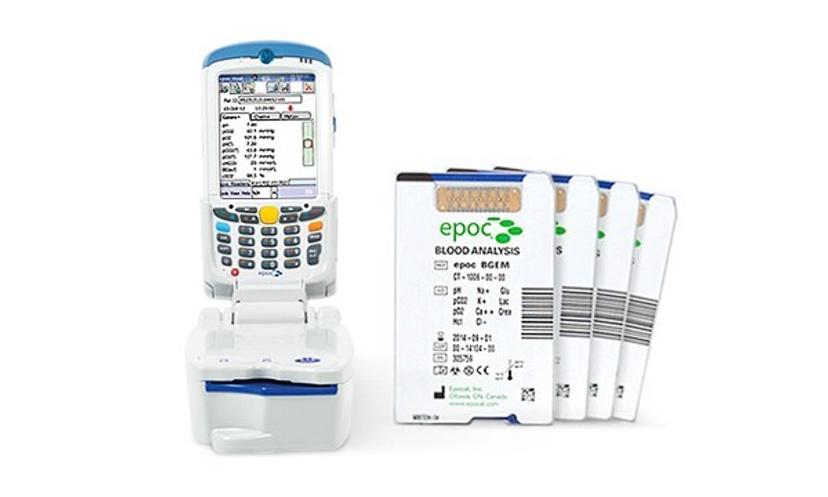
The epoc® System is a handheld, wireless solution used for testing blood gas, electrolytes, and metabolites at the patient’s bedside
epoc® Test menu
The epoc® Blood Analysis System incorporates 11 analytes on a single-use, self-calibrating epoc® BGEM Test Card:
- Measured Parameters:
pH, pCO2, pO2, Na+, K+, Ca++, Hct, Glu, Lac, Crea, Cl- - Calculated parameters:
cTCO2, cHCO3-, BE(ecf), BE(b), cSO2, cHgb, eGFR, eGFR-a, AGap, and AGapK
The test cards can be stored at room temperature, at the patient’s bedside.
The right result at the right time
Sample accuracy is assured by automated, integrated calibration and quality checks. The bedside testing system also reduces or eliminates sample transport, labelling errors and hand-offs.
In a paper published in The Journal of Near Patient Testing & Technology, Shweta Agarwal, MD et al stated “the epoc System uses calibration before sample application to minimize the chances of error and possible redraw of patient.”1
This rapid and accurate technology is already having a significant impact in healthcare settings.
Dave Culton, Clinical Coordinator, Respiratory Care Services, Pinnacle Health System said “in our Respiratory Care department, implementation of POCT using the epoc® Point of Care Blood Analysis System has enabled therapists to obtain blood gas testing results in a fraction of the time it took previously using traditional bench instruments. Pre-analytical sample degradation has been minimized, data entry and transcription errors have been reduced, and operating costs have decreased.”2
Find out more about the epoc® Blood Analysis System.
References:
1. “Evaluation of the Analytical Performance of the Modified Enterprise Point-of-Care Blood Gas and Electrolyte Analyzer in a Pediatric Hospital”. Point of Care - The Journal of Near Patient Testing & Technology, 2014 - Shweta Agarwal, MD,* Rabia Shafi, MD,* Rachel M. Edwards, BS,† Laura Collymore, BS,† and Sridevi Devaraj, PhD, DABCC*†
2. “Using the epoc® Point of Care Blood Analysis System Reduces Costs, Improves Operational Efficiencies, and Enhances Patient Care”. Clarke Woods, BS, RRT, FABC, Director, Cardiopulmonary Services, Pinnacle Health System - Dave Culton, BA, RRT, Clinical Coordinator, Respiratory Care Services, Pinnacle Health System
*The case example is a fictitious patient.