
Dynamic Devices advances automated liquid handling through strategic partnerships and proven workflows
Streamlining complex molecular and clinical workflows with the Lynx® platform and collaborative solutions
19 Feb 2026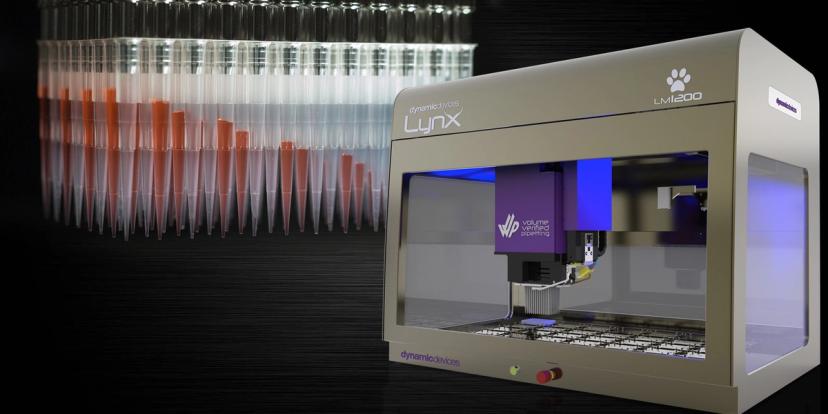
The Lynx® liquid handling platform introduces Volume-Verified Pipetting (VVP), a patented technology that verifies the actual volume transferred in every channel, in real time.
Modern life science laboratories are under increasing pressure to generate high-quality data faster, with fewer hands-on steps and greater reproducibility. From molecular biology and protein science to clinical diagnostics and translational research, automation has become essential, not optional. Dynamic Devices is meeting this challenge by combining advanced liquid handling technology with strategic partnerships that turn complex workflows into reliable, scalable solutions.
At the core of Dynamic Devices’ portfolio is the Lynx® liquid handling platform, engineered to address persistent bottlenecks in high-throughput and large-volume workflows while maintaining accuracy at the individual-sample level.
A platform designed for real-world laboratory complexity
Unlike traditional liquid handlers that rely on predefined liquid classes and averaged behavior, the Lynx platform introduces Volume-Verified Pipetting (VVP), a patented technology that verifies the actual volume transferred in every channel, in real time. This enables Lynx to:
- Detect and correct partial tip blockages or short samples
- Automatically compensate for variable viscosity
- Prevent sub-target transfers before they affect downstream results
- Maintain independent control across up to 96 channels
The result is a system capable of handling debris-containing samples, viscous reagents, and heterogeneous inputs without sacrificing throughput or reproducibility.
Alongside VVP technology, Dynamic Devices’ Multi-Core Pipetting Arm (MCPA) tools offer a flexible approach to liquid handling. With interchangeable pipetting heads, including a unique 5 mL, 24-channel pipetting core and multi-format magnetic rod tools, Lynx consolidates workflows that traditionally require multiple instruments into a single automated platform.
Validated workflows across molecular biology and protein science
Dynamic Devices has demonstrated the Lynx platform across a wide range of applications, including:
- High-speed DNA and RNA normalization (96-well plates completed in under one minute)
- Magnetic bead-based purification with improved yield and reduced wash times
- Automated protein purification, processing up to 24 × 5 mL samples in under one hour with high recovery and purity
- Design of Experiments (DOE) and dose–response setups, enabling rapid, traceable multi-factor screening
These workflows are designed to reduce manual intervention, standardize results across users and sites, and support both discovery-scale and translational research.
Partnership spotlight: Omega Bio-tek
High-volume cfDNA extraction without compromise
One of the most impactful collaborations is Dynamic Devices’ partnership with Omega Bio-tek, focused on automating high-volume circulating cell-free DNA (cfDNA) extraction.
cfDNA workflows are notoriously challenging due to low analyte concentration, fragmentation, and the need for large plasma input volumes. Together, Dynamic Devices and Omega Bio-tek developed a fully automated 10 mL cfDNA extraction workflow using the Lynx platform and Omega Bio-tek’s Mag-Bind® cfDNA chemistry.
Key advantages include:
- No sample splitting, reducing consumables and sample loss
- Automated magnetic bead handling using large-volume MagRod tools
- Comparable or improved yield and purity versus manual extraction
- Walk-away automation suitable for translational and clinical research labs
This collaboration demonstrates how hardware and chemistry partners can jointly remove long-standing barriers to scalability in molecular diagnostics.
Partnership spotlight: RhoDx
Automating ultra-sensitive rare allele detection
Dynamic Devices has also partnered with RhoDx to automate PointSuppressor™ (PSP), a next-generation PCR assay designed for ultra-sensitive rare allele detection.
PSP works by suppressing wild-type DNA during PCR, allowing mutant alleles to be amplified and detected at levels as low as 0.02%, without requiring deep sequencing or complex bioinformatics. When automated on the Lynx platform, the workflow offers:
- Single-tube processing compatible with cfDNA
- Reduced sequencing depth and lower overall cost
- Improved sensitivity compared to conventional NGS-based approaches
- Compatibility with downstream methods, including NGS, Sanger sequencing, and genotyping
Applications span oncology research, non-invasive prenatal testing (NIPT), antimicrobial resistance studies, and transplant monitoring—areas where sensitivity and reproducibility are critical.
Partnership spotlight: Repado
Bridging automation and regulated clinical environments
To support regulated clinical and diagnostic laboratories, Dynamic Devices has partnered with Repado, a certified software provider specializing in FDA, IVDR, and global regulatory compliance.
This collaboration integrates the Lynx liquid handling platform with Repado’s modular SWIS™ software framework, enabling:
- Traceable, auditable workflows for regulated environments
- Instrument control, protocol execution, and data handling aligned with regulatory standards
- Scalable deployment from R&D to clinical production
Together, Dynamic Devices and Repado provide a complete automation ecosystem—combining hardware, software, and compliance readiness—to support diagnostic laboratories transitioning from manual to automated workflows.
Looking ahead: Automation without compromise
Dynamic Devices’ approach goes beyond building a liquid handler; it focuses on solving real laboratory problems through collaboration. By partnering with reagent manufacturers, assay developers, and regulated software experts, the company enables scientists to move faster without compromising data integrity.
As laboratories continue to demand higher throughput, greater sensitivity, and stronger reproducibility, platforms like Lynx, supported by purpose-built partnerships, are poised to play a central role in the future of automated life science workflows.
Want the latest science news straight to your inbox? Become a SelectScience member for free today>>
Related products
Request Quote for All Products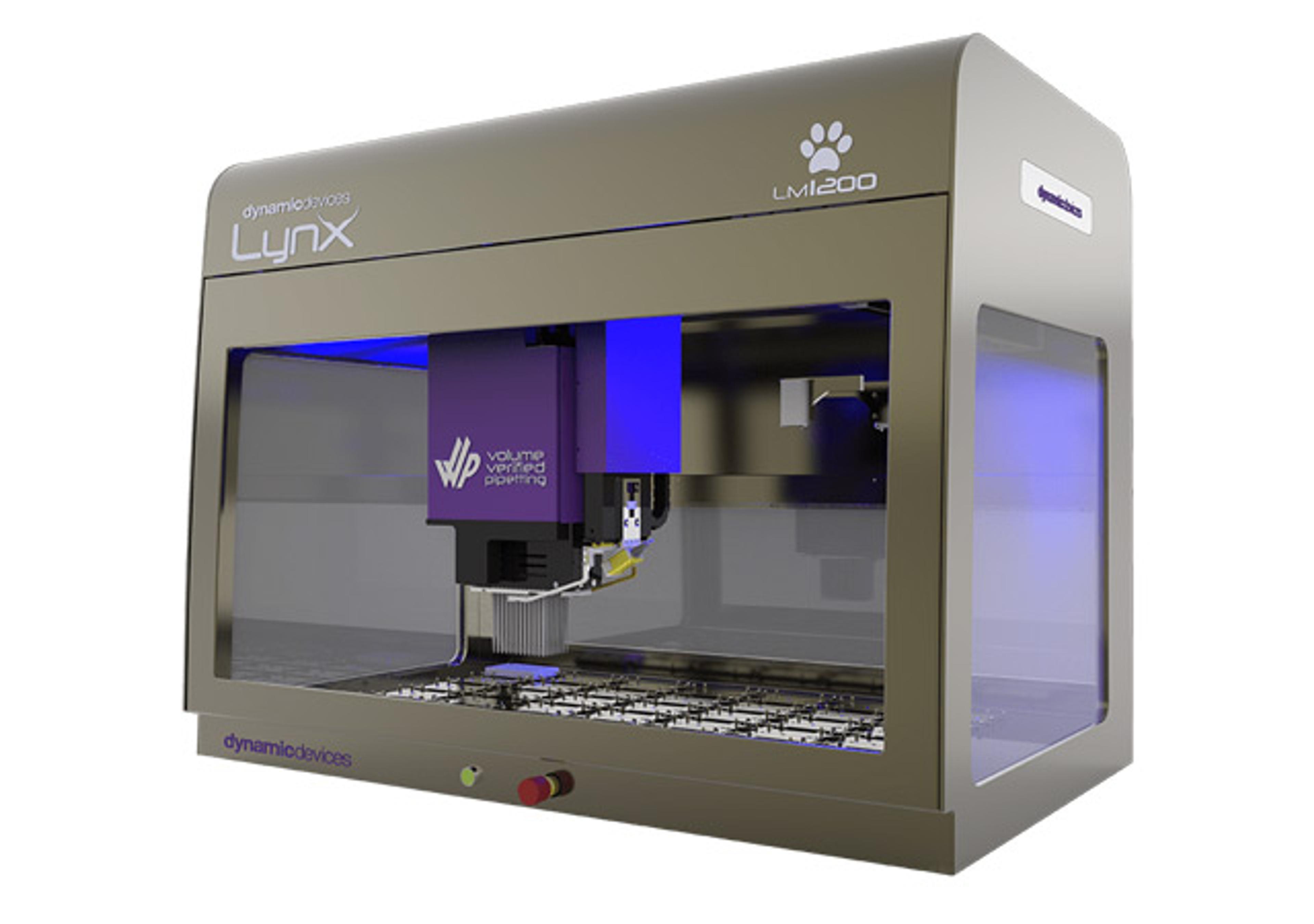
Lynx Robotic Liquid Handling Platform
Dynamic DevicesThe Lynx Robotic Liquid Handler—available in LM1800, LM1200, LM900, LM730i, and LM700 models—features Standard Technology (ST) pipetting tools, rapid on-the-fly tool swapping, and award-winning Volume-Verified Pipetting (VVP). With linear-motor motion and flexible deck designs, it delivers unmatched precision, throughput, and workflow integration.