
Costs and environmental impacts of mechanical ultra-low temperature freezers
Air Products' ULT sample storage freezers are designed to meet the most demanding needs of research and clinical laboratories
25 May 2020
ULT sample storage freezers are a vital part of many bio-banks, clinics and laboratories throughout the world. Air Products offer units that allow for medium to long-term storage of a wide array of biological sample such DNA, RNA, proteins or cell extracts. Despite their ubiquity, sample storage freezers are usually forgotten about until they are needed or worse, fail. This means many people are unaware of the energy costs and environmental impact of their freezer.
How much does it cost to run an ultra-low freezer?
One of the most common types of storage freezer is the upright mechanical or ‘minus 80’ freezer. Often simply called an ‘ultra-low freezer’ or ‘ULT’, these look similar to home freezers, are powered by compressors or motors and they typically use a refrigerant such as ethane (R170) or propane (R290) to function.
A standard upright mechanical freezer can maintain a set temperature of -20°C or -40°C but most will be set at around -80°C. It is possible for mechanical freezers to run colder, but this can put a serious strain on the motor and could lead to failures.
A constant power supply is required to maintain temperatures this low. According to the President and Executive Director of the International Institute for Sustainable Laboratories, Phil Wirdzek, the average ULT freezer consumes the same amount of energy as a single-family home - around 20kWh per day. Considering laboratories and research facilities are usually running dozens, if not hundreds of these units at once, then the running and energy costs can quickly mount up.
The average cost to run an upright, mechanical ULT freezer can vary from £570 ($750) to £750 ($1000) per year, depending on several factors. Regular maintenance and upkeep in the form of defrosting can reduce this cost, but not by much.
These figures do not take into account the additional cost of HVAC systems and the removal of warm air. This can drive the cost up even further and become a serious concern for budget conscious labs and storage facilities. What’s more, the rampant energy usage can have a noticeable environmental impact.
Turning up the heat
One common solution to the financial and environmental cost of ULT freezers is to raise the temperature. Many proponents of smarter, cheaper ULT freezers say that it is unnecessary to run them at such a low temperature. According to them, many types of samples can survive at -70°C, and even an increase of just 10°C can work wonders.
For long-term storage of fragile samples, many argue that even -80°C is not low enough. This is still well above the glass transition point of water (-135°C), the limit at which virtually all biological functions stop. For the most important samples, this is the only way to defend against the natural breakdown of cells.
The other solution to this colossal power drain and environmental nightmare could be to turn the temperature down.
Getting colder
In a variable temperature nitrogen vapor freezer, LN2 is passed through a heat exchange system, the vaporisation energy of the LN2 then cools the freezer. Continuous temperatures between -20 and -150oC are possible with only a 5oC difference in temperature variance from top to bottom. This ensures the protection of even the most fragile cells by slowing biological functions to a crawl far beyond the capabilities of most upright freezers.
Modern nitrogen vapor freezers, such as the MVE Variō™ require a fraction of the power of mechanical units. Under normal use power consumption is just 8W per day or around 1% that of an upright freezer. With the optional battery backup controlling all essential functions, even a lack of power won’t compromise the integrity of stored samples. Assuming your LN2 supply is topped up and power is restored within 72 hours, nitrogen vapour sample freezers could theoretically keep samples frozen indefinitely.
What’s more, there are no additional HVAC considerations due to negative thermal load, and no CFC or HFC refrigerants. When compared to standard mechanical or compressor freezers, LN₂ sample freezers are a boon for both Mother Nature and your wallet.
With increasing efforts within the biomedical and scientific community to reduce environmental impact, could it be time for you to make the switch from a mechanical to a nitrogen vapor sample freezer?
Do you use Air Products in your lab? Write a review today for your chance to win a $400 Amazon gift card>>
Related products
Request Quote for All Products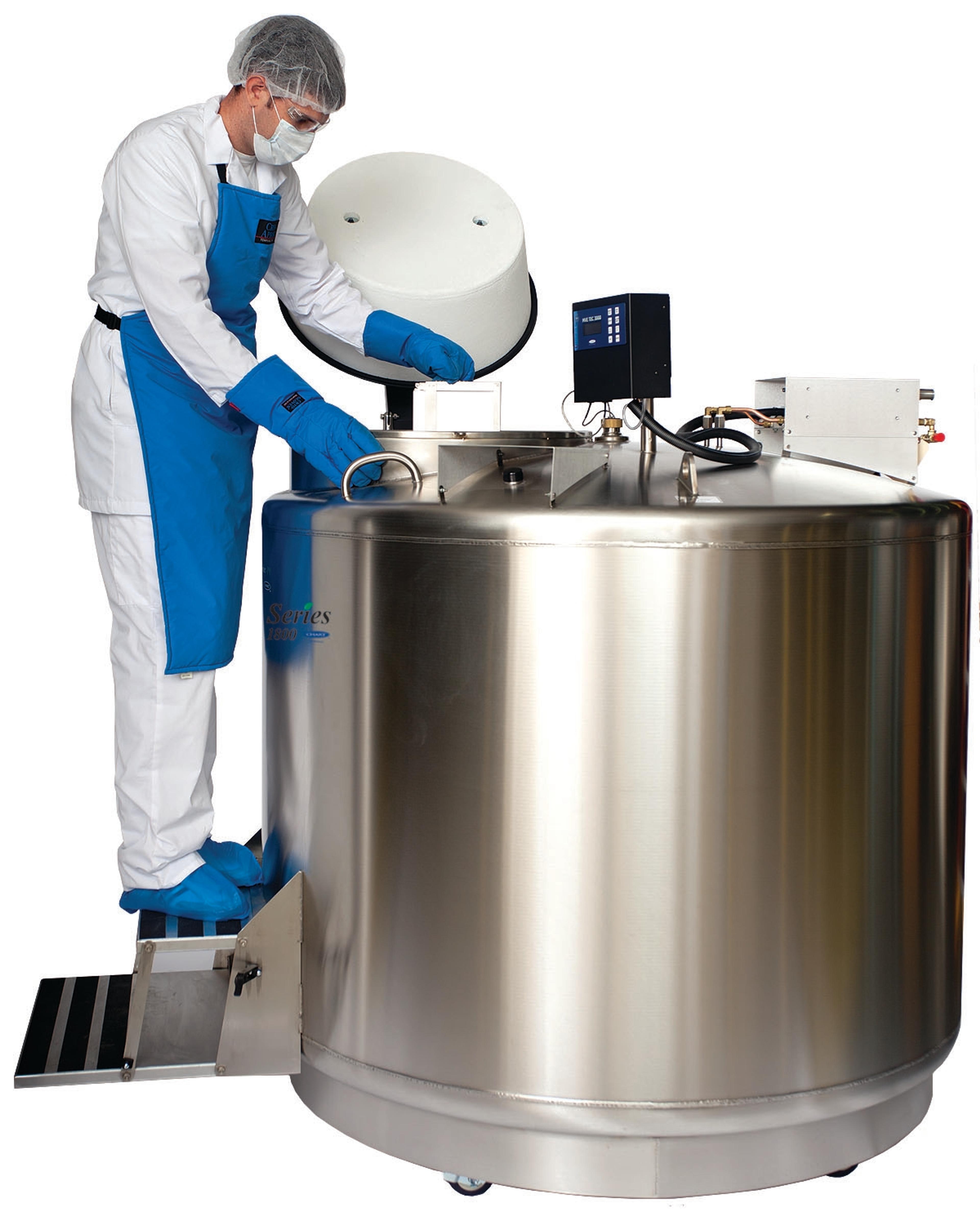
Vario freezer series
Air Products and Chemicals, IncA variable temperature nitrogen vapor ULT freezer and a safer solution to ULT freezers.