
Complete digestion of refractory platinum group metals using single reaction chamber technology
In this guest article from Milestone, discover how SRC technology, with ultraWAVE systems, delivers complete dissolution with high durability, safety, and reproducibility
16 Feb 2026Why is complete digestion of refractory PGMs a critical analytical challenge?
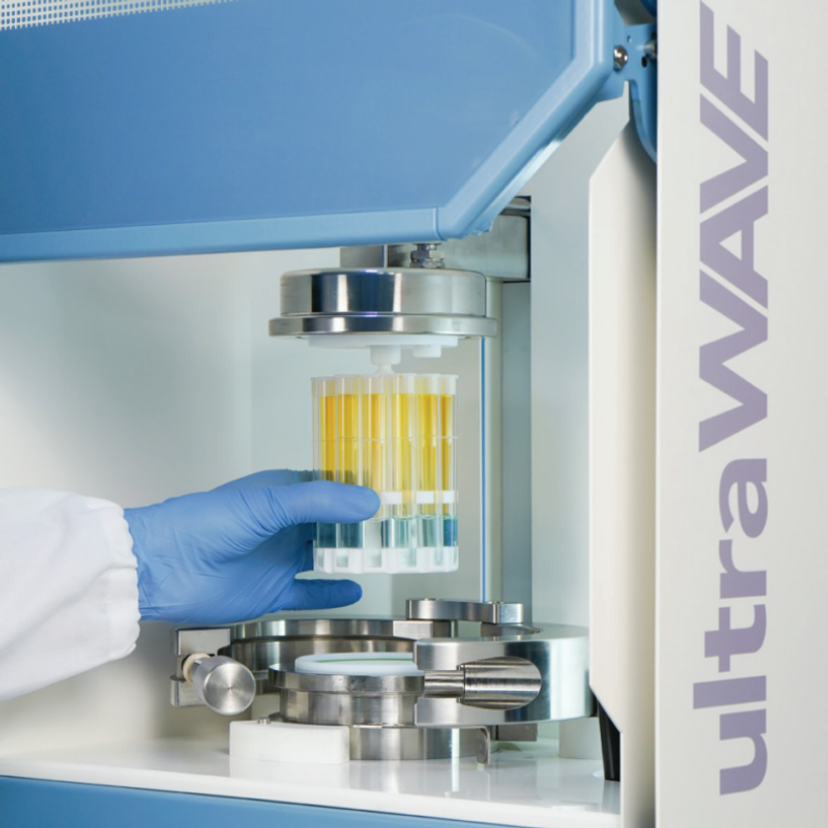
Platinum group metals (PGMs) such as iridium (Ir), ruthenium (Ru), and rhodium (Rh) are essential materials in high-value industrial sectors including catalysis, electronics, advanced coatings, and electrochemical technologies. Their exceptional chemical stability makes complete dissolution a critical and persistent challenge in analytical workflows.
In this guest article, Milestone explores how single reaction chamber (SRC) microwave digestion technology can achieve quantitative digestion (>99.9%) of refractory PGMs under highly aggressive conditions, while maintaining safety, robustness, and reproducibility. The discussion is based on experimental evidence obtained using the ultraWAVE 3 (Milestone SRC digestion unit), with emphasis on practical implications for analytical laboratories.
What makes iridium, ruthenium, and rhodium so difficult to digest?
Ir, Ru, and Rh exhibit extreme resistance to chemical attack. Conventional microwave digestion systems often struggle to reach the combination of temperature, pressure, and chemical aggressiveness required for complete dissolution. Incomplete digestion can lead to poor recoveries, biased analytical results, and increased uncertainty, which is unacceptable for trace and ultra-trace elemental analysis.
An additional challenge is the variability in reactivity among PGMs originating from different production routes or aging histories. As a result, digestion protocols must be sufficiently robust and flexible to accommodate different material forms while minimizing procedural blanks and safety risks.
How does single reaction chamber microwave digestion address these challenges?
Single reaction chamber technology addresses these challenges by processing all samples within a single, pressurized chamber rather than in individually sealed vessels. This technology enables precise and uniform control of temperature and pressure across all samples. The system is designed using chemically resistant materials that tolerate prolonged exposure to aggressive acid mixtures, ensuring consistent performance even under extreme operating conditions.
By combining high temperature and pressure with active stirring, SRC technology enables rapid and complete dissolution of refractory PGMs, while supporting higher sample masses than typically achievable with conventional systems.
Experimental overview
Representative Ir, Ru, and Rh samples from different sources, were subjected to microwave-assisted acid digestion using SRC technology. For oxide materials, a preliminary reduction step was applied to convert the oxides into their metallic state prior to digestion.
Digestion efficiency was assessed using a gravimetric approach, based on the determination of residual solids following mineralization. Multiple reagent systems were evaluated to assess both primary and alternative digestion strategies, with the goal of achieving quantitative dissolution while addressing laboratory-specific constraints related to reagent handling.
What do the digestion results reveal about SRC performance?
The optimized SRC-based digestion protocol achieved complete dissolution (>99.9%) for 250mg of Iridium, 200 mg of Ruthenium, and 500 mg of Rhodium in their metallic forms. In addition, successful digestion was also achieved for 200 mg of rhodium in its oxidized form, representing the only case where an oxide was effectively processed under the optimized conditions.
What are the practical implications for analytical laboratories?
The findings presented in this experiment demonstrate that SRC microwave digestion technology provides a reliable and scalable solution for the preparation of refractory PGM samples.
Key benefits of of ultraWAVE 3 (SRC technology) include:
- Processing of high sample masses of PGMs in a single run and significantly improving detection limits.
- Compatibility with all type of acids, allowing laboratories to select the most appropriate reagents according to their analytical needs and operational constraints.
- Safe operation at very high temperatures and pressures, ensuring efficient dissolution while maintaining the highest safety standards.
These capabilities make SRC technology particularly well suited for laboratories involved in high-accuracy elemental analysis of precious and strategic metals.
What conclusions can be drawn for advanced PGM sample preparation?
Achieving complete and reproducible digestion of refractory PGMs remains a critical requirement for accurate chemical analysis. Single Reaction Chamber microwave digestion technology enables quantitative dissolution of Ir, Ru, and Rh by combining extreme operating conditions with robust system design. As a result, SRC technology represents a powerful and future-proof solution for advanced analytical laboratories dealing with the most challenging inorganic materials.
Want the latest science news straight to your inbox? Become a SelectScience member for free today>>
Related products
Request Quote for All Products
ultraWAVE 3 SRC (Single Reaction Chamber) Microwave Digestion System
MilestoneThe features of the new ultraWAVE 3 merge with those already intrinsic in the SRC technology so that labs will experience higher performance, greater productivity, and more streamlined workflow, providing them with improved competitiveness and a lower cost of ownership. Thanks to its superior digestion capabilities that result from its higher temperature and pressure capabilities, ultraWAVE 3 microwave system provides greater digestion efficiency, making it an ideal solution to address these