
Bruker makes majority investment in RECIPE to advance high-throughput clinical mass spectrometry
Bruker and RECIPE are pioneering the high-throughput ‘chrom-free’ ClinDART triple-quad MS platform for robust and cost-effective therapeutic drug monitoring assays
29 Apr 2025Bruker Corporation has made a majority investment in RECIPE Chemicals + Instruments GmbH, a leading European provider of vendor-agnostic therapeutic drug monitoring (TDM) and other clinical in vitro diagnostic kits, based in Munich, Germany. Through this strategic collaboration, Bruker aims to expand its small molecule clinical diagnostic assay portfolio by integrating RECIPE’s ClinMASS® LC-MS/MS, HPLC and ICP-MS assay kits with Bruker’s EVOQ® liquid chromatography triple-quadrupole mass spectrometers, and by jointly introducing high-throughput, chromatography-free ClinDART® workflows for clinical laboratories.
Strategic collaboration strengthens LC-TQ-MS and TDM assay portfolio
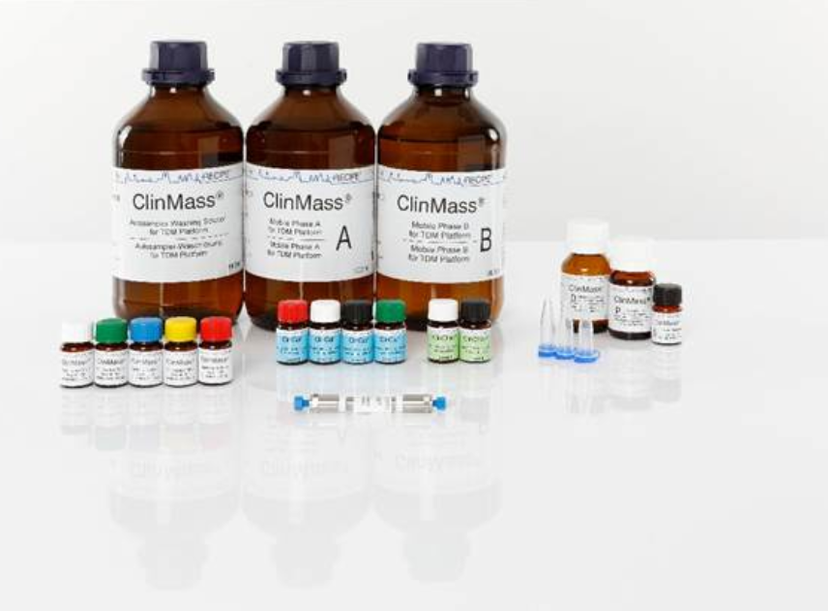
The majority investment in RECIPE enhances Bruker’s position in clinical mass spectrometry by combining Bruker’s EVOQ® LC-TQ-MS systems with RECIPE’s established ClinMASS® assay portfolio. RECIPE’s vendor-agnostic in vitro diagnostic kits are designed for LC-MS/MS, HPLC and ICP-MS assays and are widely used for therapeutic drug monitoring and other clinical applications across Europe.
Under the collaboration, ClinMASS® kits will be available for Bruker’s EVOQ® triple-quadrupole mass spectrometers, as well as for LC-TQ-MS systems from other vendors. This is intended to provide clinical laboratories with greater flexibility in implementing standardized, high-quality TDM and other small molecule assays on their existing mass spectrometry platforms.
Introduction of chrom-free ClinDART® workflows on EVOQ DART-TQ⁺ systems
Bruker and RECIPE are preparing the introduction of high-throughput, chromatography-free ClinDART® kits running on flexible EVOQ DART-TQ⁺ systems. These systems can easily switch between established LC-TQ-MS methods and novel chrom-free ClinDART® workflows, enabling laboratories to choose the most suitable approach for their clinical research and regulated TDM needs.
In chrom-free mode, the EVOQ DART-TQ⁺ system delivers higher throughput for multiplex assays without the need for chromatography, while maintaining outstanding sensitivity and quantitative performance. The platform leverages triple-quadrupole mass spectrometry selectivity and multiple-reaction monitoring (MRM) capabilities to support robust, reliable clinical assays.
Sustainability, cost savings and productivity gains for clinical laboratories
The ClinDART® platform is designed to improve sustainability in clinical mass spectrometry laboratories. By eliminating chromatography in chrom-free workflows, ClinDART® enables up to a 95% reduction in solvent use, which can lower environmental impact and reduce consumable costs.
In addition to solvent savings, the high-throughput ClinDART® methods are intended to increase laboratory productivity by shortening analysis times and simplifying workflows. ClinDART® is complementary to RECIPE’s ClinMASS® LC-TQ assay portfolio and is expected to set new standards for high-throughput therapeutic drug monitoring, drugs of abuse screening and other clinical applications.
Industry perspectives on the Bruker–RECIPE partnership
Dr. Gernot Wolfram, Managing Director at RECIPE, stated that Bruker’s majority investment and the planned joint introduction of high-throughput ClinDART® assays represent a significant advancement in clinical mass spectrometry. He emphasized that the collaboration on chrom-free, triple-quadrupole TDM assays will enable RECIPE to provide clinical laboratories with a powerful new tool that complements the company’s well-regarded ClinMASS® workflows on the EVOQ DART-TQ⁺ platform.
According to Dr. Wolfram, the additional high-throughput ClinDART® methods are designed to reduce operating costs and accelerate time-to-market for newly developed clinical diagnostics and multiplexed drugs of abuse screening assays.
Jeffrey Zonderman, Senior Vice President of Bruker Applied Mass Spectrometry, commented that Bruker is pleased to welcome RECIPE into the Bruker family. He noted that the majority investment aligns with Bruker’s strategic vision for LC-TQ-MS assays, enhanced with novel chrom-free assays based on Bruker’s proprietary DART® technology, to lead in clinical research and regulated TDM markets.
Zonderman highlighted that the combination of RECIPE ClinMASS® and ClinDART® assays with LC-based or chrom-free EVOQ DART-TQ⁺ methods is expected to offer clinical laboratories unparalleled flexibility, throughput and cost-effectiveness.
Want the latest science news straight to your inbox? Become a SelectScience member for free today>>
Links
Tags
Frequently asked questions
Show frequently asked questions
How does Bruker’s majority investment in RECIPE Chemicals + Instruments GmbH strengthen its position in clinical mass spectrometry and therapeutic drug monitoring (TDM) in Europe?
Bruker Corporation’s majority investment in RECIPE Chemicals + Instruments GmbH strengthens its position in clinical mass spectrometry by combining Bruker’s EVOQ® LC-TQ-MS systems with RECIPE’s established ClinMASS® assay portfolio. RECIPE’s vendor-agnostic in vitro diagnostic kits for LC-MS/MS, HPLC and ICP-MS are widely used for therapeutic drug monitoring and other clinical applications across Europe. Under the collaboration, ClinMASS® kits will be available for Bruker’s EVOQ® triple-quadrupole mass spectrometers and for LC-TQ-MS systems from other vendors, giving clinical laboratories greater flexibility to implement standardized, high-quality TDM and other small molecule assays on their existing mass spectrometry platforms.
What are ClinDART® chrom-free workflows on EVOQ DART-TQ⁺ systems, and how do they benefit clinical laboratories performing high-throughput TDM and drugs of abuse screening?
ClinDART® workflows are high-throughput, chromatography-free clinical mass spectrometry methods that Bruker and RECIPE are preparing to introduce on flexible EVOQ DART-TQ⁺ systems. These systems can switch between established LC-TQ-MS methods and novel chrom-free ClinDART® workflows, allowing laboratories to choose the most suitable approach for clinical research and regulated therapeutic drug monitoring. In chrom-free mode, the EVOQ DART-TQ⁺ platform delivers higher throughput for multiplex assays without chromatography, while maintaining outstanding sensitivity and quantitative performance by leveraging triple-quadrupole mass spectrometry selectivity and multiple-reaction monitoring (MRM). These capabilities support robust TDM, drugs of abuse screening and other clinical applications.
How do ClinDART® and ClinMASS® platforms contribute to sustainability, cost savings and productivity in clinical mass spectrometry laboratories?
The ClinDART® platform is designed to improve sustainability by eliminating chromatography in chrom-free workflows, enabling up to a 95% reduction in solvent use, which can lower environmental impact and reduce consumable costs. High-throughput ClinDART® methods also aim to increase laboratory productivity by shortening analysis times and simplifying workflows. ClinDART® is complementary to RECIPE’s ClinMASS® LC-TQ assay portfolio and is expected to set new standards for high-throughput therapeutic drug monitoring, multiplexed drugs of abuse screening and other clinical applications. According to industry perspectives from Dr. Gernot Wolfram and Jeffrey Zonderman, the combination of ClinMASS® and ClinDART® assays with LC-based or chrom-free EVOQ DART-TQ⁺ methods is intended to reduce operating costs, accelerate time-to-market for new clinical diagnostics and offer clinical laboratories unparalleled flexibility, throughput and cost-effectiveness.