
Agentic AI strengthens the bridge between data and wet‑lab scientists
AstraZeneca’s Executive Director of Data Sciences shares how elevating predictive models with AI can free-up scientists' time and make science more collaborative
9 Mar 2026
For years, one of the quiet but persistent bottlenecks in pharmaceutical research has been the divide between wet‑lab scientists and data scientists, two groups whose expertise is deeply interdependent, yet often separated by tools, workflows, and technical language. This disconnect can slow early drug development, limit the impact of complex data, and reduce the overall momentum of discovery efforts.
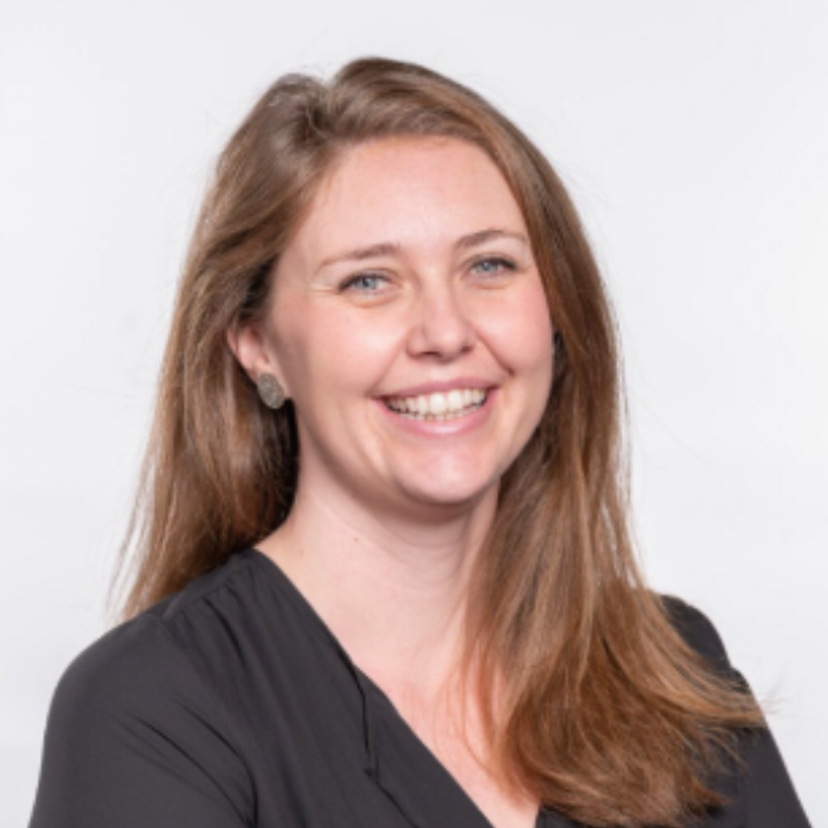
Dr. Natalie van Zuydam, Executive Director of Data Sciences, AstraZeneca
Dr. Natalie van Zuydam, Executive Director of Data Sciences at AstraZeneca, is working to dismantle that barrier by advancing AI agents for predictive and foundational models, making sophisticated analytics accessible to every scientist.
SelectScience® caught up with Dr. van Zuydam in Liverpool at ELRIG Drug Discovery 2025, a bustling hub for researchers and innovators exploring the tools shaping the next era of drug discovery, to hear how she envisions agentic AI reshaping the relationship between data and wet‑lab scientists.
Tell us about your background and what led you towards the pharmaceutical industry?
Dr. van Zuydam: I started off as a wet lab scientist working in South Africa. I trained in molecular biology to a Master’s level at the University of Pretoria focusing on plant pathogens in tree health. I then moved to the UK where I got a job at St George’s Hospital in London for an analyst role in a research group studying stroke genetics. Not being an area I had touched before, I wanted to give it a go and I thought "Wow, this is really cool. Data science has so much potential to help us unpick the biology underlying a disease."
What was most interesting about this job was that I would walk up the stroke ward to collect bloods which gave me a very clear connection to each patient. I found this truly inspiring and afterwards I thought “I need to do a PhD in this area”.
I found a PhD at the University of Dundee with this fantastic group where we looked at macrovascular and microvascular complications of type II diabetes. After three years I moved on to a couple of postdocs at the University of Oxford in a group run by Prof. Mark McCarthy. What was so incredible about this group was the shear amount of things that I could learn. We were doing things right on the cutting edge, generating the data, generating the new analytics, and just working with incredibly smart people.
This journey ultimately led me into the pharmaceutical industry which has been utterly gratifying because of the higher purpose. Even though my work sits at the very earliest stages of the drug development pipeline, I am massively motivated by the fact that one day, one of the things that I've worked on could eventually be given to a patient and improve their life.
What are your thoughts on AI and how does it support the drug discovery pipeline?
Dr. van Zuydam: I see the artificial intelligence (AI) we have available to us as three layers. The first is your ChatGPT, your co-pilots, and things that are really being developed for everybody. I think these Large Language Models (LLMs) are incredibly useful for taking meeting notes, for helping you to develop documents, and saves me a lot of time so that I'm able to think more about strategy rather than forming the documentation around that. It means scientists can focus on the discussion itself, instead of thinking, ‘I need to write all of this down.’
The second layer is what we're seeing being developed by Google and other companies that are beginning to offer bespoke solutions for scientists working in the life sciences. Such as tools that help us link our automation together or handle machine booking, as well as more sophisticated tools that act as a virtual research assistant or collaborator. These tools are helping scientists by freeing up their hands and minds, whether they are data scientists or wet lab scientists, so they can focus on the tasks that only they can do.
Underneath that, the third layer, which is an incredibly exciting area where we're working very heavily, is how can we develop predictive models by using the machine learning aspect of AI that can replace part of an experiment to allow scientists to do much more focused, and smaller experiments that can accelerate the drug development pipeline.
Another important piece that comes out of those first two layers is that we can now push into a big new frontier, agentic AI. What I love the most about this is what used to be a massive division between wet lab scientists and data scientists, it's no longer opaque, it’s transparent and it's disappearing.
For example, if we were to take an AI machine learning model such as AlphaFold, which needs some data science knowledge to work with, and add an agentic AI which can process natural language, you remove the barrier for wet lab scientists to use the model. This not only frees our hands up as data scientists but also streamlines the process for wet lab scientists. And while some may argue that agentic AI could reduce scientific interaction, I believe it will instead encourage collaboration in ways we haven’t seen before.
How do you think your predictive model work is going to affect the wider community and academia?
Dr. van Zuydam: At AstraZeneca we're very proud of the fact that we publish our work and make it available. Working in my department, we are heavily involved in academic partnerships, and these partnerships gives us access to the resources to generate very bespoke omic data at a rate that we never could before. The next step is using AI and machine learning so scientists can realize the true value of the complex data.
I think what I enjoy most about working in pharma is that the focus is all on the patients. This helps to really bring people together around that higher cause, so it makes it so easy to form these partnerships and collaborate when your common goal is the same. That being said, I feel a real responsibility to use this fantastic technology wisely. It’s powerful, but we’re still exploring where it adds the most value, and we have to recognize that it won’t be the answer to every question.