
Abbott Announces CE Mark for Test to Aid Doctors with Diagnosing and Monitoring Diabetes
8 May 2013
Abbott today announced CE Marking for the ARCHITECT clinical chemistry Hemoglobin A1c (HbA1c) test, which may aid physicians in diagnosing and monitoring diabetes as well as identifying patients at risk for developing diabetes.
As of 2012, more than 371 million people worldwide were living with diabetes and half of the people with diabetes remained undiagnosed. If left undiagnosed or not properly managed, diabetes can cause serious health complications.1
The HbA1c test is a blood test that reflects a person’s average blood glucose levels over the past three months. In 2009, an international expert committee recommended that physicians may use an HbA1c test for the diagnosis of type 2 diabetes and identification of patients at risk for developing diabetes if the assay meets specific performance criteria, such as certification and standardization processes outlined by the National Glycohemoglobin Standardization Program (NGSP) and the International Federation of Clinical Chemistry (IFCC).
"The new ARCHITECT clinical chemistry Hemoglobin A1c test provides physicians with important information that may help patients take critical steps to manage the progression of this very serious disease," said Christian Fischer, senior medical director, Diagnostics Products, Abbott.
Diabetes can be managed by using diabetes medicines, making important lifestyle changes related to diet and exercise, and monitoring blood glucose and HbA1c levels.2 For people whose HbA1c test results are normal, doctors may recommend that testing be repeated at least every three years or more frequently depending on a person’s initial results and risk status.2
"When diabetes is not managed properly, it can lead to damage of important systems in the body, including the heart, kidneys, and eyes, and even cause life-threatening complications," said Brian Blaser, executive vice president, Diagnostics Products, Abbott. "With the CE Mark of Abbott's ARCHITECT clinical chemistry HbA1c test, we are pleased to offer this valuable tool to help doctors diagnose diabetes and identify patients at-risk for developing diabetes. Doctors can use this information to improve patient care."
The ARCHITECT clinical chemistry HbA1c test is available in several countries throughout Europe, Asia, Latin America, Canada and Africa, pending country registration. Abbott recently filed for 510(k) clearance with the U.S. Food and Drug Administration.
Related products
Request Quote for All Products
ARCHITECT c4000 Clinical Chemistry Analyzer
AbbottARCHITECT c4000 can be integrated with the ARCHITECT i1000SR to consolidate clinical chemistry and immunoassay on one platform. The new ARCHITECT ci4100 helps your laboratory make a greater impact on quality health care. By integrating immunoassay and chemistry testing on a single platform along with advanced technologies like CHEMIFLEX and FlexRate, the ARCHITECT ci4100 can offer your laboratory the same robust science larger volume labs employ. See how the ARCHITECT ci4100 can increase your lab's performance by contacting your Abbott representative.
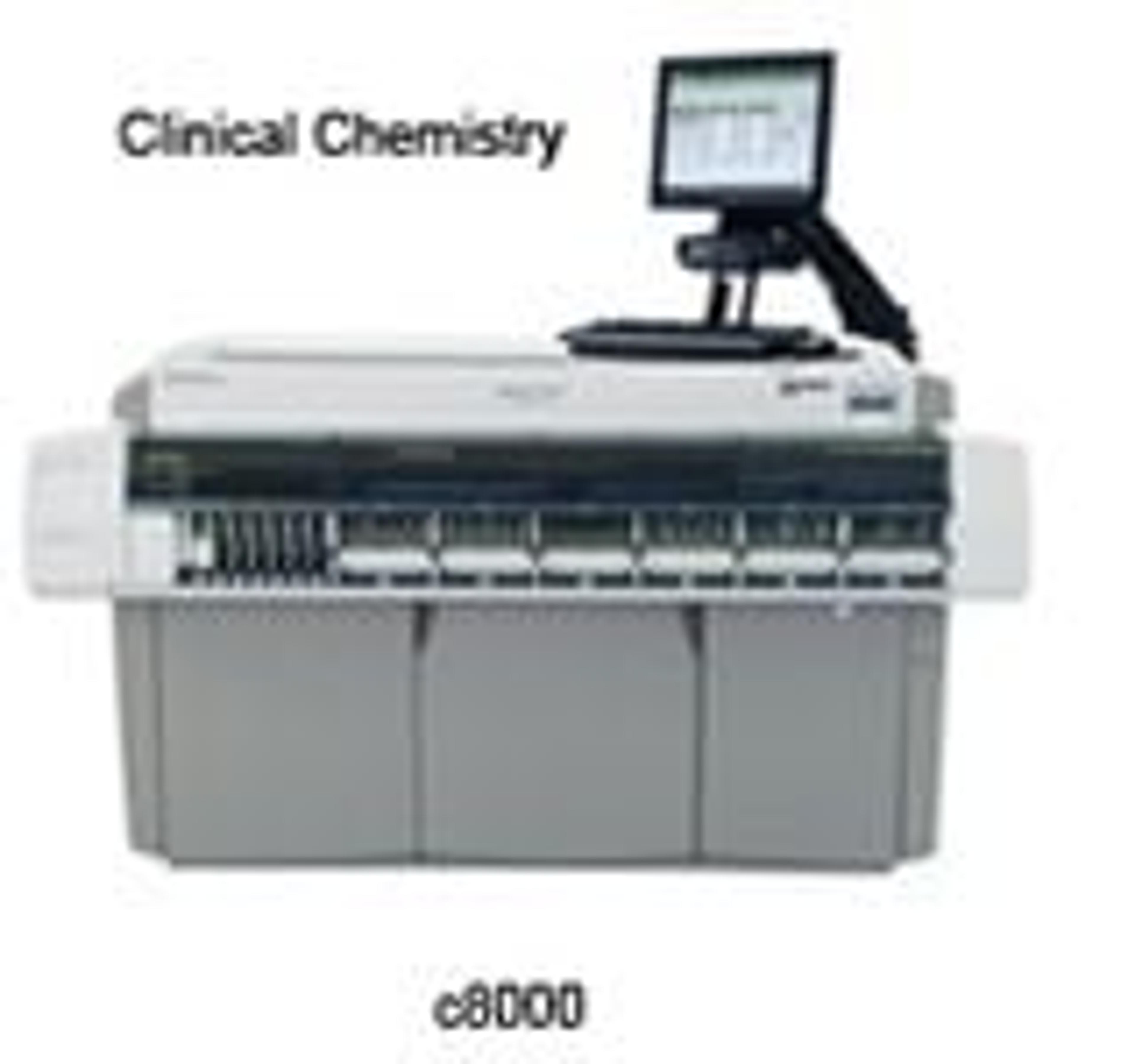
ARCHITECT c8000 Clinical Chemistry Analyzer
AbbottARCHITECT c8000 can be integrated with the ARCHITECT i2000SR to consolidate complex workloads of clinical chemistry and immunoassay testing on to one efficient platform. Our innovative integration solution for clinical chemistry testing helps you: •Report STAT results quickly using dedicated positions on a three-dimensional sample handler •Reduce repeats and reruns with FlexRate technology that extends linear ranges of enzymatic assays •Standardize processes through equivalent patient results and common consumables across all ARCHITECT c Systems •Improve workflow efficiency with a large load up capacity for samples and refrigerated reagents See how the ARCHITECT c8000 can increase your lab's performance by contacting your Abbott representative.