
24 hours in the life of a UK Principal Biomedical Scientist
In this guest editorial, Daniel Monteiro discusses his everyday life in the lab, balancing laboratory science, clinical collaboration, training, and service development.
19 Jan 2026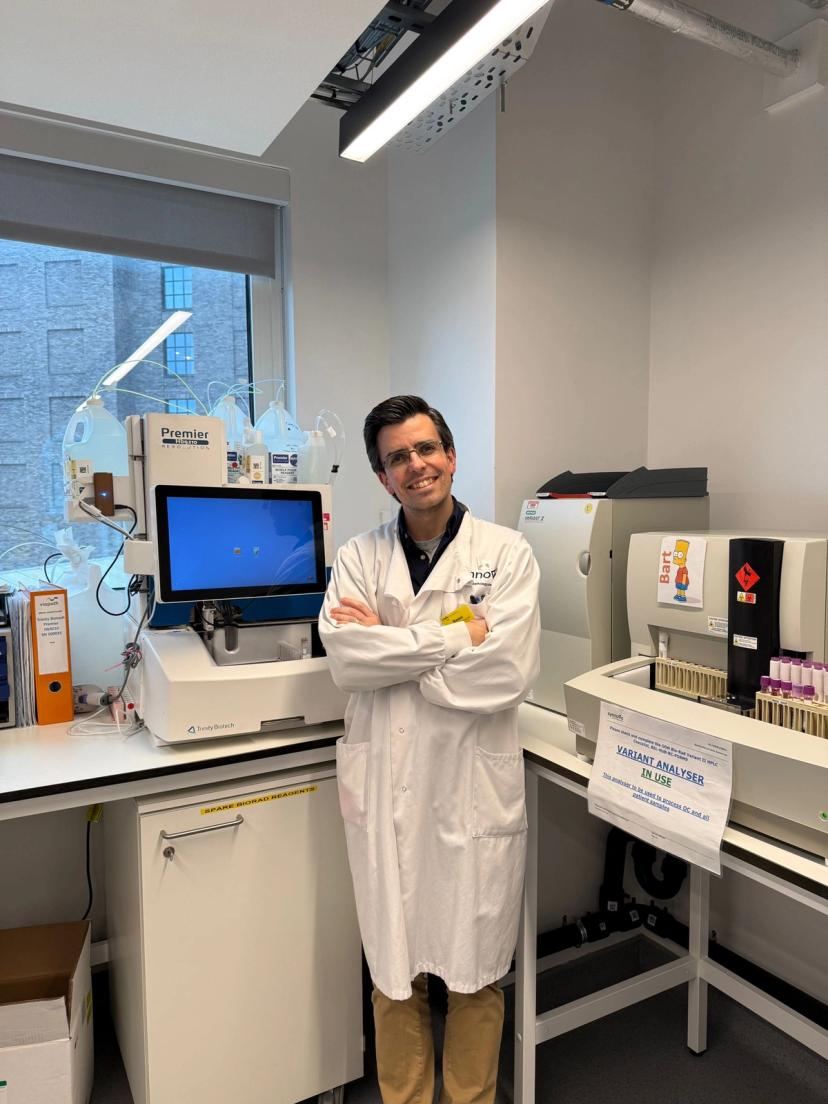
Principal Biomedical Scientist, Daniel Monteiro.
In this guest editorial, submitted as part of the #CLINICAL24 conversation, Daniel Monteiro shares his insights and experiences as a Principal Biomedical Scientist. He discusses his role in clinical laboratory science and how technology supports his work.
About my role as a Principal Biomedical Scientist
My name is Daniel Monteiro and I’m a Principal Biomedical Scientist based in London, UK, working at Synnovis. I also serve as a Scientific Advisor for the NHS England Sickle and Thalassaemia Screening Programme. My role sits at the center of laboratory science, clinical collaboration, training, and service development.
No two days are the same, but that is what makes it so exiting.
As a Principal Biomedical Scientist, I act as a bridge between the laboratory and clinical teams. This means advising clinicians, following up results, and helping plan when more complex or specialist testing is needed. These connections ensure that laboratory science is integrated into patient pathways, rather than existing in isolation, which ultimately translates into better patient care.
These collaborations extend well beyond the hospitals. I regularly work with analyzer manufacturers, clinical trial teams, universities, and other hospital laboratories. Whether validating new technologies, supporting research, or improving services, these partnerships are about achieving shared goals. Better data, better understanding, and better patient outcomes.
What does a typical day look like for you?
Most days begin with structured communication. Daily meetings with the senior laboratory members, followed by catch-ups with the wider laboratory team. This requires the ability to understand the pressures, set the priorities, and support one another before the analytical work begins.
A significant part of my day involves reviewing and authorizing complex red blood cell investigations, including hemoglobinopathy screening and diagnosis, enzymopathies, and hemoglobin protein and genetic testing. These results aren’t just numbers. They require interpretation, clinical context, and an appreciation of how they will be used, whether to guide urgent care, inform long-term management, or support antenatal decision-making.
Alongside service delivery, quality assurance is a constant. Writing and reviewing document procedures, validating assays, reviewing quality controls (internal and external), are just a few examples.
Training is one of the most rewarding aspects of my role. Within the laboratory, this includes supporting biomedical scientists at all career stages, as well as nurses, doctors, and international visitors. To be able to translate complex laboratory data and procedures into how these impact real-time patient decision making, is the key to delivering an impactful training session.
My passion for training drives my work beyond the laboratory walls. I also create scientific content for my LinkedIn community, where each week, I share a haemoglobinopathy case study, encouraging discussion, reflection, and shared learning. The level of engagement has been remarkable, highlighting how much professionals value real-world cases and open dialogue.
I also created a YouTube channel – Haemopaedia, offering bite-sized teaching content for anyone interested in laboratory science. These platforms allow knowledge to travel much further, connect people across disciplines but also raise awareness on how laboratory science is deeply connected to healthcare.
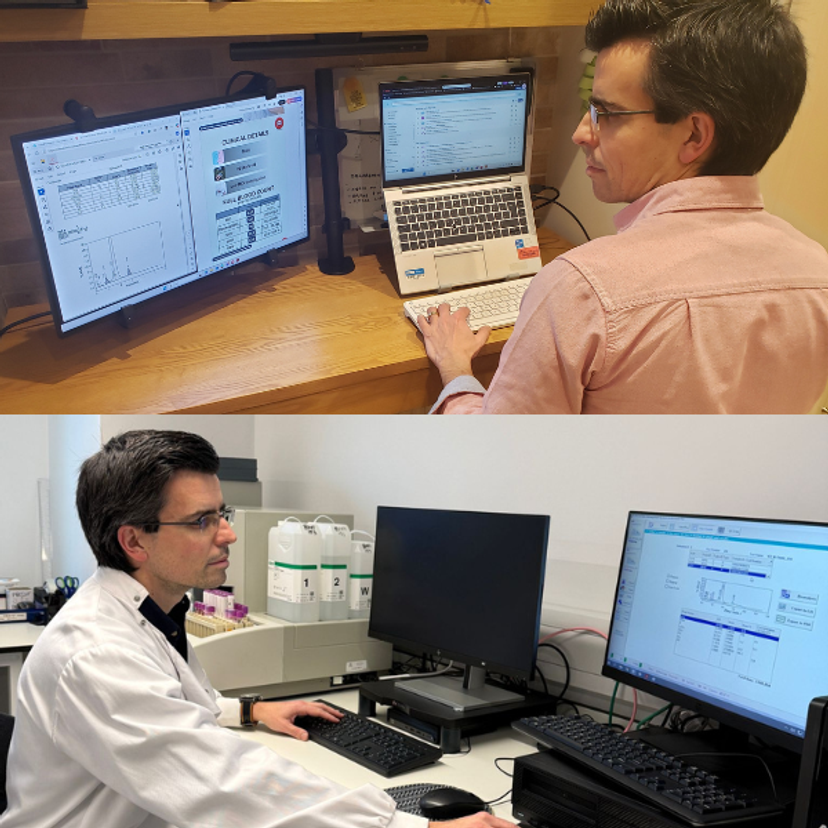
Daniel working in the laboratory and remotely.
My biggest challenges
Laboratory work is often perceived as structured and predictable. In reality, even with the best planning, the day can change in an instant. Anything from analyzer breakdowns, staff shortages, urgent clinical demands, or unexpected incidents that require immediate attention, can rapidly shift priorities.
On this note, experience teaches you to prioritize what truly matters. Some tasks can wait; maintaining a safe and responsive service cannot. The priority is always to support clinical teams with accurate and timely results so they can care for patients effectively.
How technology supports my work as a Principal Biomedical Scientist
It is impossible to talk about laboratory science without talking about technology. Technology shapes almost every aspect of our work, from how samples reach the analyzer to how results are reviewed, authorized, and communicated.
Equally important is the infrastructure that supports every single sample journey. From the moment a clinician requests a test, to the phlebotomist collecting the sample, the courier transporting it, and the laboratory receiving and analyzing it, every step is tracked through our Laboratory Information Management System (LIMS). In a setting where we deliver results to almost every part of the UK, this level of traceability underpins patient safety and accountability and is often invisible to those outside the laboratory.
One area I value enormously is connectivity. The ability to securely review results not only in the laboratory, but also from an office or remotely, has transformed how we deliver safe and responsive services. It allows flexibility without compromising governance or quality – something that has become increasingly important in modern healthcare.
Why science, technology, and people must align
While technology enables efficiency and scale, people remain central to laboratory science. Scientific expertise, critical thinking, and ethical responsibility cannot be automated. Training and mentorship ensure that technology is used wisely, consistently, and safely.
For early-career scientists, my message is simple: your work matters, and the impact of what you do may reach far beyond the laboratory bench. Science and technology provide the tools, but purpose, responsibility, and collaboration give them meaning.