
Quantitative Analysis of Dibenzo-p-dioxins (PCDD) and Polychlorinated-p-Dibenzofurans (PCDF) in Foodstuff and Animal Feed using the GCMS-TQ8030 Tandem Mass Spectrometer
Quantitative Analysis of Dibenzo-p-dioxins (PCDD) and Polychlorinated-p-Dibenzofurans (PCDF) in Foodstuff and Animal Feed using the GCMS-TQ8030 Tandem Mass Spectrometer
25 Nov 2015Contaminations of food and feed with persistent organic pollutants (POP), such as dioxons, are determined routinely by various analytical technologies. Dioxins are introduced via several ways into food products, for example eggs can be contaminated via the feed of hens. The current methods to determine the amount of dioxins and dioxin like substances is described in American and European legislations. In the past mainly gas chromatography coupled to high resolution mass spectrometry with isotopic dilution has been used as analytical method for analyzing and quantifying dioxins. In this application more than 50 samples of different matrices were split and analyzed by the Shimadzu GCMS-TQ8030 triple quadrupole mass spectrometer and the Waters Autospec GCHRMS.
Related Products
Request Quote for All Products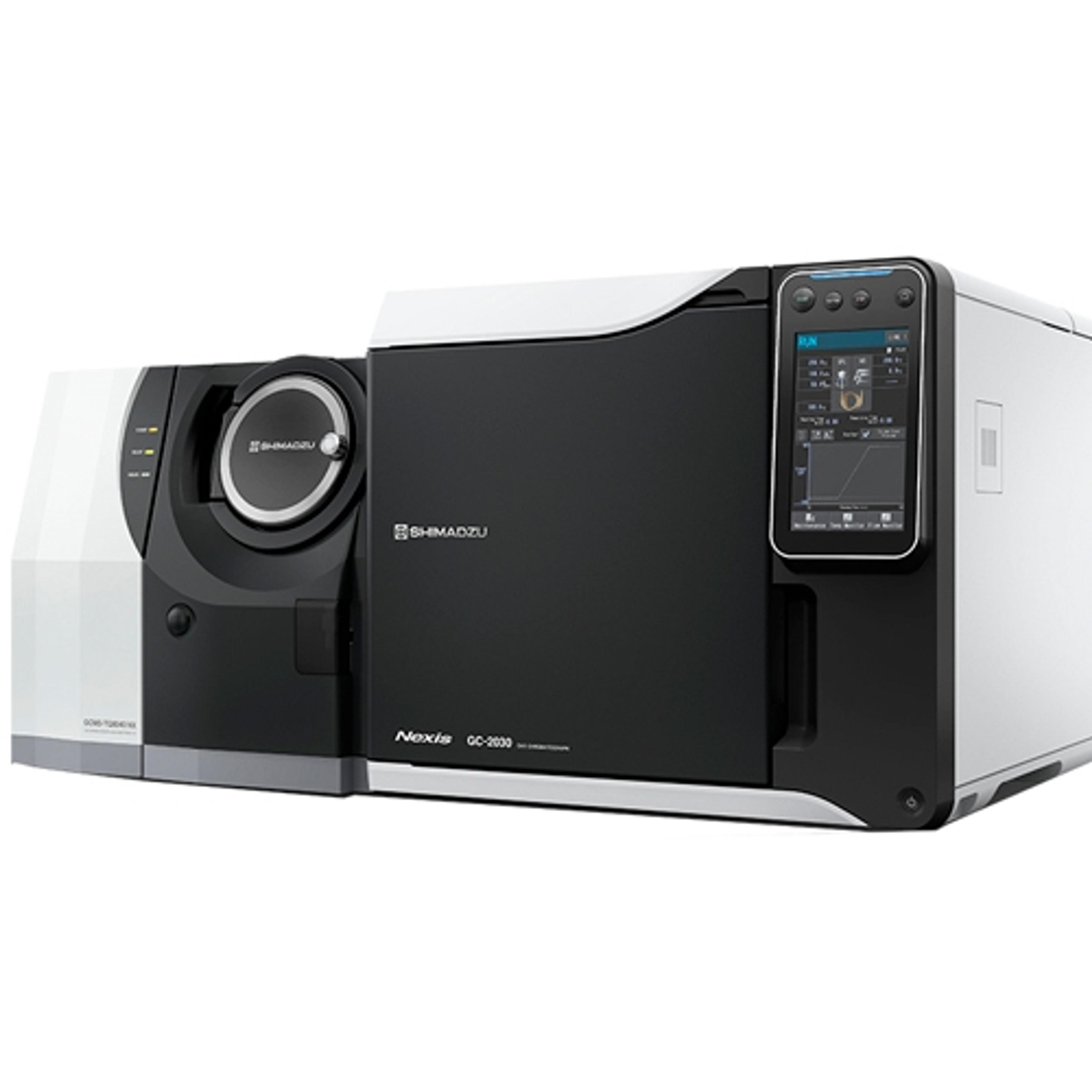
GCMS-TQ8040 NX Triple Quad Gas Chromatograph Mass Spectrometer
Shimadzu CorporationFeaturing Smart Productivity for high-efficiency sample throughput, Smart Operation for quick and easy method development, and Smart Performance for low detection limits and Scan/MRM, the GCMS-TQ8040 NX is a cost-effective, easy-to-use triple quadrupole GCMS for routine analytical work. With over 32,000 MRM transitions in a single run, the GCMS-TQ8040 NX with Smart MRM can combine over 400 compounds into a single MRM method without sacrificing sensitivity or selectivity, doubling or even tripling laboratory productivity. This results in added throughput before routine maintenance is required and faster return on investment. The Shimadzu GCMS-TQ8040 NX MRM Optimization Tool automatically determines optimum transitions and collision energies for all compounds in a single sequence, and seamlessly incorporates them into the Smart Database Series for fully automated MRM method development. Using flexible MS events, the Smart MRM function routinely determines the best dwell and loop times for >400 compounds in a single method, providing optimum precision and sensitivity. The GCMS-TQ8040 NX can acquire data in the classic MRM mode, or in synchronous Scan/MRM mode for simultaneous qualitative and quantitative results. The Scan/MRM mode simultaneously acquires accurate library-searchable mass spectra and low-level MRM quantitation in a single analysis – a critical function when sample volume is limited. Shimadzu’s proprietary UFsweeper™ technology achieves high-speed MRM analysis up to 800 transitions per second. The Advanced Scanning Speed Protocol (ASSP™) provides high-speed scanning control at 20,000 u/second. ASSP and simultaneous Scan/MRM analysis mode provides high-quality library searchable fragmentation spectra, and accurate low-level quantitative data in a single analysis. This efficient design provides optimum performance in all analysis modes: MRM, SIM, Scan, Scan/MRM, Scan/SIM, Neutral Loss, Product Ion Scan, Precursor Ion Scan and combination modes.