
Oxidation Stability of Leather
Oxidation Stability of Leather
30 Oct 2015The production of leather goes back to prehistoric times. Primitive humans used different treating methods that have remained largely unchanged for centuries, exposing it to the smoke or putting it in contact with water or leaves. Nowadays, the leather manufacture is usually divided into three processes: preparatory stages, tanning and crusting. During the process of tanning, fat is dissolved from the animal skin. These small quantities of oil, known as fat liquors, make a significant difference to the handle, i.e. the fullness, softness and flexibility, among other factors. This application note evaluate the effect of adding an antioxidant treatment on leather, comparing the oxidation stability of leather with and without the addition of antioxidant agent. OXITEST is able to determine the oxidation stability of various sample types, directly on the whole sample, without any fat separation.
Related Products
Request Quote for All Products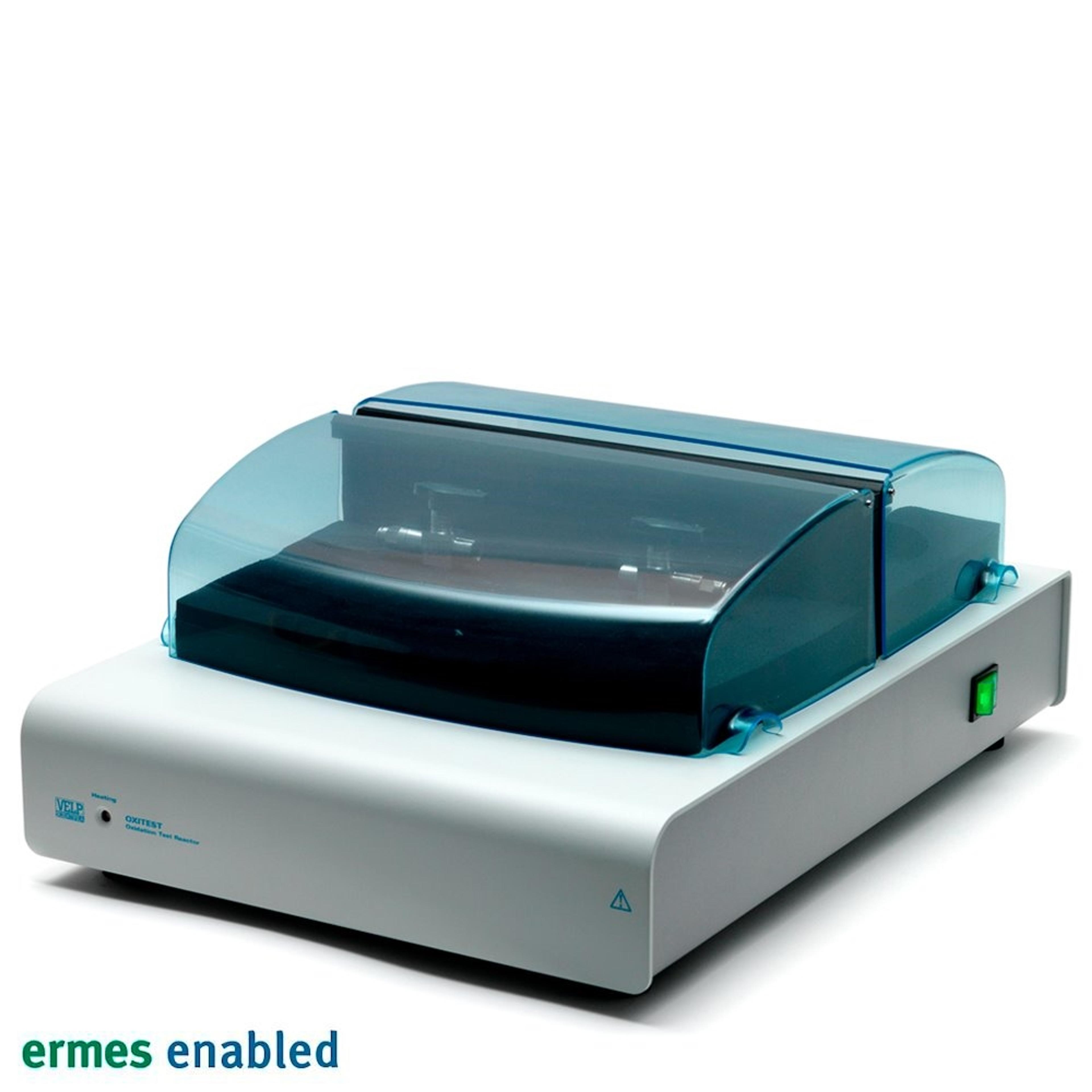
OXITEST - Oxidation Stability Reactor
Velp ScientificaThe OXITEST is designed for R&D and QC for the study of the behaviour of fat oxidation stability. The OXITEST speeds up the oxidation process and measures the absolute pressure change of oxygen inside the two titanium heating chambers at a constant temperature, thus monitoring the oxygen uptake by reactive components in the sample and automatically generating an IP value for further analysis via software.