
LC-UV-MS Peptide Mapping Development for Easy Transfer to LC-UV QA/QC
30 Nov 2015Peptide mapping is one of several routine methods to characterize biopharmaceutical proteins. For research environments, this technique, if combined with mass spectrometry (MS), is utilized for the characterization and confirmation of the primary sequence of monoclonal antibodies. In addition, peptide mapping can help to identify, localize, and quantitate post-translational modifications (PTMs). Peptide mapping methods are often developed and evaluated with combined UV and MS detection, to simplify the transfer to routine environments where UV detection is used alone. In high-throughput workflows, peptide mapping experiments are performed for antibody identity confirmation, PTM characterization, and stability studies. In this work, the separation of peptides obtained from a monoclonal antibody digest is demonstrated with a LC-UV-MS setup.
Related Products
Request Quote for All Products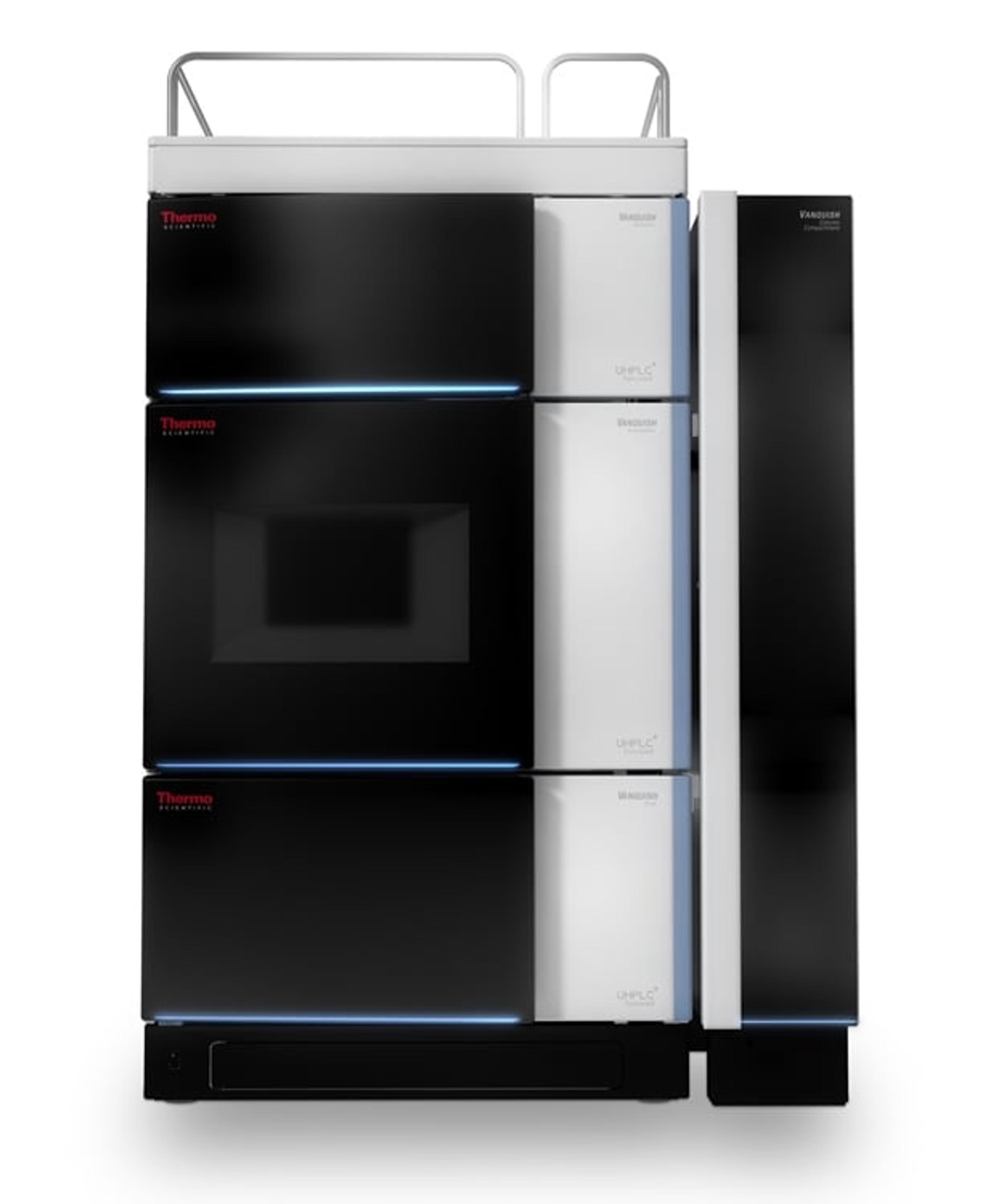
Thermo Scientific™ Vanquish™ Flex Quaternary UHPLC System
Thermo Fisher ScientificThe Thermo Scientific™ Vanquish™ Flex Binary UHPLC system is biocompatible with a state-of-the-art binary high-pressure pump and state-of-the-art binary solvent blending. This ultra high performance liquid chromatography system shares all Vanquish values, such as a design focused on uptime, robustness and reliability. Multiple detection options as well as Thermo Scientific™ Viper™ fingertight connections throughout the system will give you the performance you need with the ease of use you want. Our SmartFlow™ pumping technology with automatic compensation for changing eluent compressibility ensures excellent flow and gradient precision, independent of eluent composition and backpressures. This gives you unrivaled retention time precision and highest data confidence, even for ternary and quaternary gradients, and for more freedom in method development and application switching. Detection capabilities include high sensitivity and linearity Diode Array Detection with LightPipe technology, selective and sensitive Fluorescence Detection and near-universal detection capabilities with the Vanquish Charged Aerosol Detector. Key Features: Integrated modularity design concept to offer uncompromising UHPLC State-of-the-art quaternary solvent blending 1000 bar of pump pressure and flow rates up to 8 mL/min Industry-leading flow and gradient precision Multiple detection options including DAD, FLD and CAD Relevant Applications: Separations of Intact mAbs Analysis of labeled glycans Ternary gradient impurity profiling Efficient, reliable peptide mapping