
UltraDry EDS detector and EBSD QuasOr
1 Oct 2012
In this video Keith Thompson, Product Manager, X-ray Microanalysis at Thermo Fisher Scientific discusses how the new improvements to the UltraDry EDS detector enable it to provide superior resolution at incredibly high collection rates. Keith also tells SelectScience about some of the capabilities and applications of the EBSD QuasOr. Electron Backscatter Diffraction (EBSD) enables nanostructural analysis in the electron microscope by characterizing the crystalline structures which affect physical properties in a wide range of materials. Interview filmed by SelectScience at EMC 2012.
Related Products
Request Quote for All Products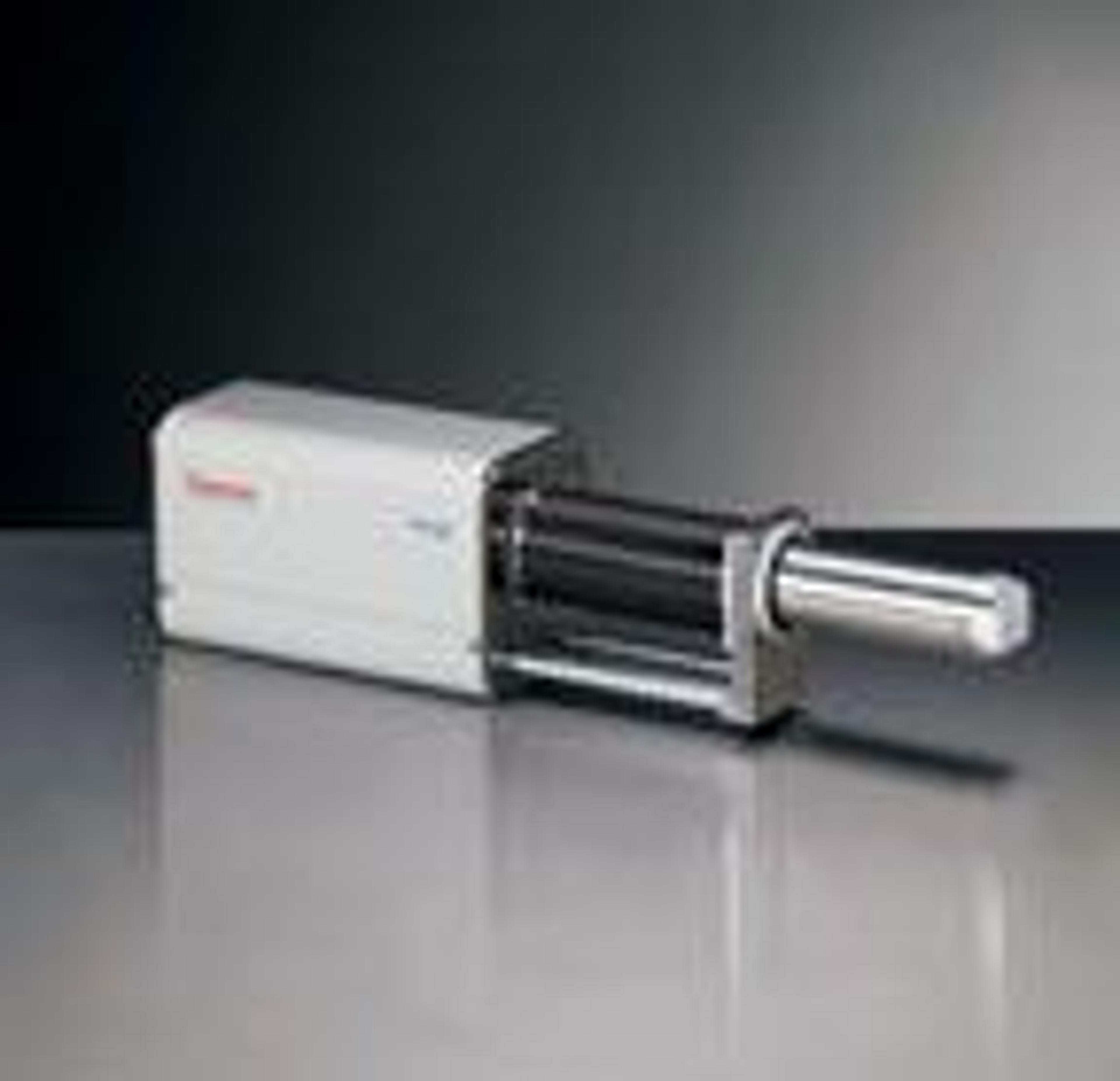
EBSD QuasOr
Thermo Fisher ScientificThermo Scientific QuasOr, the no compromise EBSD. Electron Backscatter Diffraction (EBSD) enables nanostructural analysis in the electron microscope by characterizing the crystalline structures which affect physical properties in a wide range of materials. As an integral part of the Thermo Scientific NORAN System 7, simultaneous acquisition of EBSD and EDS/WDS spectral images are performed with ease.

EDS X-ray Detectors
Thermo Fisher ScientificEDS X-ray Detectors - Thermo Fisher Scientific offer several detectors for X-ray microanalysis applications, including No-LN configurations and new Silicon Drift detector technology for high-throughput applications. The highest resolution possible is always guaranteed on your column configuration. No single component of an X-ray microanalysis system is as critical to performance and accuracy as the X-ray detector. For more than thirty five years Thermo Fisher Scientific has pioneered the development and manufacture of high-resolution X-ray detection solutions for electron microscopy. We offer a range of X-ray detector options to fit your specific sampling needs. Thermo Fisher Scientific provides detectors for all currently available electron column instruments with custom-designed mechanical interfaces to assure vacuum integrity and optimum collection efficiency. Unlike manufacturers that adapt a few designs to fit a specific column, Thermo Fisher Scientific has detector designs to correctly interface to any SEM, LVSEM, FESEM, TEM, STEM, Probe, DRT, Dual Column FIB or Auger. Combined with next generation X-ray microanalysis systems for traditional EDS and Spectral Imaging-based analysis, we provide complete high-resolution, high-throughput solutions, from routine analysis to advanced research applications.
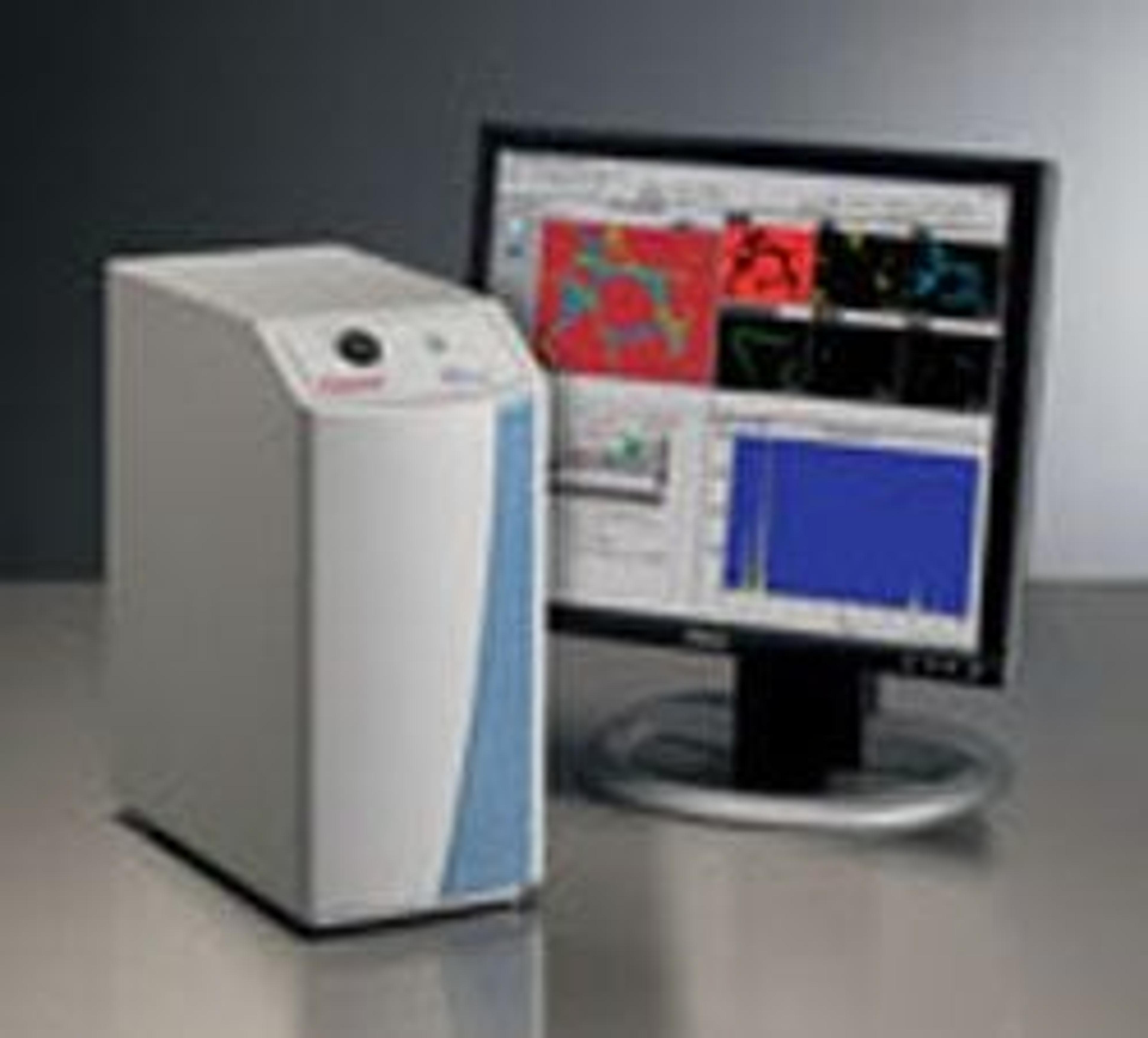
NORAN System 7 X-ray Microanalysis System
Thermo Fisher ScientificSpectral Analysis Identifies elemental peaks quickly and accurately using rule-based identification and peak shape deconvolution SpectraCheck both visually and statistically confirms the presence of an element using spectrum simulation and comparison routines—provides both an overlapped spectrum and a chi-squared value indicating goodness of fit Elemental peak references provide a complete set of spectral peak shapes collected with a typical EDS system The intensities from these shapes are automatically corrected to match the microscope detector—eliminates the need for periodic calibration of the system with standards Uses the PROZA Phi-Rho-Z matrix correction algorithm Point and Shoot Mode Integrates electron imaging and X-ray analysis Single mouse click provides both elemental identification and quantitative analysis of the selected areas of interest of the sample Areas on the sample are defined using points, rectangles, circles, polygon or with a magic wand tool Magic wand tool allows easy, instant outline of complex areas without having to manually draw a border The selection, based on gray levels, is made automatically with just one click Selected areas may be analyzed instantly or multiple areas may be selected for automated analysis Performs processing according to chosen settings Able to provide the required spectral results—from qualitative analysis to quantitative analysis with full standards Spectral Imaging Acquires a spectrum at every point—useful for imaging, X-ray mapping, Linescan and advanced automated analysis NORAN System 7 collects data that can be analyzed repeatedly without the need for reacquiring or changing acquisition parameters—with one click Analyze the collected data locally at the microscope or take the data offline to a different computer for report preparation COMPASS Allows all of the people in the lab to perform the same analysis and obtain consistent results Uses powerful multivariate statistical algorithms, as created by Paul Kotula et al. and licensed from Sandia National Labs Using advanced algorithms, Direct-to-Phase extracts and displays known phases while the data is still being collected Allow the EDS system to decide when sufficient statistics have been collected, or visualize the data as it develops Direct-to-Phase Data analysis concurrent with data collection - the speed of real time phase analysis Not only presents elemental data in maps and spectra, it develops an information-rich picture of the sample composition—and it produces complete data ten times faster than current X-ray microanalysis technology