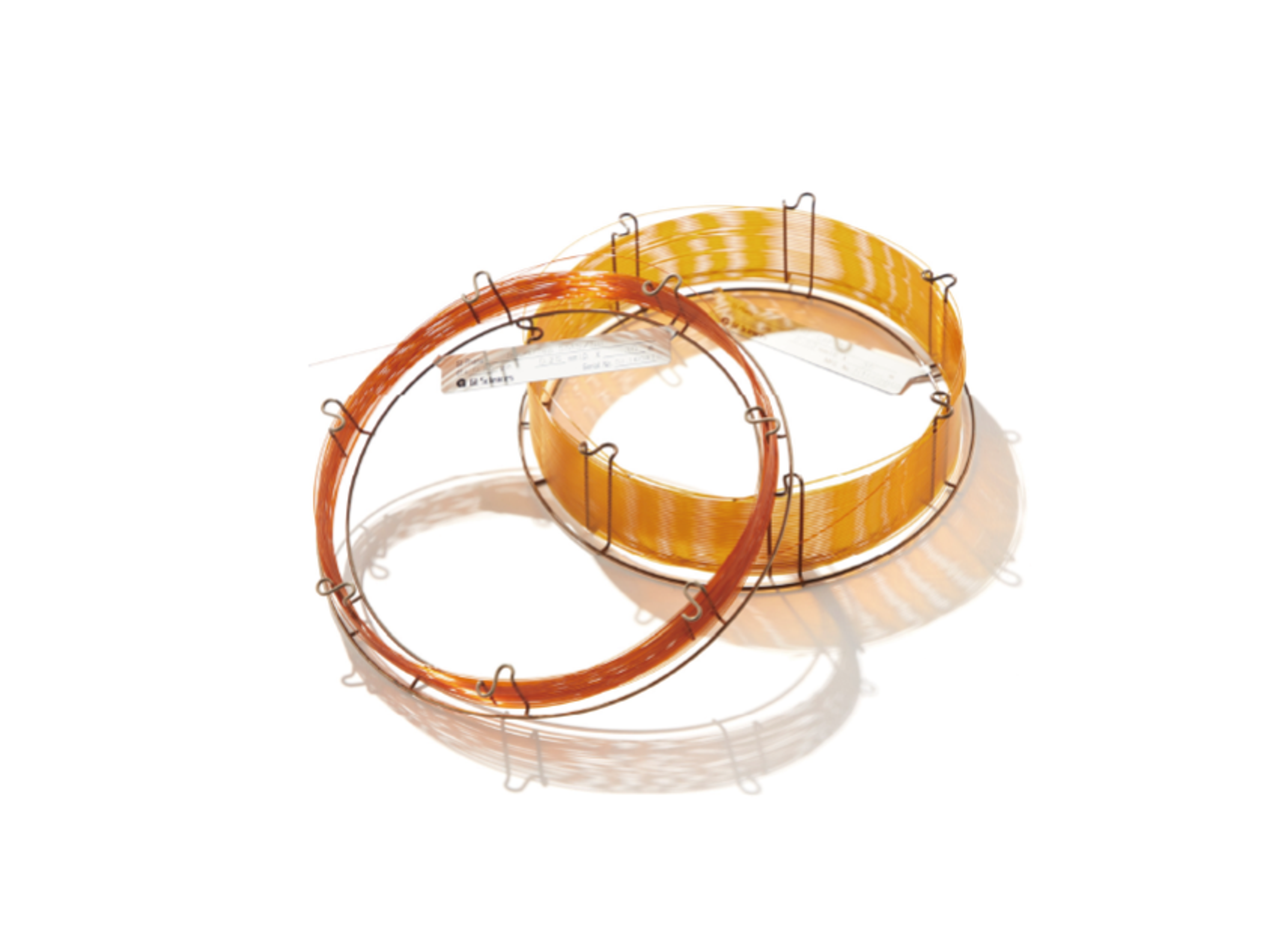
Ascentis® Express C18
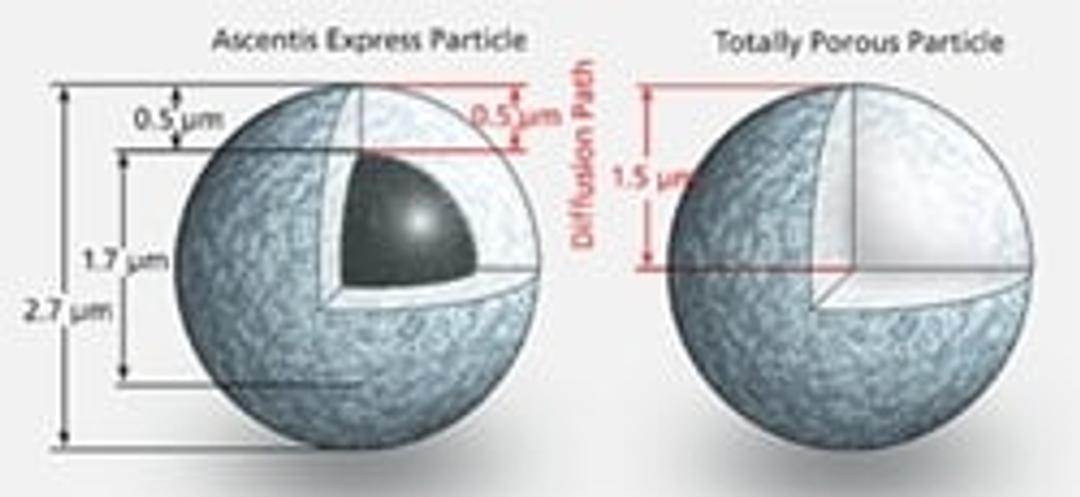
C18 HPLC column for High Speed and High Resolution Applications. Ascentis® Express C18 is the first choice for starting a new method. Ascentis Express HPLC columns, through the use of Fused-Core® particle technology, can provide you with both the high speed and high efficiencies of sub-2 μm particles at lower system pressure. With identical conditions, the Ascentis Express C18 column performs more than 4X faster tha…

The supplier does not provide quotations for this product through SelectScience. You can search for similar products in our Product Directory.
Can't live without this LC column since we used this on weekly basis.
C18
We used this for lipids, generic, and new things to look at when we have method development.
Review Date: 3 Mar 2021 | Sigma-Aldrich Supelco
Great chromatographic separation.
Chromatography
Ascentis columns with Fused-Core® particle technology provides better separation of analytes with minimum back pressure and optimized resolution.
Review Date: 13 Dec 2019 | Sigma-Aldrich Supelco
If you have to select a C18 core shell, don't hesitate, just buy it.
Pesticides analysis
I've never seen a so robust column, we are using this column for several years and we found this column really very robust. We are really impressed by this column.
Review Date: 5 Oct 2018 | Sigma-Aldrich Supelco
C18 HPLC column for High Speed and High Resolution Applications.
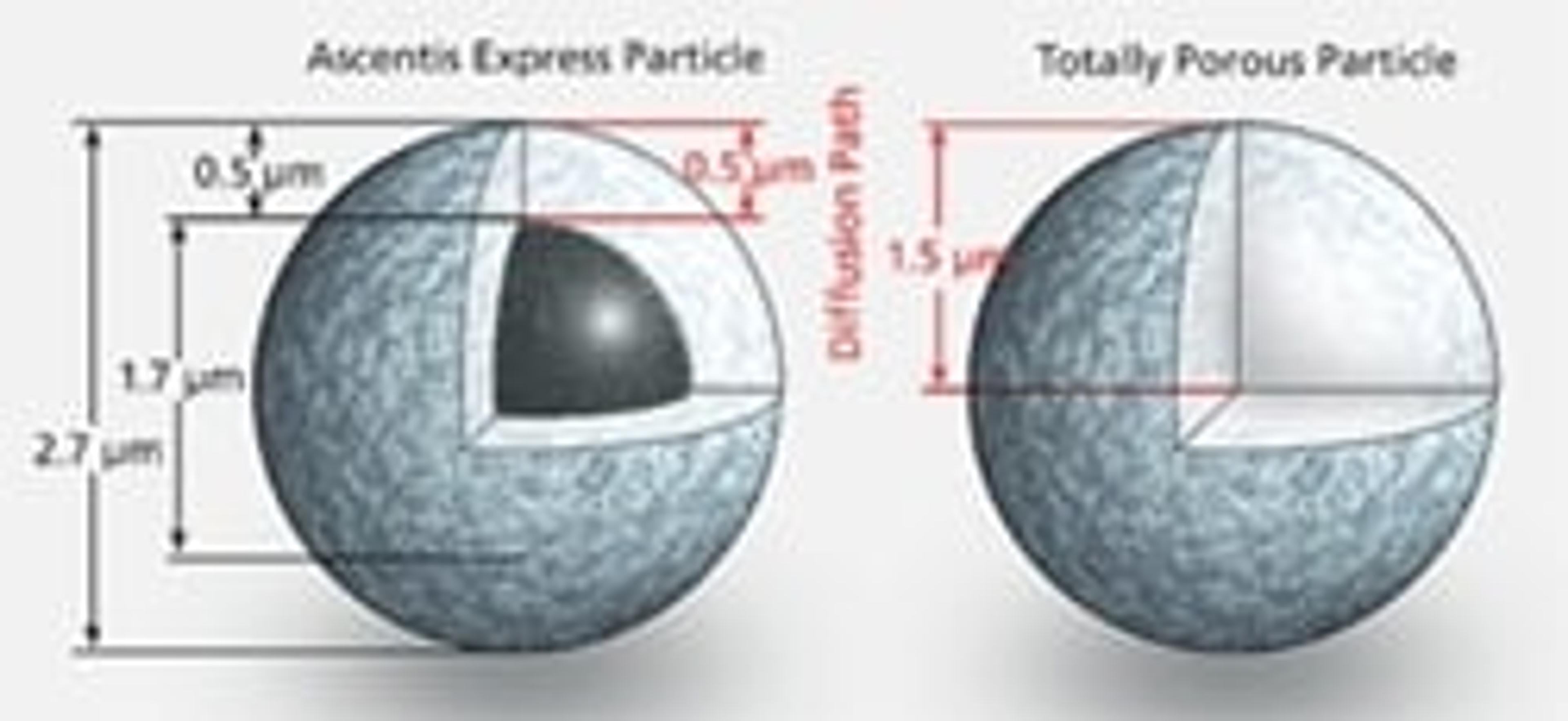
Ascentis® Express C18 is the first choice for starting a new method. Ascentis Express HPLC columns, through the use of Fused-Core® particle technology, can provide you with both the high speed and high efficiencies of sub-2 μm particles at lower system pressure.
With identical conditions, the Ascentis Express C18 column performs more than 4X faster than a standard C18 column, for most applications. The combination of high efficiency and lower operating pressure benefits UHPLC (or other ultra high pressure system) users, as well as conventional HPLC users. The increased efficiency of Ascentis Express columns enables you to use shorter columns and reduce solvent usage/cost.
The Ascentis® Express C18 is also featured in an application note about liquid GC columns which can be found on the SelectScience website here, and a study on HPLC separation of bile acid here.
Column details:
- Mode: Reversed Phase
- USP Code: L1
- Particle Size: 2.7, <2.0 μm
- Pore Size: 90 Å
- Length: 20, 30, 50, 75, 100, 150 mm
- ID: 1.0, 2.1, 3.0, 4.6, 10 mm

High-throughput analysis of cannabinoids in cannabis products
In this application note, MilliporeSigma, in partnership with Supra Research and Development, demonstrates the successful application of its Ascentis Express C18 Column in a high-throughput and reliable method for cannabinoid analysis in several different matrices.
Analytix Reporter: Issue 8
In this eBook, MilliporeSigma bring together some of their latest products and methods in analytical science, from food and beverage, through to pharms, clinical and forensics.

A Fast and Robust HPLC Separation of Bile Acids, and their Conjugates, with Ascentis® Express C18
This application note from Sigma Aldrich describes how HPLC can be used to separate Bile acids and their conjugates. Bile acid has an important role in control of the immune system which has led to research interest in their levels in the blood plasma. This application note features the Ascentis® Express C18 from Sigma Aldrich which can be seen here.
Extraction and Quantitation of Bisphenol A (BPA) from Broth-Based Soup Matrices Using Molecularly Imprinted Polymer Solid Phase Extraction
This application illustrates the use of the SupelMIP® SPE-Bisphenol A for the extraction of BPA from beef and chicken broth matrices prior to chromatographic analysis. In addition to excellent analyte recovery and reproducibility, the MIP SPE extraction and cleanup method provided sufficient matrix interference removal, facilitating quantitation. In addition, this method allows for detection and quantification of BPA levels that were as low as 60 ng/g, which is lower than current specified EU regulations.
Quantifying Picogram Concentrations of Aflatoxin M1 in Liquid Milk using SPE Cleanup and LC/MS Analysis
Aflatoxins are produced by fungi and these species can infect important cereal grains, including maize, as well as ground (peanuts) and tree nuts. The focus of this study is the metabolite of AFB1, aflatoxin M1 (AFM1) that can be present in the milk of lactating dairy animals that have consumed aflatoxin contaminated feeds. A fast method for cleanup and analysis has been developed using Supel™ Tox AflaZea SPE, Ascentis® Express C18 HPLC column and LC/MS.
Aminoglycoside Analysis in Honey Using Molecularly Imprinted Polymer Cleanup and LC/MS/MS Detection
Streptomycin and related compounds belong to a well-known class of antibiotics called aminoglycosides that are widely used to control bacterial and fungal diseases of fruit trees, seeds, and ornamental crops. A simple and sensitive method for the cleanup, analysis, and quantification of aminoglycosides in honey has been developed using SupelMIP® SPE - Aminoglycosides and LC/MS/MS analysis.
Determination of Additives in Beverages Using Ascentis® Express Columns
This application note demonstrates the use of two Ascentis® Express columns for the analysis of beverages. Two column chemistries, RP-Amide and HILIC, both amenable to the analysis of polar compounds, were successfully used to resolve several beverage components, including sugars, vitamins, sweeteners, preservatives, and caffeine.
Improved Recovery of the Fungicide Carbendazim from Various Orange Juice Matrices by Employing QuEChERS Cleanup
In this application note a single method, involving fast and effective QuEChERS cleanup, suitable for various orange juice matrices is presented. The choice of PSA/C18 sorbents reduced interferences, resulting in greater recoveries and less ion-suppression. Sample processing using QuEChERS with PSA/C18 allows analysts to accurately process various matrices in a single workflow, with very little additional sample preparation time.