
Microsampling and LC-MS/MS in Pediatric Research: Exclusive Interview with Giuliana Cangemi
The challenges involved in pediatric research, and ways of overcoming them with modern technology
29 Sept 2016
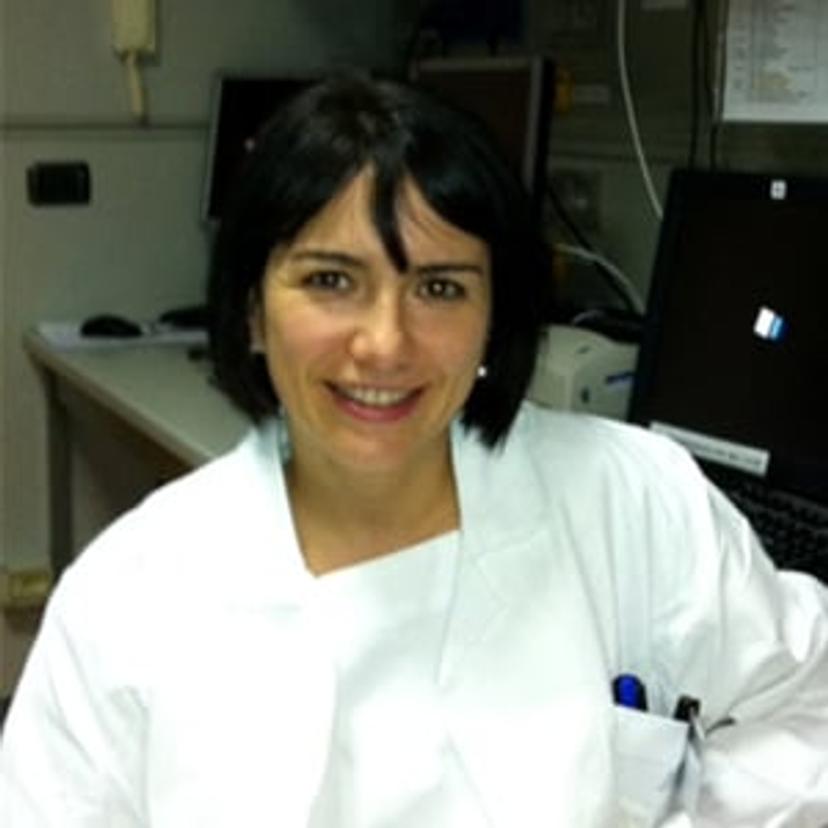
Giuliana Cangemi, Giannina Gaslini Children’s Hospital
Giuliana Cangemi is Head of Chromatography-Mass Spectrometry at the Central Laboratory of Analysis, Giannina Gaslini Children’s Hospital in Genoa, Italy. Giuliana is an expert in her field of liquid chromatography-mass spectrometry (LC-MS/MS), and a speaker at this year’s MSACL 2016 meeting. SelectScience’s Associate Editor, Sonia Nicholas, spoke to Giuliana to learn more about the use of this technology in pediatric testing.
SN: Could you start by telling us a little bit about your job and place of work?
GC: The Giannina Gaslini Institute receives thousands of children of 90 nationalities every year, as well as over 20,000 children from all Italian regions, which constitute around half of all its patients.
I work in the Central Laboratory of Analysis as an Assistant Biologist. The Central Laboratory is a three-floor laboratory where we perform about one million tests per year in all areas of laboratory medicine: clinical chemistry, hematology, microbiology, serology and so on, as well as chromatography and mass spectrometry, which is my area of interest.
In my section the staff is composed of one biologist, one chemist and five technicians. We perform about 10,000 tests per year based only on chromatographic and mass spectrometric techniques. The analytes of interest are drugs for the TDM (immunosuppressants, antiepileptic’s, antimicotics, antibiotics), catecholamines, vitamins and sugars. We also have a research and development activity, involved in the development of new analytical methods, in support of clinical research in pediatrics.
Analytical challenges
SN: You have just given a presentation at this year’s MSACL 2016 Meeting, on the use of microsampling techniques and LC-MS/MS in pediatric drug monitoring. What are the current challenges facing laboratories engaged in the drug monitoring research for children?
GC: Current challenges include the availability of robust methods to be used in clinical research and in routine clinical analysis. In particular, the requirements are:
- that the methods should show high sensitivity, due to the low volume of samples available (especially for very low birth weight children)
- to be able to use alternative sampling methods such as dried matrices and microsampling techniques (flexibility)
- to have instruments and procedures validated for clinical use
- the use of automation to improve quality and to reach high throughput
SN: How can current technological advances, such as triple quadrupole LCMS/MS, help to overcome these challenges?
GC: Triple quadrupole technology is the gold standard technique for drug monitoring research because it is able to ensure attogram-level sensitivity, with sufficient robustness. This technology is also reproducible, rapid and cost-effective.
SN: You mention the need for a test method that is able to utilize alternative sampling methods. What are the benefits of using microsampling and dried blood spots?
GC: The advantages are that we can use small sample volumes (3-10 μL) and less invasive sampling techniques such as heel pick. With these sampling methods we have the possibility to store samples at room temperature, this is important because many analytes are more stable in dried matrices. There is also the possibility to easily transport samples through ordinary mail, without dried ice.
Superior method analysis
SN: What is the advantage of triple quadrupole LC-MS/MS combined with microsampling techniques, over traditional methods still used by other laboratories, such as immunoassay?
GC: The advantages of LC-MS/MS over immunoassays are the higher analytical sensitivity and accuracy; the possibility to analyze more analytes in the same run (multiplexing); and the ability to use different matrices and lower sample volumes (microsampling) which is essential in pediatrics.
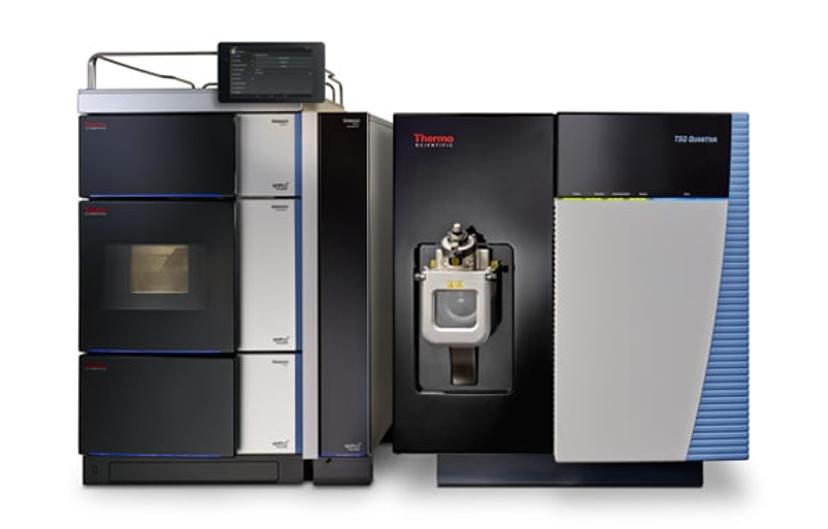
The Thermo Scientific TSQ Quantiva Triple Quadrupole Mass Spectrometer
SN: Can you tell us more about your clinical research and how technology is helping you to achieve your goals?
GC: Our clinical research is related to the development and validation of bioanalytical quantitative methods, based on LC-MS/MS, for the measurement of drugs in blood and other body fluids. In particular, our research is carried out in strict collaboration with the needs of our clinicians, to define therapeutic protocols in children or to perform what we term as ‘personalized medicine’.
Our goal is to help optimize therapies in children and to help improve the knowledge on the mechanisms of interaction between pharmacokinetic (what the body does to the drug) and pharmacodinamic (what the drug does to the body).
In pediatrics all PK parameters (adsorption, distribution, metabolism and excretion) are different from those of adults.
SN: To conclude, please could you summarize how using advanced technology in your clinical research helps you to meet the needs of the clinicians and the patients?
GC: The technology that we are using allows us to give an answer to the needs of the modern pediatrics and to help improve the treatments for our children.