INSIGHT®-Flow
Flow modulator for GCxGC
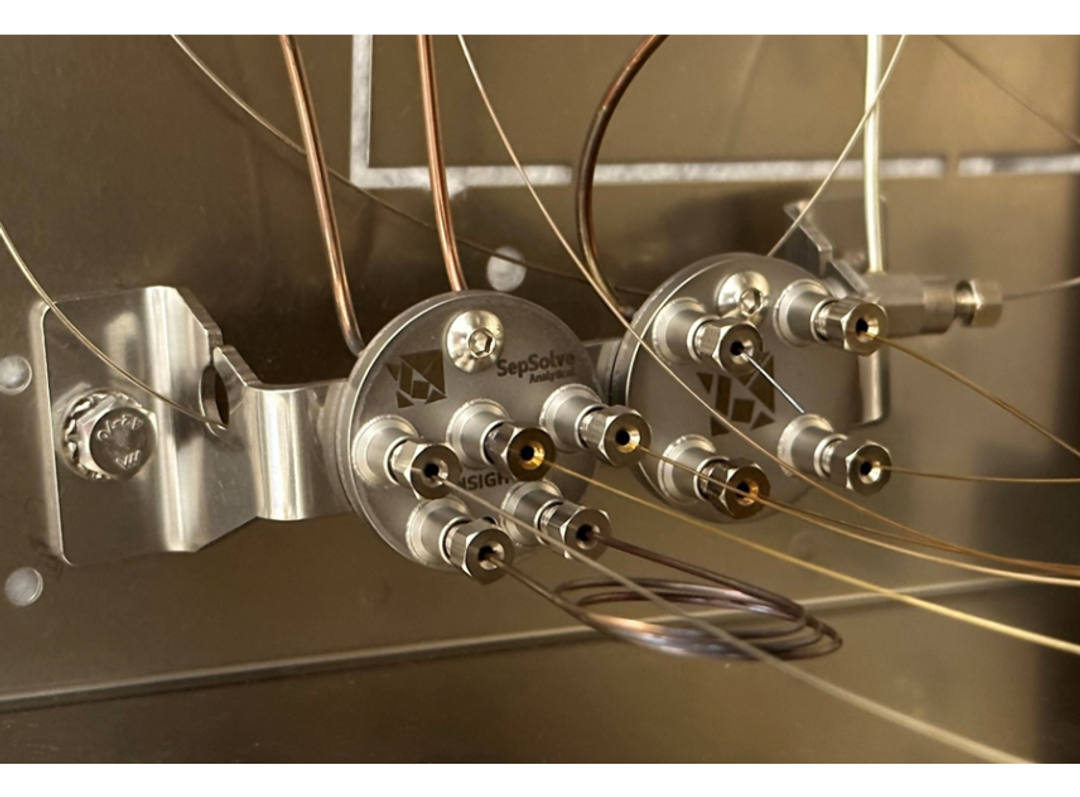
INSIGHT flow modulator for GCxGC

The supplier does not provide quotations for this product through SelectScience. You can search for similar products in our Product Directory.
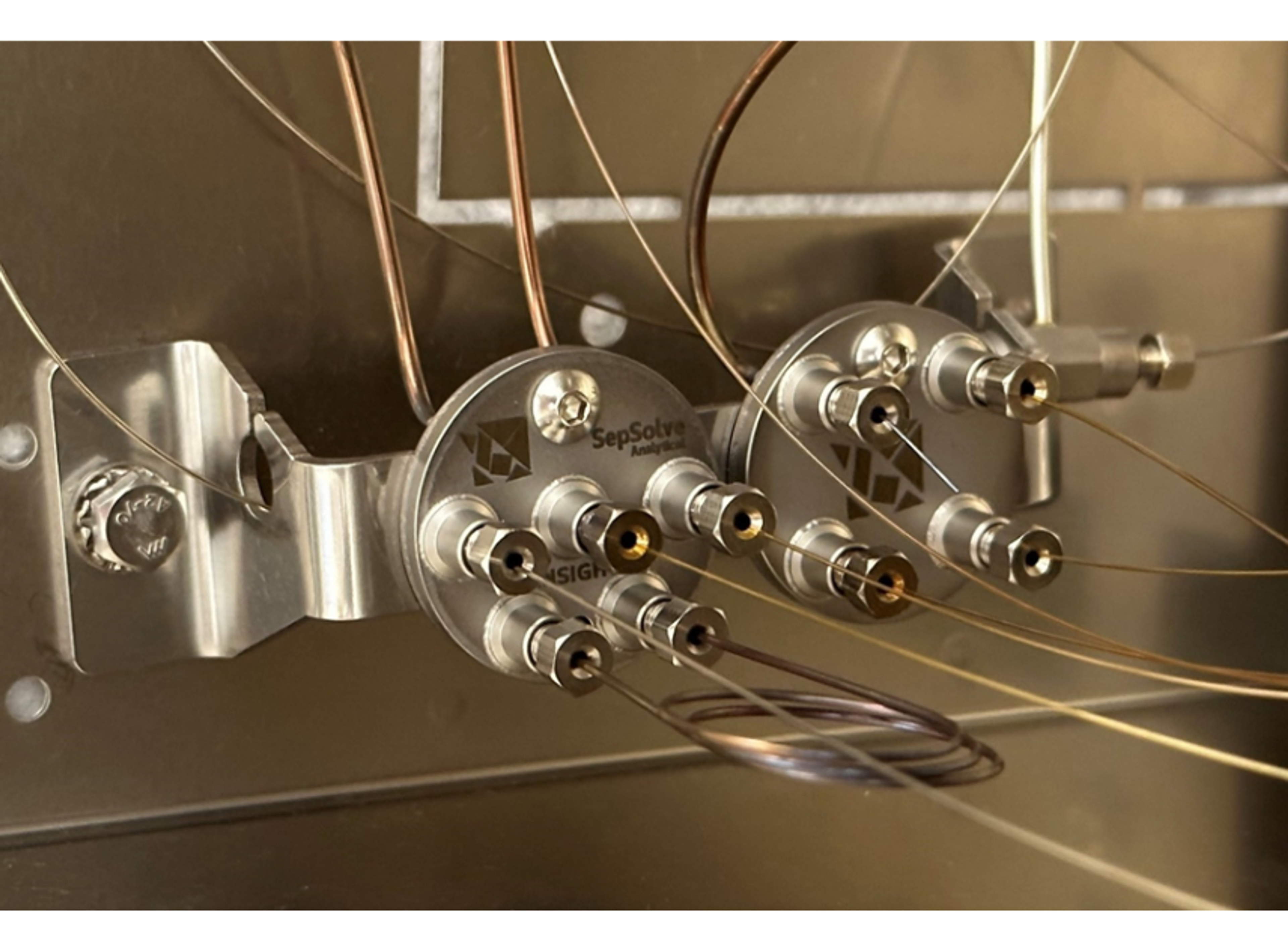
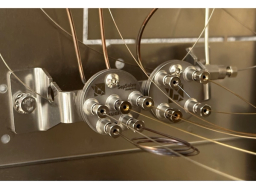
The INSIGHT®-Flow modulator from SepSolve Analytical offers advanced multidimensional GC separations without the cost and complexity of liquid cryogen. Using best-in-class reverse fill/flush operation, it provides reliable, repeatable, and cost-effective GCxGC performance. This makes INSIGHT-Flow an excellent choice for GC laboratories focused on routine, high-throughput analyses or exploratory applications involving volatiles below C7, such as breath biomarker discovery and aroma profiling. In keeping with SepSolve’s customised GC and GC–MS product offering, the INSIGHT-Flow modulator integrates seamlessly into any commercial GC, with its compact design easily mounted within the oven.

Untargeted comparison of soft drink brands using immersive sorptive extraction, GC×GC–TOF MS, and chemometrics
In this application note, SepSolve uses an immersive sorptive extraction coupled with comprehensive two-dimensional gas chromatography and BenchTOF2™ time-of-flight mass spectrometry (GC×GC—TOF MS) to compare flavor profiles from popular brand soft drinks with those of imitation products.
Flexible, custom-built analytical system for whole-vehicle emissions tests
Download this application note to find out how a custom-built analytical system is being used in vehicle emissions tests to carry out whole-vehicle analysis of volatile organic compounds (VOCs).
Reverse engineering the aroma of plant-based meat substitutes
This study describes the use of headspace sorptive extraction with GCxGC-TOF MS to compare the volatile profiles of ground meat and plant-based substitutes.
Discovery of biomarkers in breath and other biological samples
The accurate identification and measurement of biomarkers in biological samples - such as breath and biofluids - has the potential to provide rapid, minimally-evasive diagnosis of a range of physiological and pathological conditions. In this application guide, SepSolve Analytical describes how flexible sampling coupled with high-performance GC-MS or GCxGC-MS enables the maximum possible number of compounds to be identified in a realistic run time.
Discovery of biomarkers in breath: Enhancing separation and identification using GCxGC-TOF MS
In this study, SepSolve Analytical describes the comprehensive, high-sensitivity screening of disease biomarkers, through use of sampling onto TD tubes, automated preconcentration, and GCxGC-TOF MS.
Discovery of biomarkers in breath: Development and optimization of a TD-GCxGC-TOF MS analytical platform
This study by SepSolve Analytical describes the development of an analytical platform based upon TD-GCxGC-TOF MS and shows its application to the collection and analysis of breath samples.
Fast and efficient group-type (PiPNA) classification of jet fuels
This study demonstrates the performance of flow-modulated GC×GC for robust group-type characterisation of jet fuels, with quantitative analysis by flame ionisation detection (FID) and confident identification of trace-level contaminants by mass spectrometry.
A guide to two-dimensional gas chromatography
Comprehensive two-dimensional gas chromatography (GC×GC) is an advanced analytical technique with an increased separation capacity suitable for the analysis of complex samples. This application note demonstrates some of the most important applications of two-dimensional gas chromatography.
Gaining insights into the complex chemistry of cannabis aroma
This scientific poster evaluates differences in terpene composition for the same cannabis strain grown under different conditions.
Improved discovery of biomarkers of disease by TD–GC×GC–TOF MS
Analysis by comprehensive two-dimensional gas chromatography coupled with time-of-flight mass spectrometry (GC×GC–TOF MS) provides the enhanced separation necessary to resolve complex mixtures. This scientific poster demonstrates the enhanced performance of a multi-functional TD–GC×GC–TOF MS system by simulating disease biomarkers through a controlled, artificial change in participants’ breath.
Investigating the impact of volatile compounds on the flavor profiles of foods and drinks
Volatile profiling of food and beverages is crucial for understanding and enhancing their quality, safety, and consumer appeal. Analysing these volatiles presents several challenges due to the diversity of chemical classes, their varying concentrations, and the complex matrices involved, which can be problematic for conventional gas chromatography–mass spectrometry (GC–MS) approaches.
Join Prof. Kieran Kilcawley, Principal Research Officer at Teagasc Food Research Centre and Adjunct Professor, University College Cork and Technological University Dublin, as he explores how innovative extraction and enrichment techniques, combined with state-of-the-art GC–MS analyses, can overcome these difficulties and deliver more detailed and accurate volatile profiles.
Key learning objectives
- Understand the critical role volatile compounds play in shaping the flavor and overall quality of food and beverages
- Learn about the latest techniques for the sensitive extraction and analysis of aroma-active compounds, including high-capacity sorptive extraction and comprehensive two-dimensional gas chromatography (GCxGC).
- Explore practical applications through case studies, including volatile profiling of whiskey, analysis of fatty acids in dairy products, and evaluating the impact of cooking temperature on the volatile profile of beef
Who should attend?
- Food scientists who want to understand more about profiling, odour perception, sensory evaluation, and food authenticity analysis.
- R&D food scientists and analytical scientists who want to enhance their understanding of analysing complex samples.
- GC(–MS) users eager to hear about the latest instrument developments.
Certificate of attendance
All webinar participants can request a certificate of attendance, including a learning outcomes summary, for continuing education purposes.

Non-target screening of food flavorings using GC×GC with BenchTOF2 and Tandem Ionisation
Liquid smoke is the name given to flavoring products that claim to enhance food by adding a ‘smoked’ flavor to mimic the traditional smoking process.
Due to the complex nature of liquid smoke, the European Food Safety Authority (EFSA) issued new guidelines in February 2021 for the analysis of such products prior to authorization. The new guidelines call for full chemical characterization of the primary product, meaning that non-target analysis is required.
In this SelectScience webinar, discover how GC×GC–TOF MS coupled with innovative chemometrics software can provide comprehensive comparison of liquid smoke composition to improve quality control procedures and to accelerate the development of new flavorings.
Key learning objectives
- How GC×GC–BenchTOF2 can gain greater insights into sample composition for robust aroma and flavor profiling
- How Tandem Ionization® can be used to improve confidence in compound identification and enhance non-target workflows
- How smart software workflows can automatically uncover key differences between complex flavor profiles
Who should attend?
- GC(-MS) users who want to enhance their ability to analyze complex samples
- Food, fragrance and flavor scientists interested in how advanced analytical techniques can provide a competitive edge
Certificate of attendance
All webinar participants can request a certificate of attendance, including a learning outcomes summary, for continuing education purposes.

Comprehensive vehicle emissions testing using thermal desorption (TD) and GC×GC–TOF MS
With the increased uptake of hybrid and electric vehicles, non-exhaust emissions are now of growing environmental concern. In this webinar, our guest speaker, Dr Nick Molden, (Emissions Analytics), will demonstrate the use of thermal desorption (TD) for versatile sampling of emissions from exhausts, vehicle interiors and tyres. When coupled with GC×GC–TOF MS this provides improved chemical fingerprinting of emissions to enhance our understanding of how vehicles may impact the environment and human health.
Key learning objectives
- See how GC×GC–TOF MS can gain insight into volatile emissions from car trim materials, such as plastic, textiles and rubber.
- Find out how characterising tyre composition can help us to understand the sources of microplastics being observed in air, water and soil samples.
- Learn how to future-proof your lab in case of expansion of the target lists of regulated compounds.
Who should attend?
- GC-MS analysts, lab supervisors and directors
Certificate of attendance
All webinar participants can request a certificate of attendance, including a learning outcomes summary, for continuing education purposes.