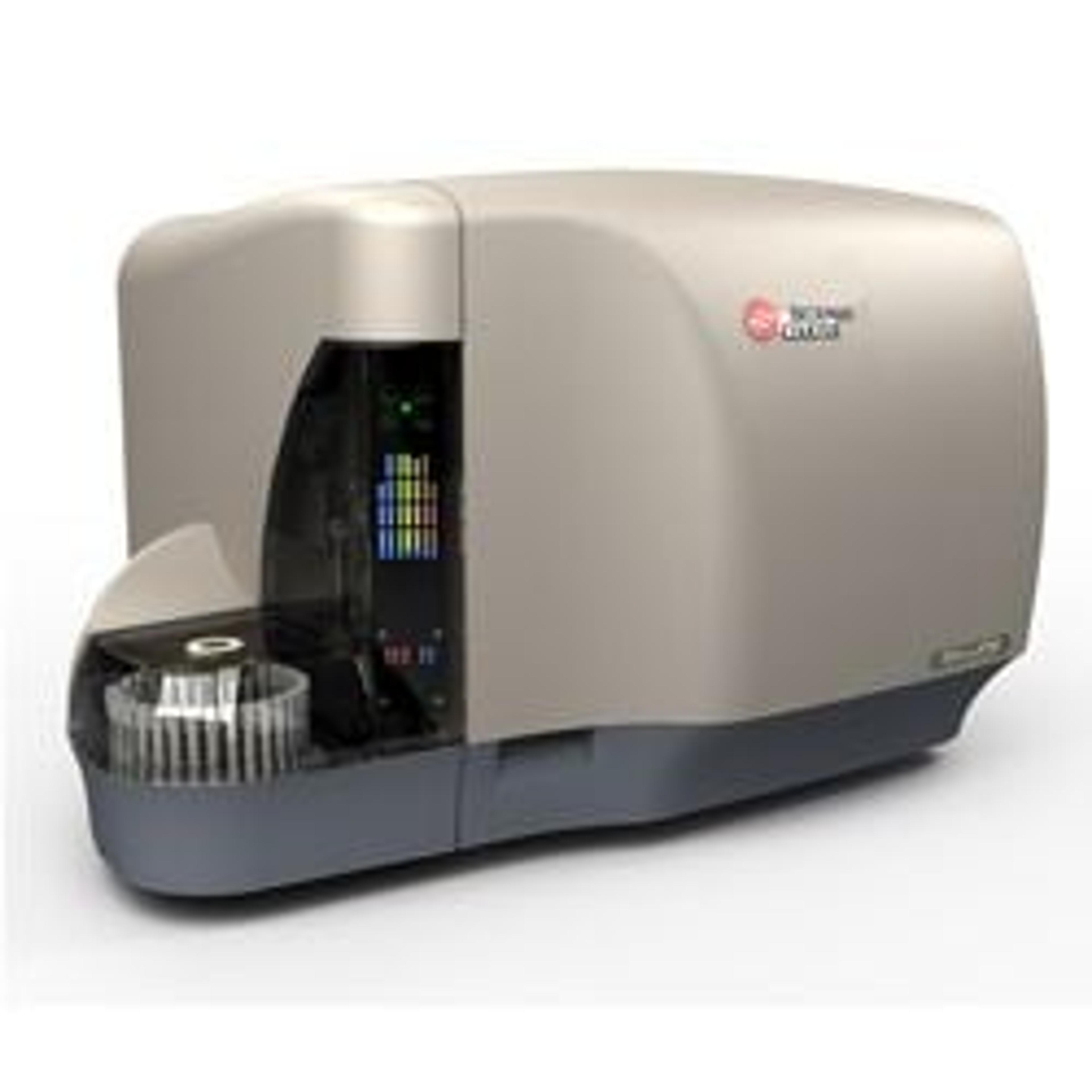
Gallios™ Flow Cytometer
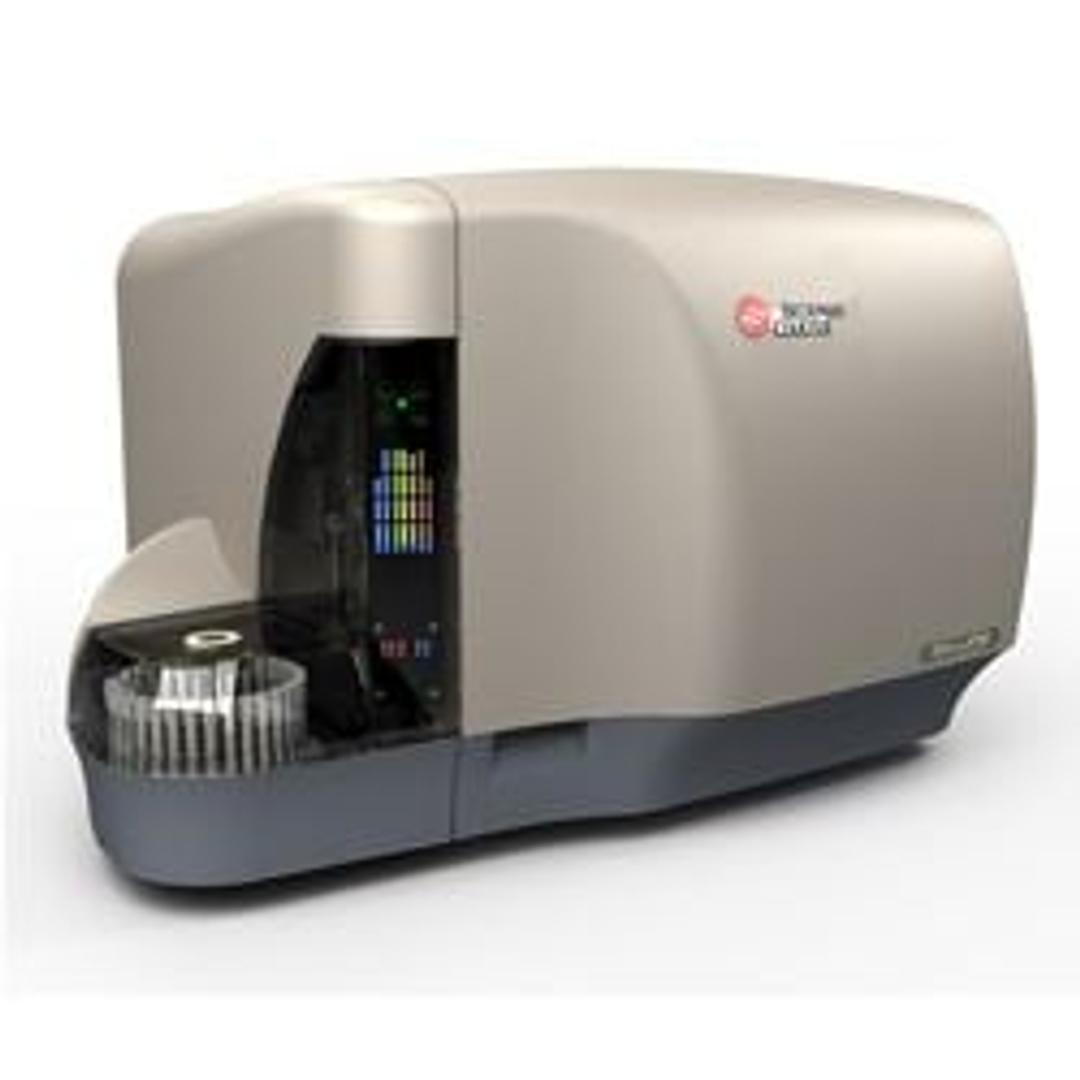
The Gallios Flow Cytometer is a research system that delivers analytical excellence by coupling extraordinary sensitivity, resolution and dynamic range with high-speed data collection. Designed to fit your needs, today and tomorrow, the Gallios flow cytometer provides efficient acquisition of excellent quality data from up to 10 colors with advanced optical design for enhanced sensitivity for multicolor assays. With customize…

The supplier does not provide quotations for this product through SelectScience. You can search for similar products in our Product Directory.
Powerful equipment that offers more features than the ones we currently use
Analisis of protein binding to cell surface
The 10-channel Gallios Flow cytometer is an easy-to-use, powerful piece of equipment, that offers great sensitivity and stability.
Review Date: 13 Feb 2019 | Beckman Coulter Diagnostics
Research
I now have 2, 3 laser, 10 color Gallios in my flow core. The Kaluza G operating software is awesome. My users cannot move to the new instrument fast enough, and my original instrument will have Kaluza G very soon.
Review Date: 10 Dec 2014 | Beckman Coulter Diagnostics
Flow Cytometry
I have had a 3 laser 10 color Gallios in my core facility since the beginning of 2013. It has a very high usage rate (~150 hrs/month), and is a reliable instrument. However, most users would prefer different operating software, and the expected upgrade to Kaluza in 2015 is generating a lot of excitement. I am currently looking at trading my FC 500 on a second (2 laser 8 color) Gallios with Kaluza as the operating software. That is not to say there is anything wrong with the current software, but in a research setting a little more flexibility would be a bonus.
Review Date: 26 Aug 2014 | Beckman Coulter Diagnostics
Biometrics
This equipment is very useful in a clinical lab. It is easy to use by most of the technicians and also the service they provide is great. The manual is very helpful and is written in a simple way. May be the only fault is the price, particularly for a small lab.
Review Date: 7 Feb 2014 | Beckman Coulter Diagnostics
The Gallios Flow Cytometer is a research system that delivers analytical excellence by coupling extraordinary sensitivity, resolution and dynamic range with high-speed data collection.
Designed to fit your needs, today and tomorrow, the Gallios flow cytometer provides efficient acquisition of excellent quality data from up to 10 colors with advanced optical design for enhanced sensitivity for multicolor assays. With customized forward scatter, to achieve the most accurate size measurement, and optimized electronics for high resolution and fast, accurate processing, the Gallios was designed for your research needs.
The Gallios offers up to four highly reliable, solid-state lasers in standard red and blue, with violet and yellow lasers available as an option. By incorporating the optional 405nm violet laser and an optional 561nm yellow laser, the Gallios Flow Cytometer offers a greater choice of fluorochromes to perform sophisticated multicolor experiments. With the new 561nm laser system you can analyze multiple fluorescent proteins simultaneously, as well as benefit from a greater ability to detect red fluorescent proteins. Easily interchangable optical filters facilitate detection of a variety of dyes and wavelengths.
Gallios™ Flow Cytometer Features:
- Available in 4 configurations
- Innovative laser cartridges
- Plug and play filters allow rapid instrument reconfiguration between experiments
- Efficient delivery of light
- Electronics design incorporates fast, accurate measurement of signals over a wide range of event rates

High-Recovery and High-Purity Data Analysis Strategies for Rare Abnormal Plasma Cell Event
Rare event cytometry faces the challenge of abundancy of non-target events and heterogeneity that may overlap with hallmark features of the target cells. However, this challenge can be resolved by using highly discriminative antibody panels with high-recovery gating strategies, robust plausibility checks and effective gate purification steps. Such a methodology is demonstrated in the application note below.
Monitoring FOXP3+ Tregs Cells Sensitivity To Low Doses of IL-2 using p-STAT-5 detection in Ex-Vivo Whole Blood Samples
The detection of phospho-epitopes by flow cytometry is a long and inefficient process, required multiple washing steps and dedicated buffers and protocols which can be harmful to certain epitopes, like the FOXP3 marker. Interleukin-2 (IL-2) is a key player in the immune system, affecting lymphocytes and the regulatory system. This poster demonstrates a fast and reliable method for gentle sample preparation allowing monitoring of regulatory T cell (Treg) sensitivity to IL-2.
Flow Cytometric Analysis of Multiple Signaling Pathways in LPS Stimulated Human Peripheral Blood Monocytes
The availability of antibodies specifically reactive with phospho-epitopes characteristic of activated signaling proteins provides specific probes that can be used to simultaneously monitor multiple signal transduction pathways. This poster describes an optimized protocol for specific fixation and permeabilization techniques to monitor signaling pathways in blood and bone marrow samples.
LPS Activation of MAPK Signaling in Whole Blood Samples
LPS (lipopolysaccharide) is known to activate multiple signaling pathways in peripheral blood monocytes via the Toll-Like Receptor 4 (TLR4) complex. Following LPS exposure, monocytes rapidly activate all three major MAP Kinase pathways – ERK, p38, and SAP/JNK, in addition to PI3 Kinase and IKK/NFkB pathways. This application note describes a procedure for monitoring these signaling pathways in whole blood samples using flow cytometry.
Beckman Coulter Gallios Flow Cytometer and the Detection of Micro-particles
This white paper demonstrates that the Gallios is a superb platform for the identification and characterization of biological small and micro-particles.

Beckman Coulter Hosts Flow Cytometry Educational Programme for Diagnostics and Research Applications in the Clinical Setting
Beckman Coulter to present at the European Society for Clinical Cell analysis (ESCCA) 2017
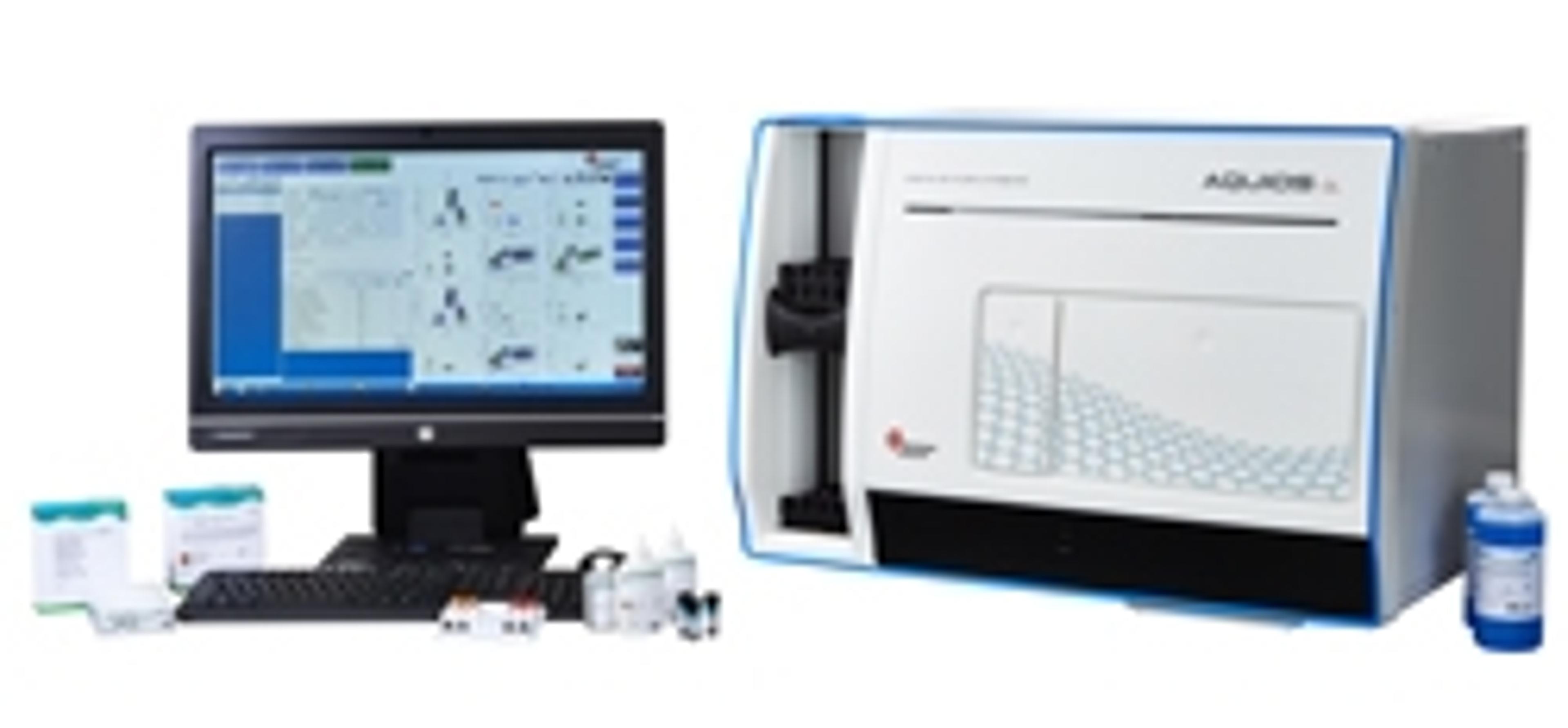
Beckman Coulter Expands Innovative Solutions for the Monitoring of HIV and AIDS in Africa
Beckman Coulter Expands Innovative Solutions for the Monitoring of HIV and AIDS in Africa