Thermo Fisher Scientific Sets New Standards for Biopharma Drug Discovery and Production
19 Sept 2013Product news
Biopharma manufacturers attending the BioProcess International Conference and Exhibition can explore several new innovations from Thermo Fisher Scientific in bioprocessing technologies and solutions that address the evolving requirements for drug discovery and production.
“We understand the complex requirements and technologies required to bring the biologic from discovery to production,” said Brandon Pence, global marketing director, cell culture and bioprocessing, Thermo Fisher Scientific. “Our new innovations introduced today further position us to offer pharma and biopharma companies a total solution that spans research through large-scale manufacturing.”
Bringing the Biologic from Discovery to Production
During the annual conference this week at the Boston Convention Center (September 17-19, 2013, Booth #611), Thermo Fisher will showcase new innovations in cell culture and bioprocessing aimed at facilitating biomanufacturing productivity, performance and efficiency. Highlights of the company’s presence at BioProcess International include:
• The new Thermo Scientific HyCell TransFx cell culture media platform offers animal-derived component-free and serum-free media targeted for HEK293 (Thermo Scientific HyCell TransFx-H) and CHO cells (HyCell TransFx-C). HyCell TransFx establishes a new benchmark for transfection media with improved efficiency and higher viable post-transfection cell density compared to other products.
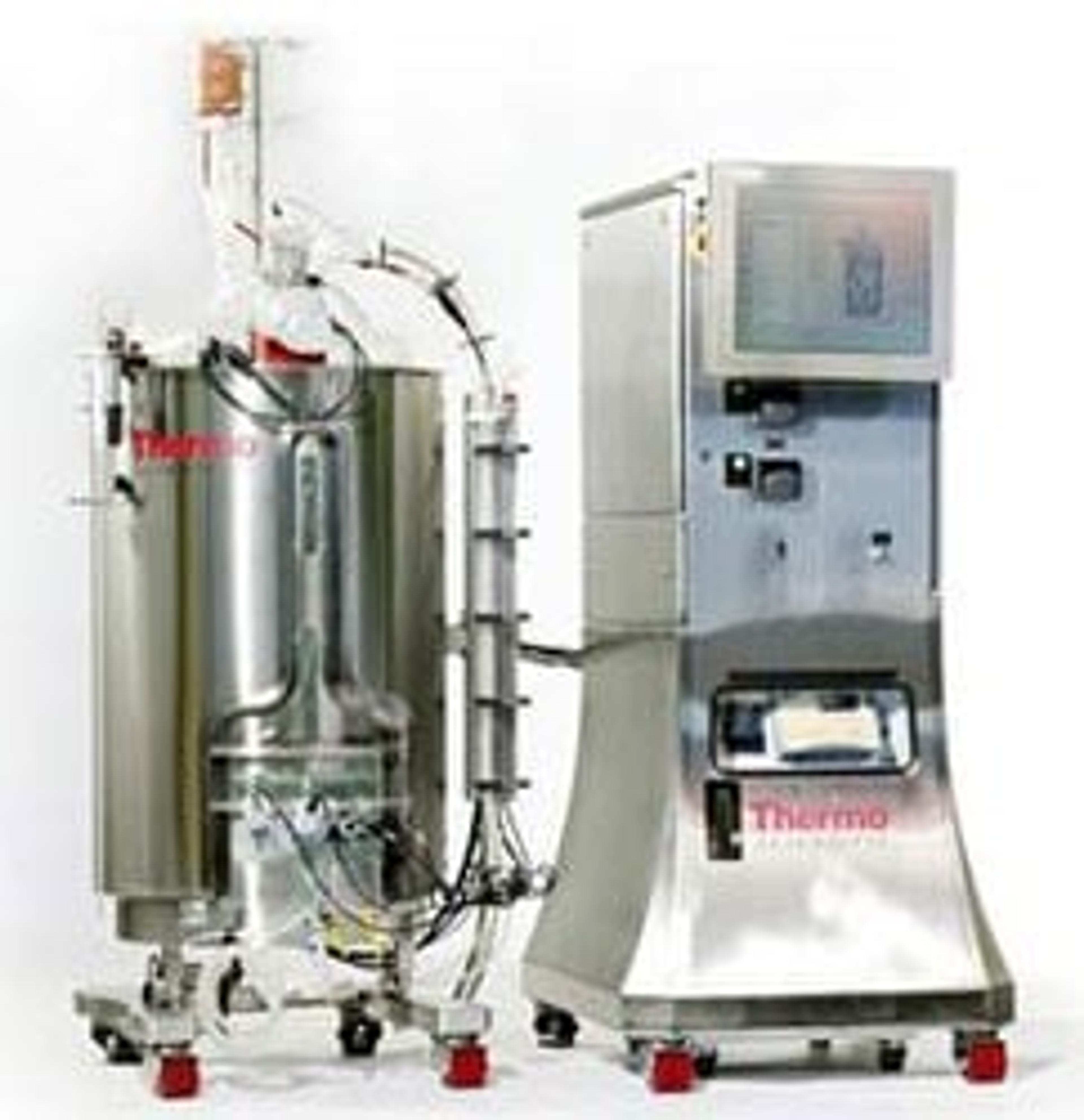
• Setting new standards for cell culture performance, the Thermo Scientific HyPerforma Single-Use Bioreactor BioProcess Container systems feature a new gas sparger design that is engineered to produce a consistent bubble size for predictable scale-up and performance from the 50L to the 2000L Single-Use Bioreactors (S.U.B.). The new dual sparger design consists of a micro and macro sparger integrated into the standard S.U.B. BioProcess Container systems.
• The new next-generation Thermo Scientific HyPerforma Single-Use Bioreactor has been redesigned to optimize usability and ergonomics while maximizing lab space. The new system offers all of the advantages of the previous design but with advancements that make it easier to manage tubing systems and loading of single-use Thermo Scientific BioProcess Containers, as well as assist in faster heat up and cool down, flexible positioning, and height-adjustable single-or dual-filter brackets.
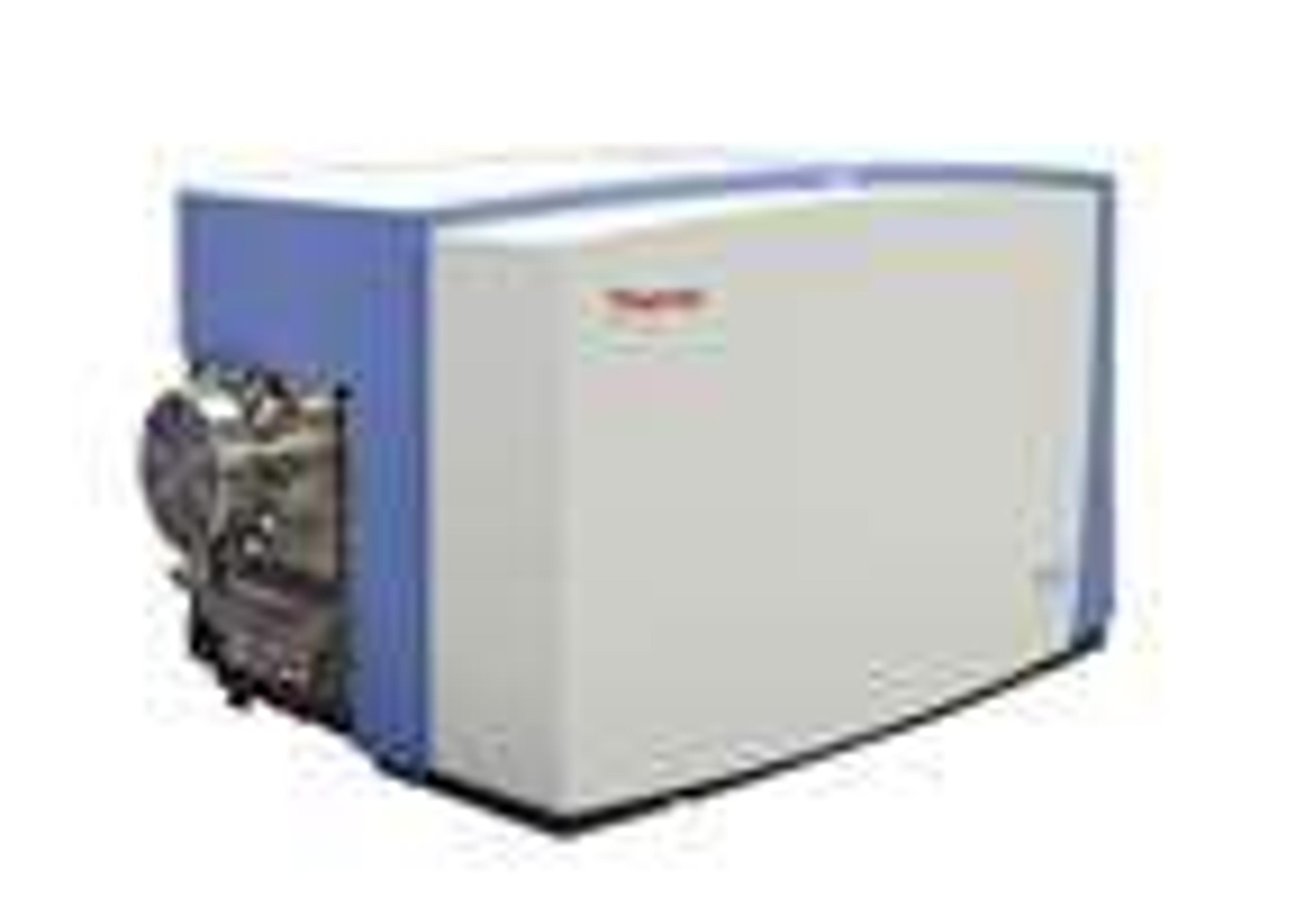
• The new Thermo Scientific Prima BT Benchtop Mass Spectrometer, an affordable industrial laboratory gas analyzer, is the only scanning magnetic sector mass spectrometer configured for lab-based process development. Suited for laboratory managers who need a flexible gas analyzer, Prima BT is ideal for highly-sensitive low-flow biologics research, as it connects directly to the bioreactor, enabling critical real-time analysis and ensuring worry-free scale-up from the lab to the process line.
• Conference Sessions: Thermo Fisher experts will participate in two presentations as part of the Single-Use Innovations in Critical and High-Value Applications session:
• Development, Qualification and Application of Single-Use Technologies for BioProcessing: Michael Goodwin, director of research and development, Thermo Fisher Scientific
• Panel Discussion: What’s Next for Single Use?: Emerging Applications in Process Development and Manufacturing: moderated by Brandon Pence, director of marketing, Thermo Fisher Scientific
Thermo Fisher has served the biopharma industry for decades. The company introduced several industry firsts—most notably, the first-to-market bioprocess container and stirred-tank S.U.B. Thermo Fisher bioprocessing solutions are aimed at facilitating biomanufacturing quality, performance and efficiency. Its solutions include single-use technologies, analytical instruments, labware and safety consumables, centrifugation, and production chemical supply chain services as well as Fisher BioServices, the world’s largest biorepository and biobanking service provider.