The Perfect Tissue Storage Solution: Customer Review

18 Dec 2014

Sonia Nicholas
Managing Editor and Clinical Lead

Editorial article

Diane McGarvey is the Director for the Cooperative Human Tissue Network (CHTN) Eastern Division at the University of Pennsylvania. The CHTN was initiated by the Cancer Diagnosis Program of the National Cancer Institute in 1987. Its objective was to provide researchers with increased access to human cancer tissue, helping to accelerate the advancement of cancer research.

The CHTN Eastern Division is part of the Pathology Department at the University of Pennsylvania and provides biospecimens to investigators working in the fields of cancer, neoplasia, autoimmune disease, aging and degenerative diseases. In some cases, a portion of a patient specimen that is no longer required for patient diagnosis, or further ongoing tests, can be made available for distribution and use in research projects. Effective sample freezing and storage at CHTN is essential to ensure the well-characterized and high quality specimens necessary for these research projects.

The Problem

Diane McGarvey had long identified a storage problem in her laboratory - the use of multiple vial sizes made storage in freezers difficult. The department was using five different container sizes, depending on the size and type of tissue that was to be stored. This made it impossible for the lab to use traditional storage racks. Diane had informed her current container supplier, WHEATON Industries, of the problem that she was having.

The Solution

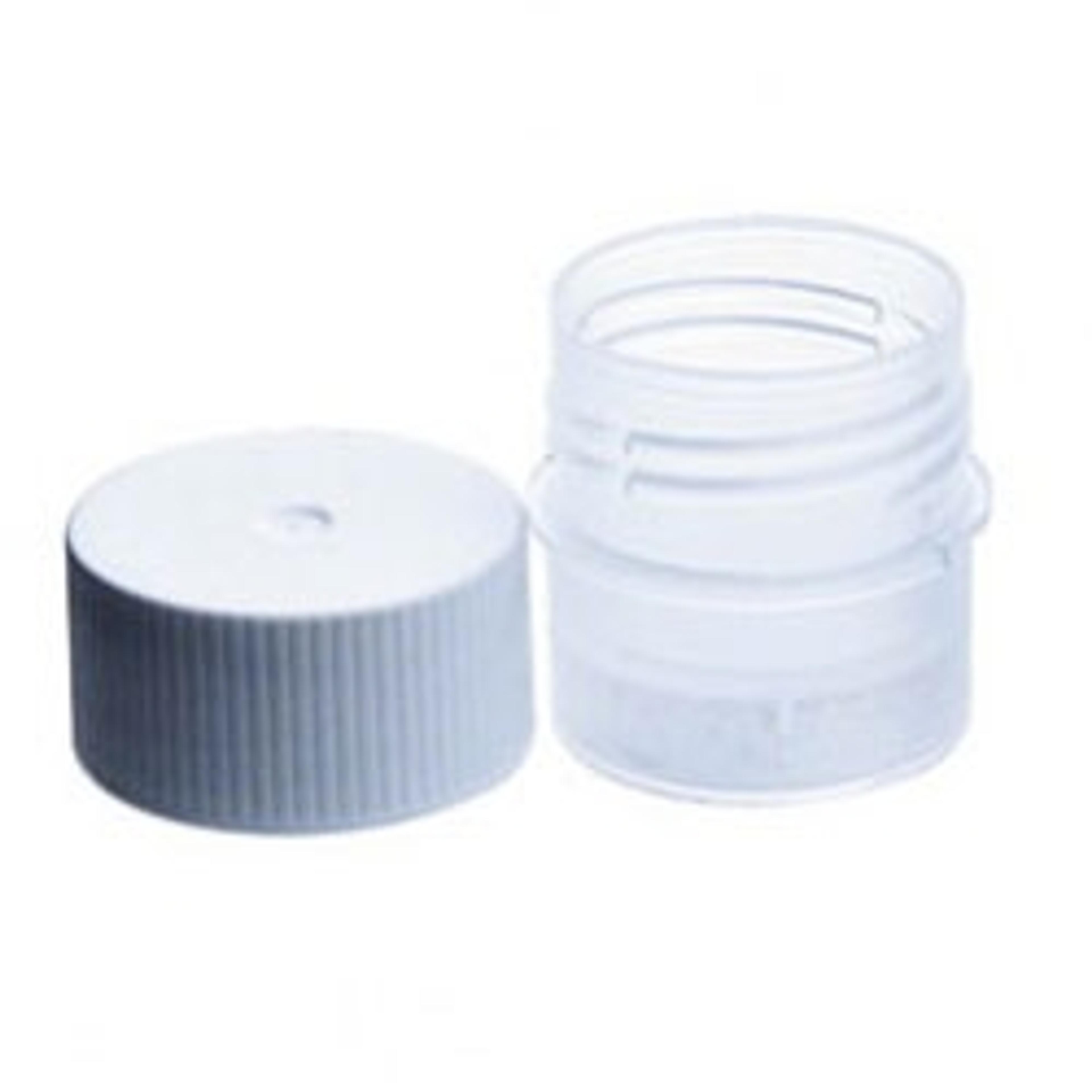
WHEATON listened to the concerns of Diane and other customers in a similar position, and designed the new WHEATON CryoELITE® Tissue Vial. This vial has been specifically designed for the effective cryopreservation of biological tissue specimens, taking into account the fact that tissue destined for cryoypreservation has different requirements compared to cells and other biofluids. The vial is designed to provide a secure, reliable, cryogenically approved method of both storing and transporting cryogenic tissues.

What customers like Diane needed was a vial with a wide-mouth for larger tissue samples. The sturdy wide-mouth CryoELITE Tissue Vial is ideal for these larger tissue samples. The tissue can be manipulated in and out of the vial without damage to the tissue itself. In addition, customers with transportation needs will approve of the fact that the cap seal exceeds DOT and IATA regulations, ensuring ultimate protection of samples during transportation and demanding freeze-thaw handling. The WHEATON tissue vial meets USP Class VI classification and is manufactured from low binding, cryogenic-grade virgin polypropylene. The vials are lot tested and certified to be free of pyrogens, RNase / DNase and endotoxins, and are tested for viable storage from -196⁰C to 121⁰C.

Diane McGarvey told SelectScience: “Sometimes it is the relatively small problems that cause the biggest daily headaches in the laboratory. WHEATON listened to my needs, and even involved me by allowing me to provide feedback during the design of the new tissue vial. The new CryoELITE Tissue Vial is the perfect solution to our storage problems. It immediately enabled us to use traditional storage rack solutions, solving a genuine problem that we were experiencing.”

When companies are willing to listen to their customers, act on feedback and solve an existing problem, they inspire long-term customer satisfaction and tremendous brand loyalty. This has certainly been the case with Diane McGarvey and WHEATON Industries.

Learn more about the CryoELITE Tissue Vial.

Read an exclusive interview with WHEATON CEO Wayne Brinster: Unique Vial Solutions that Address the Needs of the Clinical Customer

CryoELITE® Tissue Vial

WHEATON

WHEATON CryoELITE® Tissue Vial, 5mL, White Cap, Sterile.The new WHEATON CryoELITE® Tissue Vial was developed in response to demand from researchers looking for a secure, reliable, cryogenically approved vial to store and transport cryogenic tissues. Featuring the proven WHEATON unrivaled cap seal that exceeds DOT and IATA regulations, the WHEATON CryoELITE® Tissue vial allows consumers to leverage WHEATON's expertise in cryogenic storage for cells and fluids to tissues.Shipped sterile in cases containing 10 bags of 25 vials, with certificates of sterility and RNase/DNase and Endotoxin free, the WHEATON CryoELITE® Tissue vial is the newest innovative solution designed by WHEATON to support the research community.Features: Wide-mouth CryoELITE® vial for use with tissue sections Unrivaled cap seal exceeds DOT and IATA regulations ensuring ultimate protection of samples during transportation and demanding freeze-thaw handling Made from low-binding, cryogenic grade virgin polypropylene Lot certified RNase/DNase and endotoxin free and non-pyrogenic providing assurance for sample integrity Freestanding bottom for stability Stippled vial surface for easier handling and writability Temperature range: -196C to 121C Non-cytotoxic, non-mutagenic USP, Class VI tested

(0)

Links

Tags

Cell / Tissue CultureCell culture or tissue culture is used to study the biology of cells or tissues and to isolate cellular products in an environment which can be manipulated and well defined. Accurately control your culture environment with bioreactors or culture incubators, bind your cells to a surface or together with an extracellular matrix. Distinguish cell types with differential media or proliferate cells with certain characteristics using selective media. Enrich your media with supplements such as growth factors, sera and vitamins. Find the best cell and tissue culture products, kits and equipment in our peer-reviewed product directory: compare products, check customer reviews and receive pricing direct from manufacturers.ProteomicsProteomics is the systemic bioinformatics study of proteins and amino acids, including their structure, size, function and identification. Tools used in proteomics include chromatography, blotting and gels, protein arrays, mass spectrometry and ELISA and associated analysis software. Analyzers and proteomic systems should be sensitive, high resolution, fast and may be automated for high-throughput.Cell Lines Stem Cells and Primary CellsPrimary cell cultures, established cell lines and stem cells are vital for <i>in vitro</i> and <i>ex vivo</i> experimentation. High-quality cells, optimized for your applications, alongside optimized cell substrates, growth medium and supplements, are critical for experimental success. Explore a range of cells suitable for your applications, including isogenic cell lines, competent cells, induced pluripotent stem cell (iPSC)-derived cell lines, fungal/bacterial/mammalian cell lines, stem cells and cancer cell lines. Find the best cells for your research in our peer-reviewed product directory: compare products, check customer reviews and receive pricing direct from manufacturers.Labware and Lab SuppliesLabware and lab supplies include various forms of glassware, plasticware, reagents and personal protective equipment (PPE) and are used across all scientific laboratories, enabling daily tasks to be performed. Explore a range of flasks and beakers, petri dishes, carboys and storage bottles. Labware such as condensers, desiccators and burettes are also available for more specific tasks. Find the best labware and lab supplies in our peer-reviewed product directory: compare products, check customer reviews and receive pricing direct from manufacturers.MicrobiologyMicrobiology is the study of microorganisms including protists, prokaryotes, fungi, and, often, viruses. Microorganisms are a useful research tool as genetic vectors and, in immunology, for antibiotic susceptibility testing, cellular biology and genetics. Microorganisms commonly grow readily in incubators with microbial culture media; this can contain chromogenic supplements to differentiate between cell lines. Estimate your culture’s density of microorganisms with colony counters, or screen and select colonies for desirable clones with automated colony pickers. Additionally, equipment is available to monitor environments for the presence of microbes and identify with microbial identification instruments. Find the best microbiology products in our peer-reviewed product directory: compare products, check customer reviews and receive pricing direct from manufacturers.Blood TransfusionBlood Transfusion involves giving donor blood to a recipient patient. Screening is essential to avoid transfusion reactions. Blood banks use immunohematological techniques to determine rh and ABO blood group, and screen for antibodies using specific antisera. Blood Banks use Direct Coombs Tests (DCT) and Indirect Coombs Tests (IAT) to detect hemolysis and Haemolytic Disease of the Newborn (HDN).HematologyIn Haematology / Hematology, complete blood cell counts (or full blood counts) are obtained using automated blood count analyzers to enumerate blood cell types.  Hematology also encompasses haemostasis and coagulation, thrombophilia and hemophilia, plasma viscosity and ESR analysis, hemoglobinopathies, cell morphology and haematinic measurement.ImmunologyImmunological techniques measure and characterize immune responses. Immunology kits and analysis systems often use techniques such as ELISA, radioimmunoassay (RIA) and immunodiffusion assays, Immunohistochemistry, and flow cytometry. Immunologists use equipment such as flow Cytometers, plate readers, plate washers and fluorescent microscopes.Cellular PathologyCellular Pathology deals with the microscopic analysis of tissue samples and cells. Sample preparation and processing includes fixation, staining, sectioning and slide mounting, using equipment such microtomes and cryostats. In choosing immunohistochemistry and immunocytochemistry kits, consider chromogens, staining method, antibodies, microscopes and imaging.Cell-Based AssaysCell-based assays are used to monitor the presence, quantity and activities of a desired cellular analyte including drug molecules or biomarkers. This can reveal information on cell health (apoptosis, cytotoxicity, viability and proliferation assays), cell metabolism, cell migration and cell signaling mechanisms. Find the best cell-based assay products, kits and equipment with our peer reviewed product directory: compare products, check customer reviews and receiving pricing direct from manufacturers.BiomarkersBiomarkers are biological markers which can be measured and evaluated to indicate a biological state. The use of biomarkers in research and diagnosis can indicate a normal or disease state or drug response of cells / tissues. Biomarkers include genetic markers, cell surface markers such as antigens, antibodies or receptors and secreted molecules such as cytokines. An assay system is required for identification of biomarkers. :Clinical ChemistryBiochemistry (or clinical chemistry) involves the analysis of bodily fluids using chemical tests. Techniques used include HPLC, chromatography, spectroscopy, mass spectrometry, immunochemical, electrophoresis, turbidometric / spectrophotometric assay, MRI and ISE analysis. Tests are often carried out on plasma or serum but urine (urinalysis) and fecal specimens are also processed.Clinical GeneticsMolecular Genetics covers the analysis of hereditary genetic disease and chromosomal abnormalities. Genetics can be analysed using DNA, RNA, and protein microarrays, PCR, RT PCR and DNA sequencing. Genetic equipment includes genetic workstations, thermal cyclers, cooling blocks and electrophoresis products. Diagnostic kits are used for DNA / RNA extraction and purification.Clinical MicrobiologyMicrobiology is the study of microorganisms including protists, prokaryotes, fungi, and, often, viruses. Microorganisms are a useful research tool as genetic vectors and, in immunology, for antibiotic susceptibility testing, cellular biology and genetics. Microorganisms commonly grow readily in incubators with microbial culture media; this can contain chromogenic supplements to differentiate between cell lines. Estimate your culture’s density of microorganisms with colony counters, or screen and select colonies for desirable clones with automated colony pickers. Additionally, equipment is available to monitor environments for the presence of microbes and identify with microbial identification instruments. Find the best microbiology products in our peer-reviewed product directory: compare products, check customer reviews and receive pricing direct from manufacturers.Embryology / IVFEmbryology refers to the development of an embryo resulting from the fertilization of the ovum, to fetus stage. In vitro fertilization (IVF) refers to the fertilization of the egg outside of the human body, and is an important treatment for infertility.