
PerkinElmer Launches Innovative Atomic Spectroscopy Offerings
6 May 2014
NexION 350 ICP-MS and Intuitive Syngistix Software Deliver Lab Professionals Leading Solutions, Enhancing Efficiency of Elemental Analyses and More Accurate Detection of Nanoparticles.
PerkinElmer Inc., a global leader focused on the health and safety of people and the environment, announces the launch of the NexION® 350 Inductively Coupled Plasma Mass Spectrometer (ICP-MS), its newest atomic spectroscopy product and Syngistix™ for ICP-MS Software, its next generation atomic spectroscopy software platform.
The NexION 350 is designed to empower laboratory professionals with greater efficiency in elemental analyses, specifically delivering the most accurate characterization of nanoparticles in the market. Syngistix for ICP-MS Software is a proprietary workflow-based platform with an intuitive interface and new, automated method setup tools for faster, more efficient implementation.
The NexION 350 delivers enhanced instrument uptime and productivity through several technical innovations designed to reduce background and interferences, optimize signal stability and minimize maintenance requirements and downtime. The combination of these features can enable lab professionals to run more samples per unit of time.
The NexION 350’s data acquisition rates of 100,000 data points per second (10 times faster than any other ICP-MS currently on the market) are ideal for applications that require fast, transient signal analysis, such as nanoparticle characterization, speciation and laser ablation ensuring that critical events are not missed. It can be used for a wide range of environmental testing applications, including detection of trace metals or elements in drinking water, waste water and soil. Scientists can also use the NexION 350 to identify adulterants in food, as well as elemental impurities in pharmaceuticals, helping comply with new testing requirements under USP 232/233).
The NexION 350 operates using Syngistix for ICP-MS Software, which features an intuitive interface with easy navigation for each step of an analysis -- from starting the instrument, to optimizing the system, creating methods and sample lists, performing the run, and reviewing results. Syngistix for ICP-MS Software helps lab professionals to generate faster and more actionable information for every type of analysis, including qualitative, semi-quantitative, quantitative or specialized (isotope-ratio, isotope-dilution).
The NexION 350 also has an optional, dedicated Nano Application Module which provides an unprecedented level of nanoparticle detection and characterization. By combining capabilities of the NexION 350, such as the fastest data acquisition rates on the market with the Syngistix Nano Application Module, lab professionals in the fast growing nanomaterials sciences can significantly improve processes such as particle composition and concentration, along with size distribution. These can be determined in a single run and in less than one minute, without the need for subsequent labor-intensive data processing providing deeper insights about these evolving, new materials.
“The NexION 350 and Syngistix for ICP-MS Software represent important innovations in atomic spectroscopy and nanotechnology, which will help customers run a wide range of analyses more efficiently and detect and characterize nanoparticles more accurately,” said Jon DiVincenzo, President, Environmental Health, PerkinElmer. “Discoveries using nanotechnology are increasingly impacting many aspects of human and environmental health – including pharmaceutical design, food safety, and environmental remediation – and our new offerings help lab professionals to deliver better outcomes.”
PerkinElmer will display the NexION 350 ICP-MS at the 2014 ASMS conference in Baltimore, USA.
Related products
Request Quote for All Products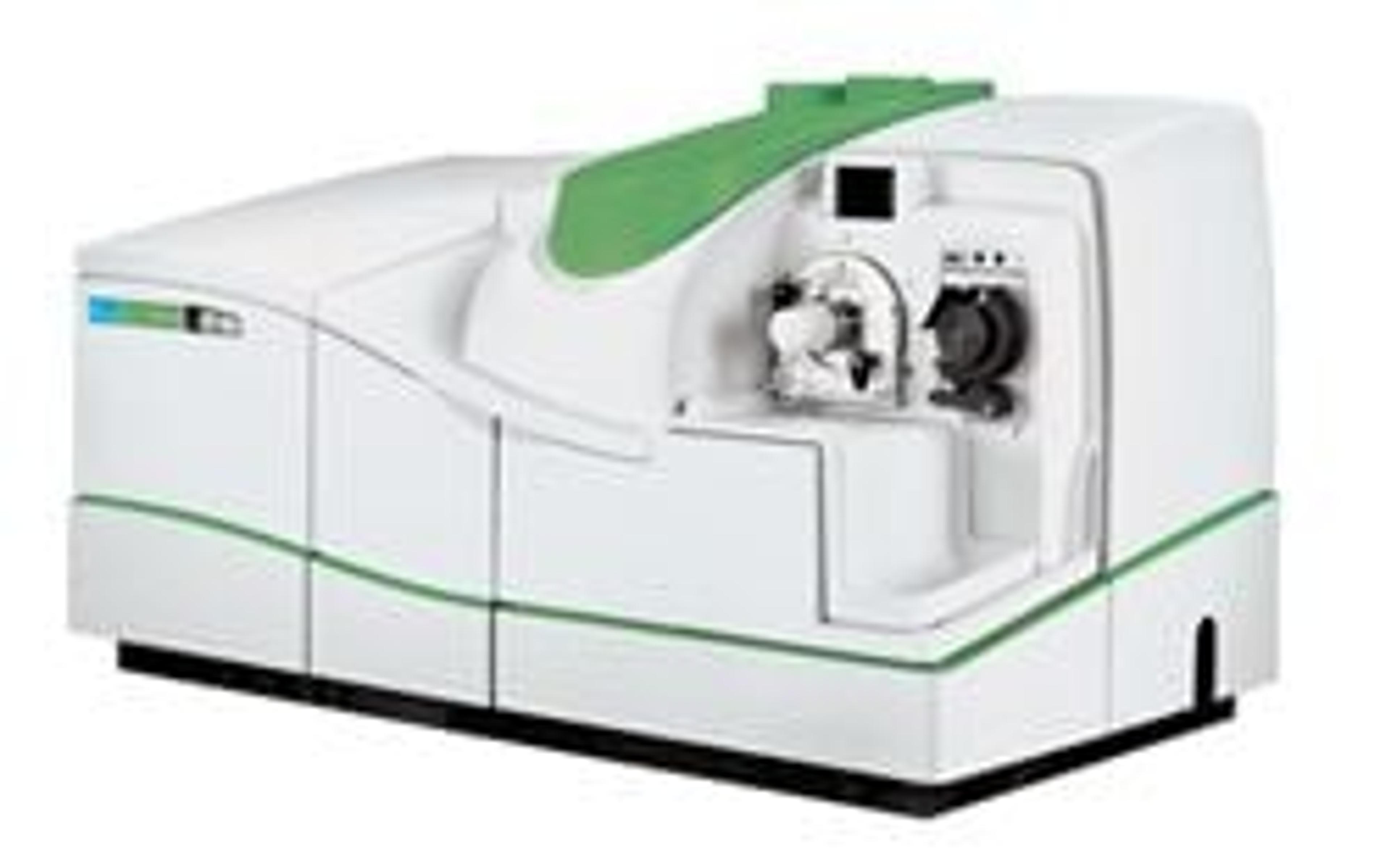
NexION 350 ICP-MS Spectrometers
PerkinElmerWhen your instrument is more efficient and productive, so too are your scientists and your lab. And nothing puts the flow in your workflow better than the NexION® 350 ICP-MS. With a data acquisition speed 10 times faster than any other ICP-MS on the market, the new NexION 350 ICP-MS opens up a whole new world of efficiency and opportunity, allowing you to measure more in less time, and accurately characterize nanoparticles. In addition to the exceptional application flexibility afforded by its speed, the instrument also delivers superior uptime and productivity through a variety of unique features engineered to enhance signal stability: Triple Cone Interface produces the industry’s most tightly focused ion beam and prevents sample deposition on internal components. Quadrupole Ion Deflector turns positively charged ions 90° into the Universal Cell and filters off neutrals. Analyzing Quadrupole made of a unique steel alloy for negligible thermal expansion for unparalleled stability. No extraction lenses to clean for minimized maintenance.