
Hamamatsu Releases the ORCA-Flash4.0 Scientific CMOS Camera Now With ImageConductor Connectivity
17 Oct 2012Product news
The ORCA-Flash4.0 scientific CMOS camera now includes Hamamatsu’s new ImageConductor Connectivity™, a built-in camera function that automatically senses which of the camera’s two output connections, USB 3.0 or Camera Link, is being used.
The default USB 3.0 configuration provides 30 frames per second imaging at the full 2K x 2K resolution. If a faster frame rate is needed now or later, the camera can be easily upgraded by purchasing a high-speed PCI x8 Camera Link board and cable. The addition of the Camera Link board to a user’s computer makes 100 frames per second of full-resolution data possible.
Featuring exceptional quantum efficiency and low noise, the ORCA-Flash4.0’s high sensitivity means extreme versatility. This generation 2 sCMOS camera has quantum efficiency values of over 70% at 600 nm and 50% at 750 nm. In every configuration and at every speed, the ORCA-Flash4.0 has only 1.3 electrons median (1.9 electrons rms) read noise. It also features a 6.5 μm × 6.5 μm pixel size, which is ideal for microscopic applications. The combination of these features makes the ORCA-Flash4.0 camera ideal for demanding microscopy applications such as super-resolution microscopy, TIRF microscopy, ratio imaging, high-speed calcium ion imaging, FRET, real-time confocal microscopy, and many more.
Related products
Request Quote for All Products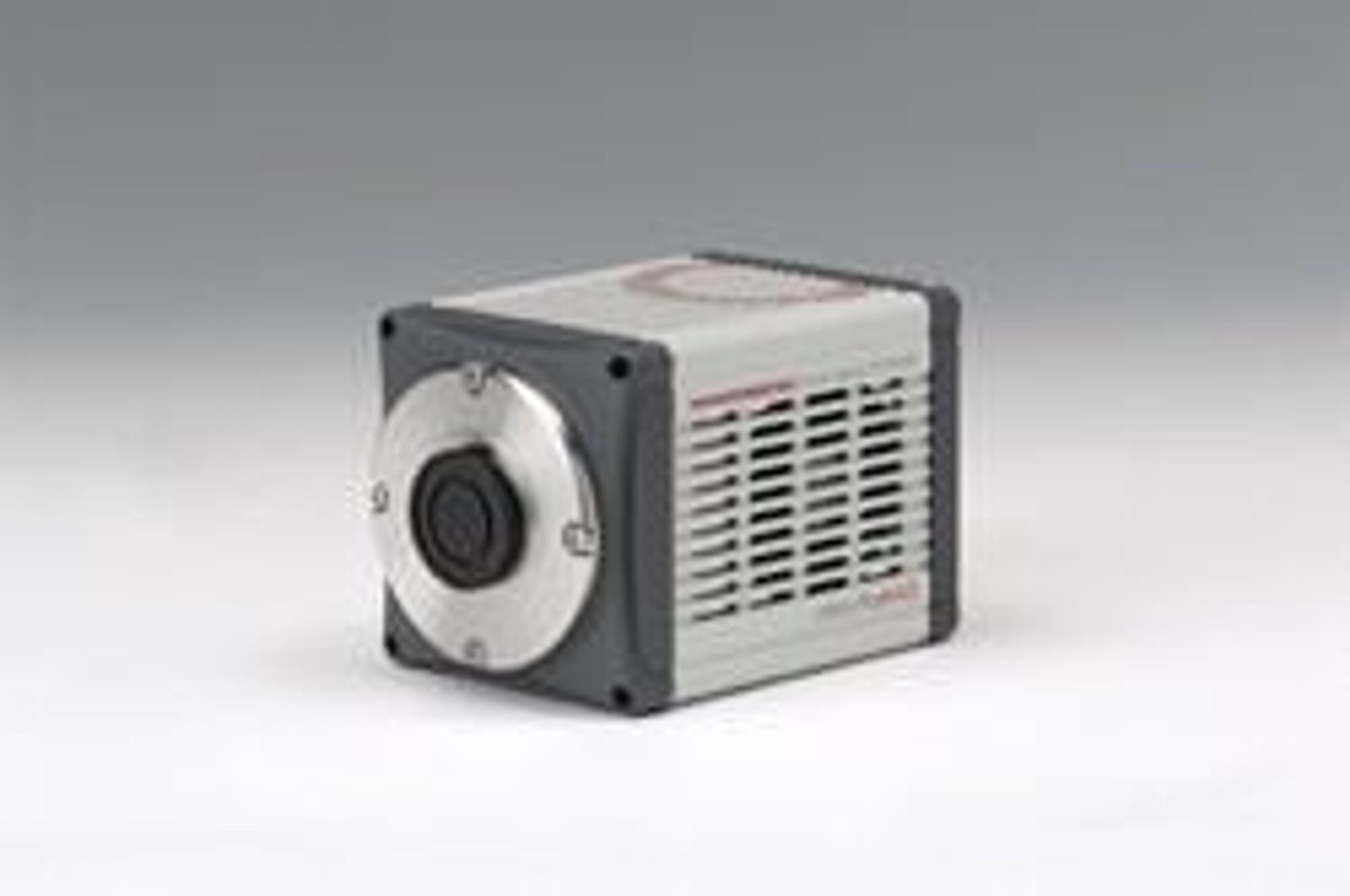
ORCA-Flash4.0 Camera
Hamamatsu Corporation Camera Products GroupHamamatsu’s brilliantly designed ORCA-Flash4.0 is truly a game changer in the world of scientific imaging. Built on a revolutionary new Gen II sCMOS detector, the ORCA-Flash4.0 is the first sCMOS camera that challenges the performance of all CCD, EM-CCD, and Gen I sCMOS cameras. With its combination of low noise and high quantum efficiency, the ORCA-Flash4.0 delivers unprecedented sensitivity as well as high dynamic range, blazing fast speeds, large field of view, and excellent resolution—all at once. Scientists have used EM-CCDs for very low-light, often high-speed imaging such as TIRF or spinning disk confocal, while they have relied on cooled CCDs for other fluorescence applications such as GFP or multichannel imaging. But the ORCA-Flash4.0 is changing all of that. Now one camera covers a wide range of imaging needs—including localization microscopy, TIRF microscopy, live cell GFP, high-speed calcium ion imaging, FRET, real-time confocal microscopy, and many more. The ORCA-Flash4.0 is a solid piece of camera engineering. It has optimized cooling and outstanding image uniformity across the entire sensor compared to cameras based on Gen I sCMOS technology. Other features include 16-bit A/D converter and multiple external trigger and timing output functions.Applications • Localization microscopy • TIRF microscopy • Live cell GFP • Time lapse fluorescence • Ratio imaging • FRET • High-speed calcium ion imaging • Real-time confocal microscopy • Light sheet microscopy • Morphology • Fluorescence in situ hybridization (FISH) For more information on the ORCA-Flash4.0 please visit our website or request more information at the top of the page.