
New Oncomine Childhood Cancer Research Assay Launched by Thermo Fisher Scientific
16 Apr 2018One in 285 children born in the U.S. this year alone will be diagnosed with cancer before their 20th birthday, yet, until recently, too little was known about the genetic alterations that drive their cancers to appropriately manage the disease. To address this global issue, Thermo Fisher Scientific has announced that it has established the International Childhood Oncology Network (ICON) and the concurrent launch of its Oncomine Childhood Cancer Research Assay, a comprehensive, next-generation sequencing (NGS) panel it developed in collaboration with Children’s Hospital Los Angeles that specifically targets mutations associated with pediatric and young adult cancers.
Thermo Fisher’s ICON is a resource to develop a global community spanning academic and clinical researchers who collaborate by sharing data, best practices and experiment protocols to drive deeper understanding of pediatric, childhood and young adult cancers. Membership in ICON is free through a registration process enabling access to data sets that are uploaded by network members to the ICON database.
Past research of recurrent mutations associated with pediatric, childhood and young adult cancers has lagged behind studies into adult forms of the disease, leading to an underserved community of patients. But recent initiatives aimed at profiling genomic mutations in younger cancer patients have helped identify a large set of unique recurrent somatic variants, revealing fundamental differences from their adult counterparts. While adult cancers are commonly carcinomas with mutations that accumulate over time, childhood cancers are most often embryonic or neuro-ectodermal in origin and are largely driven by gene fusions.
To enable comprehensive analysis of these tumor samples, Thermo Fisher’s new Oncomine Childhood Cancer Research Assay combines specific mutations, gene amplification and fusions in a single panel. The assay, designed by leading scientists and pediatric oncologists, interrogates 203 unique genes representing multiple gene classes and 1,700 fusion transcripts in two DNA and two RNA pools using a seamless NGS workflow.
Find out the latest news and updates from AACR 2018 from our offical event page >>
“The Oncomine Childhood Cancer Research Assay is of particular importance because it is the first designed for all forms of childhood cancers that simultaneously detects RNA gene fusions and DNA mutations, both of which are critical in childhood cancer,” said Timothy J. Triche, M.D., Ph.D., co-director, Center for Personalized Medicine, Children’s Hospital Los Angeles. “I am also very excited by the International Childhood Oncology Network, which will allow us and its members to collect data and share our experience in an effort to drive clinical research in childhood cancer.”
Oncomine Childhood Cancer Research Assay is designed to integrate with Ion AmpliSeq technology and the Ion Chef System for automated library preparation and amplification, as well as the new Ion GeneStudio S5 Systems and Thermo Fisher’s Ion Reporter for downstream bioinformatics and reporting.
“Genetic aberrations that drive childhood cancers are vastly different from their adult counterparts, yet surprisingly there has been a lack of relevant tools available that are designed to help researchers take a comprehensive approach to analyze samples. We have used the Oncomine Childhood Research Assay on archived FFPE tumor tissues and on tumor samples and found the assay to be easy to use and to provide rapid and robust results, which have enabled us to quickly test target agent relationships against tumor cells. This new assay helps fill a gap that can accelerate research in our labs.”
“It is through deep collaboration and cutting-edge technology that the scientific community will be able to drive real change and better understanding of childhood cancers,” said Joydeep Goswami, president of clinical next-generation sequencing and oncology at Thermo Fisher Scientific. “We are pleased to have partnered with Children’s Hospital Los Angeles to develop the Oncomine Childhood Cancer Research Assay. By establishing ICON, we want to further support and facilitate collaboration in the research community.
Recieve the latest updates and news from upcoming events straight to your inbox. Become a member today.
Related products
Request Quote for All Products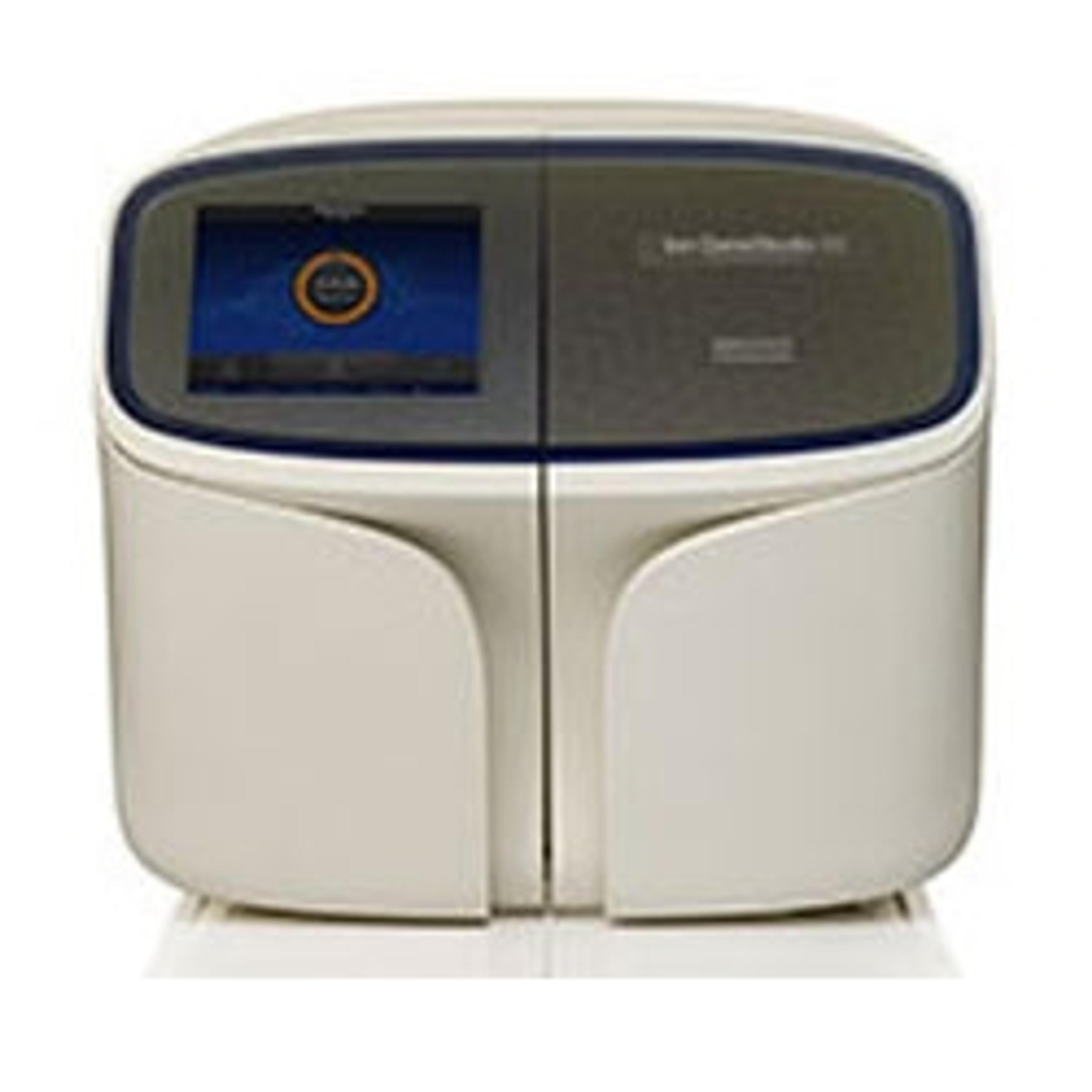
Ion GeneStudio S5 Series
Thermo Fisher ScientificAchieve speed and throughput flexibility across a broad range of next-generation sequencing (NGS) applications with the Ion GeneStudio™ S5 series of benchtop NGS systems from Thermo Fisher Scientific.