
Top New Trends in Food Quality and Safety Testing Revealed
Guest editors, Professors Jana Hajslova and Michel Nielen, the co-chairs of RAFA 2017, share their insights into the latest advances in food analysis
13 Sept 2017Perhaps it is hard to believe while still suffering from an egg scandal in Europe, but food quality and safety testing has never been so advanced and progressing so rapidly as nowadays. November 7-10, the 8th International Symposium on Recent Advances in Food Analysis (RAFA 2017) will be organized in Prague and chaired jointly by Jana Hajslova from the University of Chemistry and Technology, Prague (CZ), and Michel Nielen from RIKILT Wageningen University & Research, Wageningen (NL). The steady growth of this biannual leading event now reaches 800+ participants from more than 50 countries.
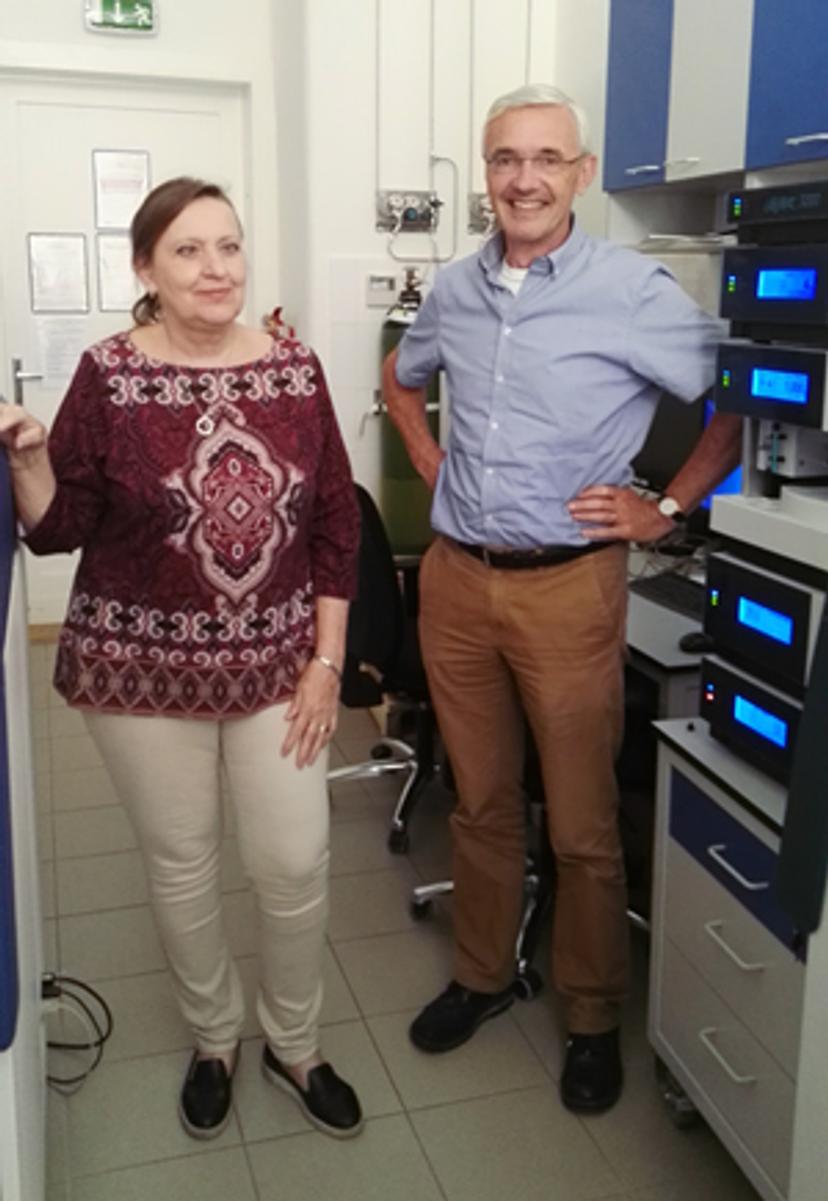
Multi-dimensional analytical separation methods combined with high resolution accurate mass spectrometers (HRMS) or hybrid ion mobility (HRMS) are the upcoming ‘workhorse’ for the food analysis lab, providing multi-target food contaminant analysis of hundreds of pesticides, natural toxins and persistent organic pollutants in one workflow. Food fraud is, unfortunately, a major issue and here similar advanced equipment can do a great job when operated in the untargeted mode and provided with multivariate statistics in order to disclose any abnormal chemical composition from the ‘real’. Such advances in high-end instruments are not only being adopted for food integrity studies but also for more fundamental ‘foodomics’ studies in academic centers and research institutes.
See our Food Quality Special Feature here >>
At the opposite end of the food analysis toolbox we see the emergence of easy-to-use smartphone-enabled food scanners, suitable for on-site application at the farm, retail, and even by consumers at home. Typically, these devices rely on low-resolution vibrational or optical scanners but, combined with the appropriate chemometric models, already provide meaningful food and nutritional value data about moisture, fat, protein and carb content. The same approach is seen for on-site food authenticity and fraud testing. The first smartphones having built-in near infrared (NIR) scanning capabilities will appear on the market this year and open the possibilities for food testing by citizen science. Lower levels, for example, food contaminants such as pesticides, antibiotics, natural toxins and natural toxins, will require more specificity. Smartphone-enabled lateral flow immunoassays have been commercialized already and the recently started H2020 program ‘FoodSmartphone’ aims for an entire range of novel biorecognition-based food analysis tools.
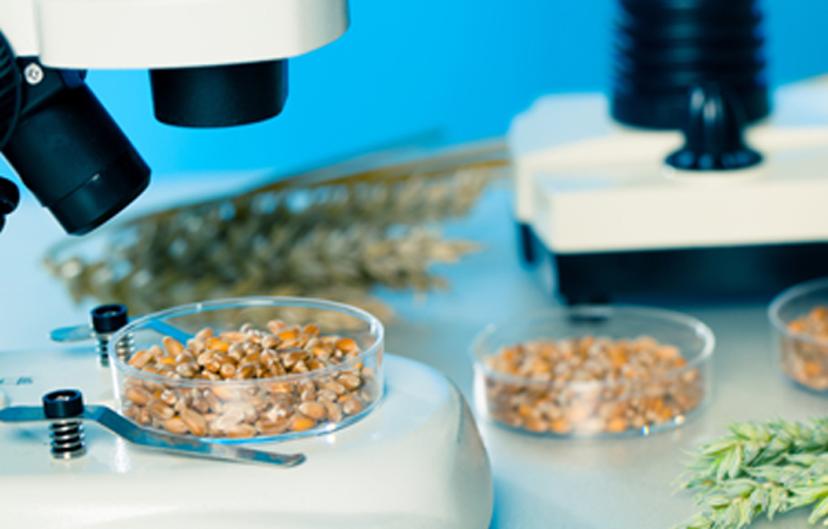
The upcoming trend towards on-site food testing has been being recognized but more slowly by the mass spectrometry vendors. A few compact single quadrupole or ion trap systems are on the market but far from truly portable and still require mains power and gas supplies. Apart from the challenge of miniaturizing MS analyzers while maintaining as much mass resolution and sensitivity as possible, novel portable direct ionization methods featuring low power consumption and no (or low) nitrogen or helium gas consumption are to be developed further prior to validation and benchmarking by reference laboratories.
Principles and best-practices from forensic science already influenced analytical methodologies in food fraud testing (food forensics). Now, human biomonitoring of food exposure is emerging and considering non-invasive sampling such as saliva and human hair for short- and long-term exposure studies to both healthy and hazardous food components. Clearly, forensic sciences successfully dealt with these sample matrices for drug testing and concepts are increasingly being adopted in food analysis.
To summarize, at RAFA we will cover the latest advances in high-end equipment and its application, in portable smart sensing solutions, foodomics, new monitoring concepts, together with a range of associated tutorials and workshops on topics such as recent achievements at EU Reference Laboratories, the US Food and Drug Administration and Department of Agriculture and in China.
Authors:
Michel Nielen, Principal Scientist of RIKILT, professor of Analytical Chemistry at Wageningen University & Research, Wageningen, NL.
Jana Hajslova, Professor of Food Analysis and Nutrition at the University of Chemistry and Technology, Prague, CZ.
See more information about RAFA 2017 here