
T Cell Engineering for Breakthrough Immunotherapy Research

Discover the world’s only fully automated, GMP-compliant, CAR T cell manufacturing system

3 Jul 2017

Sonia Nicholas
Managing Editor and Clinical Lead

Editorial article

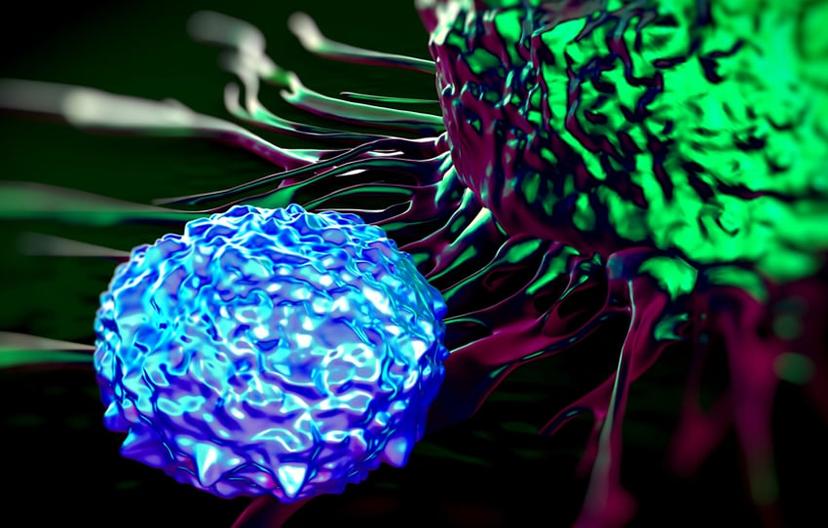
Image: T-cells attacking a cancer cell, illustration of microscopic photos RoyaltyStockImage © 123rf.com

Immunotherapy is one of the most exciting areas of cancer research today. Metastatic cancer, in particular, remains particularly challenging, as a systemic treatment approach is required. T cells play a vital role in the immune response against cancer and scientists are now looking at ways to harness the body’s own immune response against tumor cells.

The adoptive transfer of T cells expressing genetically engineered chimeric antigen receptors (CARs) has shown great potential in the treatment of certain leukemias. In CAR T therapy, T cells are removed from the patient and modified to express tumor-specific CARs on their surface. The T cells are then reintroduced to the patient, where they can recognize and kill the targeted cancer cells.

Dr. Katharina Winnemöller, Marketing Manager, Miltenyi Biotec explains: “Engineering T cells is a booming area for cell therapy manufacturers, hospitals and centers of excellence around the world. The data has shown this to be a breakthrough treatment for cancer, and so a lot of money is being invested in the technology.”

Manufacturing challenges

The preparation of CAR T cells for clinical application is a complex process, not least because national and international legislation and regulations must be rigorously followed. Manual production of engineered T cells is extremely labor intensive, each processing step must be stringently controlled. Miltenyi Biotec has developed the world’s only available all-in-one solution for cell processing, in a closed GMP-compliant, fully automated system. The CliniMACS Prodigy® enables the entire workflow for the manufacture of CAR T cells, from T cell selection right through to cell formulation.
Watch: The CliniMACS Prodigy T Cell Transduction Process


Each processing step is automated to ensure a highly reproducible and standardized manufacturing process. T cells are enriched by specific selection on Day 0 during the T cell transduction process (TCT process). On Day 1, T cells are transduced with a lentiviral vector. The transduced T cells are then expanded to the desired cell number for final cell formulation. The fully automated nature of the system means that the end product is completely standardized. This high level of quality is crucial for manufacturers, but it also saves money and materials, and eliminates the possibility of user error.

The CliniMACS Prodigy®

The CliniMACS Prodigy® enables the magnetic separation of different cell types as well as customized cell processing protocols. This flexible platform automates the washing, fractionation and cultivation of cells. A layer detection camera automatically determines the optimal cell fractionation endpoint by discerning the macroscopic layers of the source cell product.
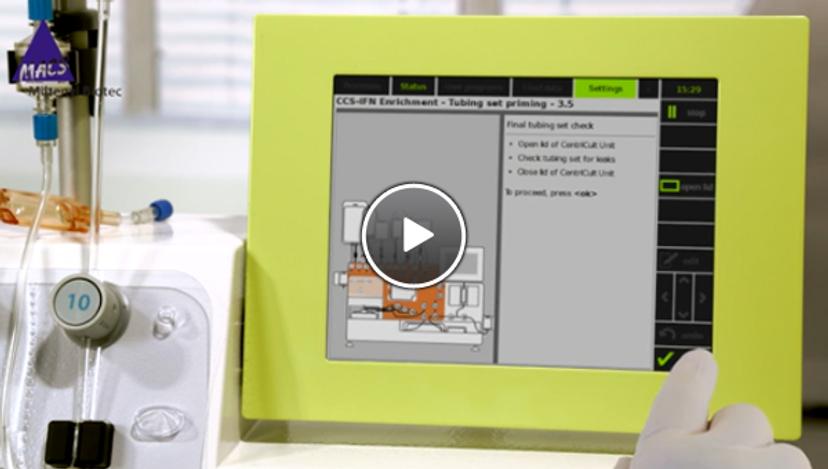
Watch: CliniMACS Prodigy® – mastering the complexity of cell processing


The Miltenyi Biotec team is on hand to help their customers throughout the entire implementation process, starting with a thorough three-day training course on running the instrument. Customers can change the settings to adapt the process to suit their needs. There is also a large team of technical support available to support all users. “The support service that we offer to all of our Prodigy customers is a crucial part of the package that you purchase with your system. We provide training and technical support to our users, and we have developed fantastic relationships with our customers as a result,” says Dr. Winnemöller.

Visit the CliniMACS Prodigy® product page

Links

Tags

Cell / Tissue CultureCell culture or tissue culture is used to study the biology of cells or tissues and to isolate cellular products in an environment which can be manipulated and well defined. Accurately control your culture environment with bioreactors or culture incubators, bind your cells to a surface or together with an extracellular matrix. Distinguish cell types with differential media or proliferate cells with certain characteristics using selective media. Enrich your media with supplements such as growth factors, sera and vitamins. Find the best cell and tissue culture products, kits and equipment in our peer-reviewed product directory: compare products, check customer reviews and receive pricing direct from manufacturers.Cell Lines Stem Cells and Primary CellsPrimary cell cultures, established cell lines and stem cells are vital for <i>in vitro</i> and <i>ex vivo</i> experimentation. High-quality cells, optimized for your applications, alongside optimized cell substrates, growth medium and supplements, are critical for experimental success. Explore a range of cells suitable for your applications, including isogenic cell lines, competent cells, induced pluripotent stem cell (iPSC)-derived cell lines, fungal/bacterial/mammalian cell lines, stem cells and cancer cell lines. Find the best cells for your research in our peer-reviewed product directory: compare products, check customer reviews and receive pricing direct from manufacturers.Flow Cytometry / Cell CountingFlow cytometers are used to count, sort and examine multiple characteristics of cells. Other cell analysis equipment includes image cytometers, cell counters, fluorescence-activated cell sorters (FACS), magnetic-activated cell sorters (MACS), and a range of flow cytometry assay kits. Flow cytometers can reveal information on cell viability, cell proliferation, apoptosis and cell cycle progression, as well as identify cell populations and intracellular or cell-surface molecules. Additionally, some flow cytometers, known as FACS, have an additional sorting function after analysis. Cell counters and image cytometers count live and dead cell populations and can also conduct cell proliferation assays. Find the best flow cytometers, cell counters and cell sorters in our peer-reviewed product directory: compare products, check customer reviews and receive pricing direct from manufacturers.ImmunologyImmunological techniques measure and characterize immune responses. Immunology kits and analysis systems often use techniques such as ELISA, radioimmunoassay (RIA) and immunodiffusion assays, Immunohistochemistry, and flow cytometry. Immunologists use equipment such as flow Cytometers, plate readers, plate washers and fluorescent microscopes.Cell-Based AssaysCell-based assays are used to monitor the presence, quantity and activities of a desired cellular analyte including drug molecules or biomarkers. This can reveal information on cell health (apoptosis, cytotoxicity, viability and proliferation assays), cell metabolism, cell migration and cell signaling mechanisms. Find the best cell-based assay products, kits and equipment with our peer reviewed product directory: compare products, check customer reviews and receiving pricing direct from manufacturers.ImmunotherapyImmunotherapy is a treatment approach that utilizes the body�s immune system to fight diseases, especially cancer. It includes therapies such as monoclonal antibodies, checkpoint inhibitors, and CAR-T cell therapy. Immunotherapy is a rapidly growing area of research in oncology and autoimmune diseases. Browse our peer-reviewed product directory to find the best immunotherapy tools, compare products, check reviews, and get pricing directly from manufacturers.Cancer ResearchAlthough cancer is often referred to as a single condition, it actually consists of more than 100 different diseases. Microscopy, mass spectrometry, high throughput sequencing and flow cytometry are some of the most common techniques employed in cancer research labs.
T Cell Engineering for Breakthrough Immunotherapy Research