
Exclusive Interview: Prof Matthew Hall Reveals How Glass Could Change the Landscape of Energy Consumption– Part 1

2 Dec 2014

Kathryn Rix
Administrator / Office Personnel

Editorial article

Professor Matthew Hall is an Associate Professor and Director of the New York State Center for Advanced Ceramic Technology at Alfred University. In this exclusive SelectScience interview, he discusses how glass can be used to purify DNA and for healthcare applications, and how glass could change the landscape of energy consumption.

What are your research interests?

MH: The themes of my research program revolve around the formulation, processing and characterization of glass, with the majority of our projects relating to the use of glass in energy or healthcare applications.

What are the benefits of using glass in energy applications?

MH: The energy-related projects involve the use of a glass as an enabling material in solid oxide fuel cells and high temperature batteries. The commercialization of such technologies would radically alter the way society produces and consumes energy, particularly from renewable sources.

How can glass be used in healthcare applications?

MH: Our work has focused on the study of therapeutic bioactive glasses that exhibit significant chemical reactivity when placed in a physiological environment. These materials are frequently developed for hard tissue repair in dental and orthopedic settings. We are also considering other functionalities, such as anti-microbial and anti-inflammatory glasses.

How can glass be used to purify DNA?

MH: Glass is traditionally used in the form of small diameter fibers that have a correspondingly high surface area. The electrical surface charge of these glass fibers is negative at the pH of typical solutions containing DNA, which is also negatively charged. As such, there is generally not a strong driving force for adsorption of DNA to the glass surface, and so other agents such as chaotropic salts are added to induce adsorption. These additives need to be rinsed away from the purified DNA to prevent interference with downstream processes. My group worked on developing a glass that had an inherently positive surface charge under similar conditions, thereby avoiding the expense and possible contamination associated with the chemicals that are used in traditional purification procedures.

What equipment do you use to perform your research?

MH: The characterization of the glasses we develop involves many different tools and techniques:
• Quantitative compositional analysis is carried out using ICP, XRF, and electron microprobe.
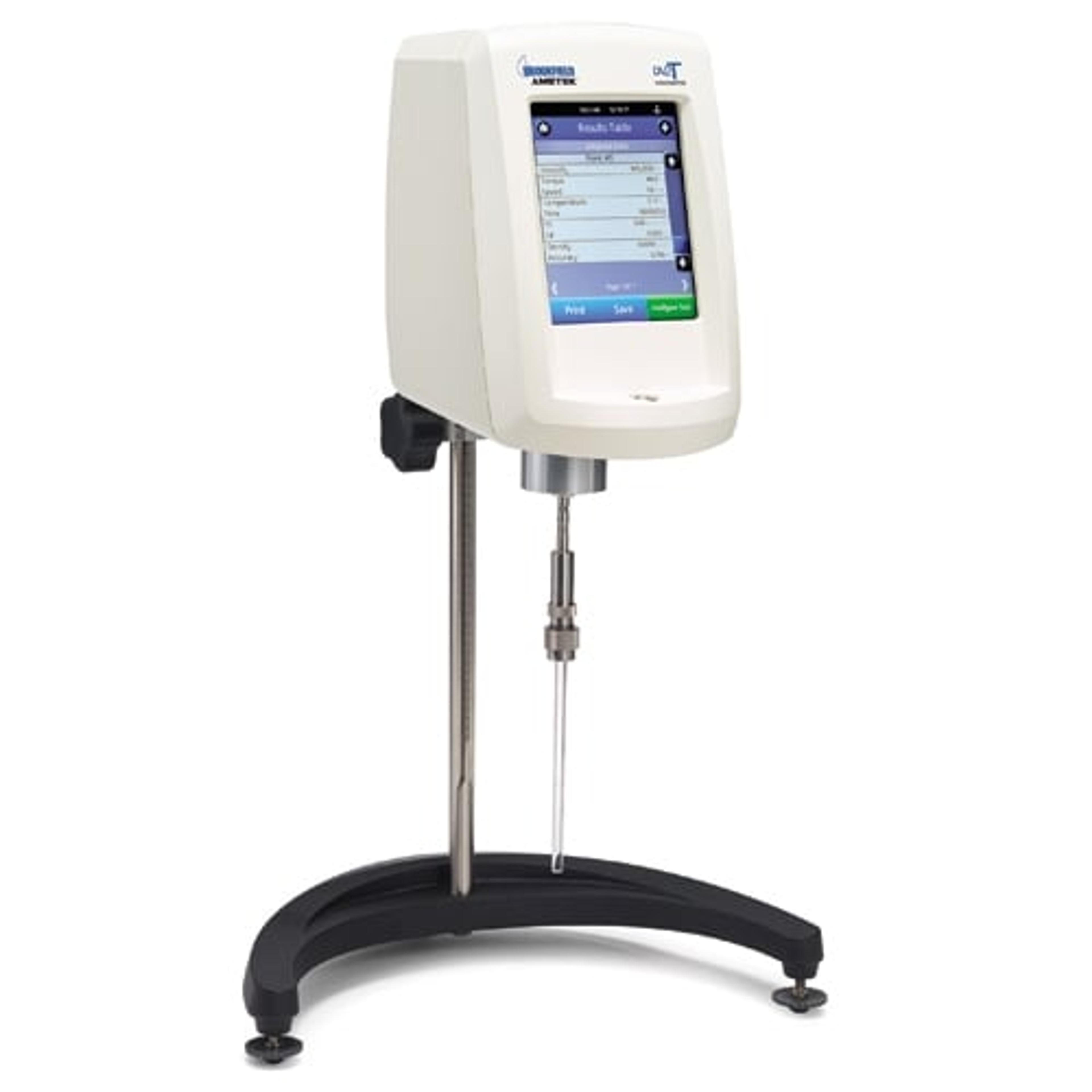
• Thermal processing depends on a variety of ovens and furnaces whereas the properties of glasses are commonly evaluated using a combination of DSC/DTA, dilatometry, hot stage microscopy, and high temperature viscometers.
• Atomic scale structural analysis can be accomplished using a variety of spectroscopic techniques, including FTIR, Raman, NMR, and XPS.
• Projects involving bioactive glasses also require in vitro cell culture studies – typical equipment consists of cell incubators, cell counters, a laminar flow hood, centrifuges and autoclaves.

What is the future of your research?

MH: I anticipate that we will continue to work on developing glasses for various energy related applications, given the vast number of technologies that use glass in one form or another (eg, solid oxide fuel cells, batteries, fiber-reinforced turbine blades, photovoltaics, etc). I also look forward to continuing our research in pharmaceutical glass packaging, with the goal of making an impact on the analytical methodology used to assess quality and chemical stability.

You can read about Professor Hall’s work on pharmaceutical glass packaging in Part 2 of this interview.
Links

Tags

Infrared / IR SpectroscopyInfrared (IR) spectroscopy measures the interaction of infrared light with a sample, including transmission, reflectance & absorbance, facilitating the identification of analytes. Equipment used for quantitative analysis includes Fourier-transform infrared (FTIR) spectrometers, infrared cameras, FTIR gas analyzers, as well as attenuated total reflectance (ATR) accessories and pellet or film presses. Find the best IR spectroscopy products in our peer-reviewed product directory: compare products, check customer reviews and receive pricing direct from manufacturers.NMR and EPR SpectroscopyNuclear magnetic resonance (NMR) spectroscopy is used to resolve the local chemical environment of atomic nuclei with spin, revealing information on molecular structure, dynamic processes and chemical reactions of organic molecules, from proteins to synthetics. Electron paramagnetic resonance (EPR) also known as electron spin resonance (ESR) spectroscopy is used to detect and quantify paramagnetic species in a sample, including free radicals as transition metal ions. By immersing the sample in a strong magnetic field, both NMR and EPR spectrometers probe the sample with either radio waves or microwaves respectively. A range of benchtop, solid-state and time domain NMR spectrometers & EPR spectrometers are available, as well as NMR tubes, NMR solvents, software, coils, and magnets. Find the best NMR & EPR equipment in our peer-reviewed product directory: compare products, check customer reviews and receive pricing direct from manufacturers.Raman SpectroscopyRaman spectroscopy is used to discern the vibrational and rotational states of molecules and hence the chemical composition of a sample by measuring the inelastic scattering of monochromatic light. Explore a range of Raman spectrometers, including handheld/portable Raman spectrometers for QC/QA labs and in situ spectrometers for processes. Conduct Raman imaging for microanalysis of mixed samples using a Raman microscope. Raman spectrographs are also available. Find the best Raman spectroscopy products in our peer-reviewed product directory: compare products, check customer reviews and receive pricing direct from manufacturers.UV-Visible SpectroscopyUltraviolet-visible (UV-Vis) spectrophotometers are used to measure the interaction of UV and visible light with a sample, including transmission, reflectance & absorbance. The two major instrument classes are single-beam or double-beam spectrophotometers. More specialized equipment includes colorimeters, spectroradiometers and refractometers. Portable and microvolume spectrophotometers are also available. For the modular spectroscopy lab, explore a range of light sources for combination with a spectrograph/spectrometer and optics. Find the best UV-Vis spectroscopy products in our peer-reviewed product directory: compare products, check customer reviews and receive pricing direct from manufacturers.Heating EquipmentA range of heating equipment is available for different laboratory applications including furnaces, ovens and hotplates. Furnace systems include vacuum furnaces and ultra-high temperature furnaces and ovens comprise of convection and vacuum ovens.X-Ray Diffraction and SpectroscopyX-Ray diffraction & spectroscopy are used in material characterization to discern the structure and elemental composition of a sample. X-Ray diffractometers (XRD) are superior instruments in elucidating the dimensional atomic structure of crystalline materials, including powders, thin films and single crystals. For large unit cells or ordered macromolecules, consider small-angle X-ray scattering (SAXS). X-ray spectroscopic techniques include X-ray fluorescence (XRF) and X-ray photoelectron spectroscopy (XPS), both providing simple and accurate methods for determining the elemental composition of a material. Energy dispersive (EDXRF) and wavelength dispersive (WDXRF) XRF spectrometers are available, as well as handheld/portable devices. High-resolution, 3D microstructure characterization of materials can be achieved with X-ray microscopes combining sub-micron resolution imaging with 3D computed tomography. Find the best XRD and XRF spectrometers in our peer-reviewed product directory: compare products, check customer reviews and receive pricing direct from manufacturers.RheometryRheometers are used to measure the rheology of fluids, which is the flow of fluids in response to an applied force. The most common types of rheometer include shear rheometers (capillary, cone and plate and rotational cylinder) and extensional rheometers. Viscometers are similar to rheometers however viscometers only measure the viscosity of a fluid.ViscometersViscometers are used to measure the viscosity of a fluid. Types of viscometer include rotational, vibrational and falling piston viscometers. Options for viscometers include modular, portable, benchtop and temperature compensation and density measurement features.Particle CharacterizationParticle characterization instruments are used to determine particle size distribution, shape, surface area, zeta potential, density and porosity of particles and materials. Multiple tecchniques are available for determining particle size, shape and count including dynamic light scattering (DLS), laser diffraction, electrozone (Coulter technique), imaging particle analysis and single particle optical sensing. Determine the density of your material with a gas pycnometer or examine its surface area and porosity with gas adsorption analyzers and mercury porosimeters. Find the best particle characterization instruments in our peer-reviewed product directory: compare products, check customer reviews and receive pricing direct from manufacturers.Thermal Analysis EquipmentThermal analysis equipment is used for measuring heat flow, weight loss, dimension changes or thermomechanical properties and is important for analyzing a material’s performance and stability. Thermal analysis equipment includes differential scanning calorimeters (DSC), thermogravimetric analyzers (TGA), thermomechanical analyzers (TMA), dilatometers, thermometers, vapor sorption analyzers, boiling and melting point apparatus. Thermal analyzers can reveal properties such as melting, crystallization and glass transitions or other processes such as oxidation, decomposition, volatilization, as well as coefficients of thermal expansion and modulus. Find the best thermal analysis equipment in our peer-reviewed product directory: compare products, check customer reviews and receive pricing direct from manufacturers.GlassGlass is an amorphous solid (non-crystalline) typically made up of silica and silicon dioxide. This transparent solid has many applications, from window panes to optical lenses for microscopes.