
Meeting the Growing Challenges of Pesticides and Contaminants – Special Feature
From field to food discover the technology scientists are using to monitor food and environmental samples in this special feature
3 Apr 2018

In April SelectScience® is focusing on the impact that pesticides and other contaminants have on our environment and food, and how this is driving the development of new sensitive and accurate technologies. In this feature you can discover methods for detecting these contaminants in a range of matrices and useful resources from across the industry to help your lab workflow.

THE WORLD'S GROWING APPETITE: How Will We Ensure Safe, Nutritional Food Production in Years to Come?
From insecticide contamination in eggs to salmonella scares in baby formula, concerns around food safety rarely leave the news. The safety of our food can be compromised both inadvertently through pesticide contamination and through purposeful adulteration. As the global food market is put under pressure, managing the safety of our food will remain a top priority. Discover the solutions scientists predict will be utilized in the future to overcome these challenges. Visit Feature
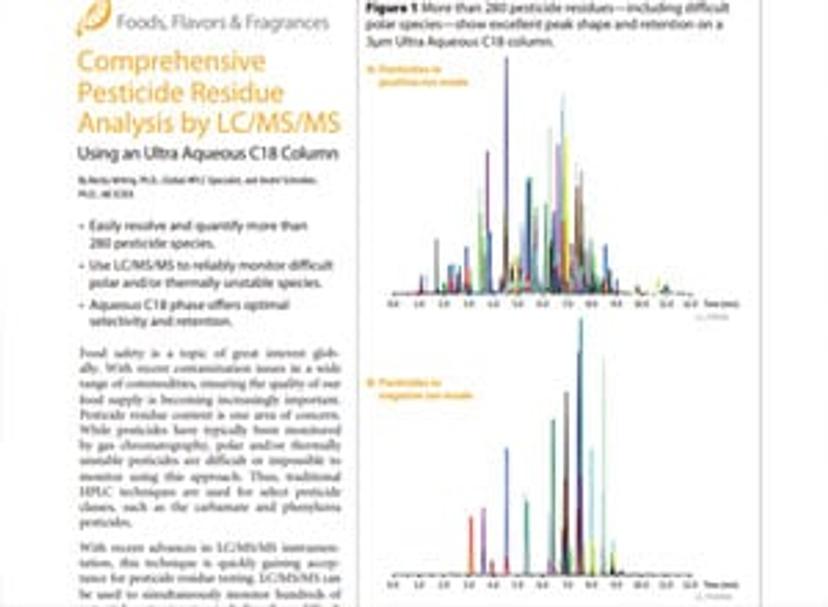
FOOD SUPPLY QUALITY: Comprehensive Pesticide Residue Analysis by LC/MS/MS
With recent contamination issues in a wide range of commodities, ensuring the quality of our food supply is becoming increasingly important. Pesticide residue content is one area of concern. LC/MS/MS can be used to simultaneously monitor hundreds of potential contaminants, including those difficult to detect by GC. Using LC/MS/MS in combination with GC allows for a faster, more complete picture of pesticide residues.
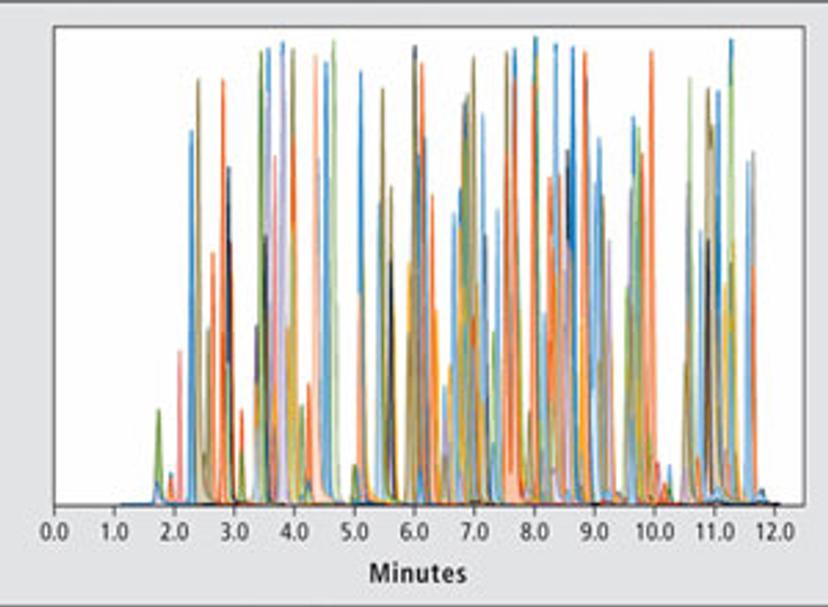
ENHANCED REPORTING CONFIDENCE: Routine Pesticide Residue Analysis
Discover how you can help reduce the incidence of false positive and negative reporting in pesticide residue monitoring. This application note describes enhanced routine multiple-reaction monitoring (MRM) methods to detect a higher number of fragment ion transitions for increased specificity and reporting confidence. In this workflow, typically 6-10 fragment ion transitions were monitored for each target pesticide as opposed to a conventional approach using 2-3 fragment ions only.
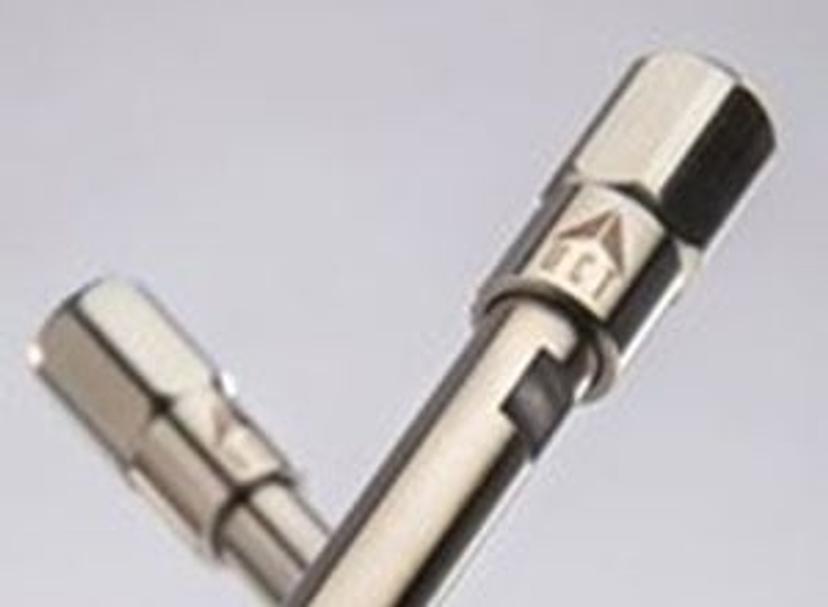
UNDERSTANDING EPA 538: Determining Organic Contaminants in Drinking Water
Discover the method for preparation and analysis of drinking water samples to detect and measure acephate, diisopropyl methylphosphonate (DIMP), methamidophos and thiofanox. In this application note find out how the Selectra® Aqueous C18 HPLC Column from UCT can be used to accurately detect selected organic contaminants in drinking water by aqueous direct injection and LC/MS/MS.
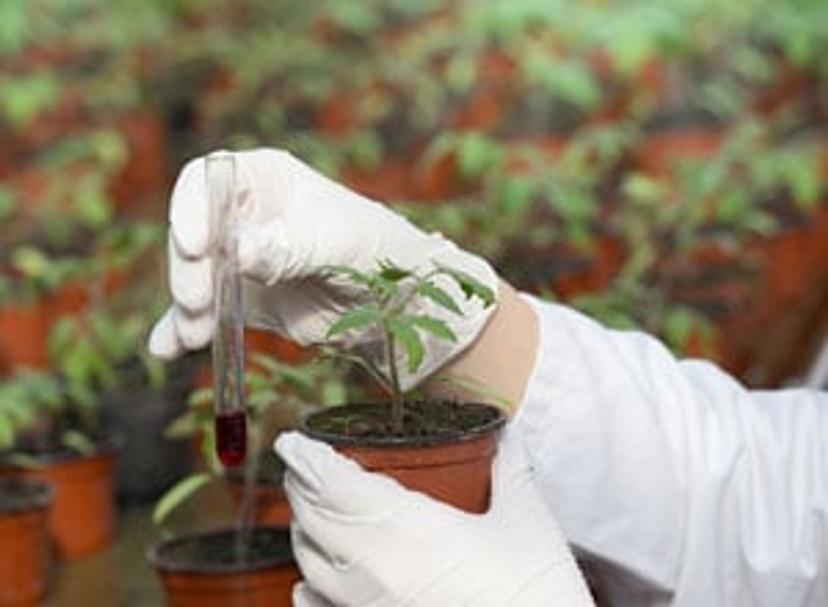
TOXICITY TESTING: Custom-Made Multiplex Assays Aid Unique Agrochemical Analysis
Hormone-altering chemicals can cause developmental problems during pregnancy, abnormal growth patterns, abnormal reproductive function and also trigger some forms of cancer when ingested. In this SelectScience® interview, Dr. Olivier Blanck, from the Crop Science division of Bayer in France, explores the importance of examining toxicity during agrochemical development and discusses current projects under the endocrine disruption program.

OPTIMIZED WATER ANALYSIS: How to Ensure Quality Control & Meet Regulatory Requirements
In this video, Dr Edward F. Askew tackles some of the frequently asked questions about the water analysis industry regulations and quality control, as well as pinpointing the benefits of Spectroquant Test Kits for this application. Dr Askew is President of Askew Scientific Consulting LLC, a research lab and consultancy that has worked with Merck KGaA to produce the kits which are designed to meet method equivalency for EPA, clean water act methods and safe drinking water act methods.
Related products
Request Quote for All Products
SELECTRA® HPLC Columns
UCT, Inc.High purity, Type B, spherical silica support. 100A pore size. 1.8um, 3um, & 5um partical sizes. Variety of stationary phases.

Ultra Aqueous C18 Columns
Restek Corp.The Ultra line represents Restek’s broadest selection of stationary phases on a single silica support. Made of high-purity, type-B silica that minimizes activity and creates high-density bonding, these columns are designed for selective and reliable HPLC applications.The Ultra Aqueous C18 HPLC column provides reproducible retention times and can be used with highly aqueous mobile phases, which may eliminate the need for sample derivitization or ion pairing reagents. This column features a true C18 alkyl bonded phase, meeting the requirements of a US Pharmacopoeia (USP) L1 stationary phase.The Ultra Aqueous C18 column uses a novel bonding chemistry that results in polar groups at the silica surface. These surface polar groups keep the alkyl stationary phase extended, and thus wetted by the mobile phase—even when using up to 100% aqueous mobile phases.Additionally, although the Ultra Aqueous C18 column behaves similarly to a traditional base-deactivated C18 column when analyzing neutral hydrophobic compounds, it has enhanced retention and unique selectivity for polar and basic compounds.Ultra Aqueous C18 Columns Features: Analyzes polar compounds by reversed phase. Retains compounds such as amino acids and water soluble vitamins using simple mobile phases and without derivitization. Analyzes polar, hydrophillic materials without retention time loss. Stable retention in 100% aqueous mobile phases. Can analyze compounds that are sparingly soluble in organic solvents. True C18 alkyl bonded phase. High-density C18 ligand coverage. Similar selectivity as traditional C18 phases for neutral hydrophobic compounds. Unique secondary polar characteristics. End-capping diminishes peak tailing observed from exposed silanol sites on the silica surface. Column Characteristics: Phase: C18 particle Size: 3, 5 μm Pore Size: 100 Å Length: 30, 50, 100, 150, 200, 250 mm ID: 0.3, 1.0, 2.1, 3.0, 3.2, 4.6 mm