
Advantages of Automated Workflow Miniaturization for Synthetic Biology
Adapting platform technologies to push the boundaries of experimental design
3 Apr 2017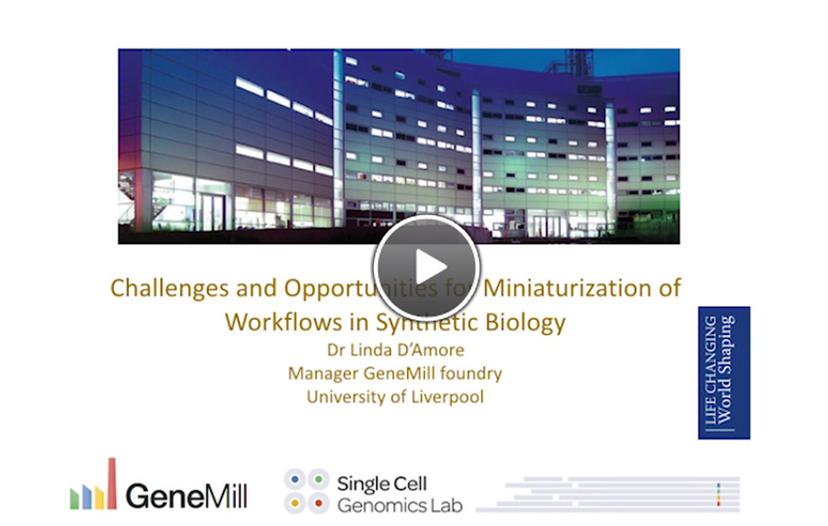
Snapshot of video from Labcyte Genomics Symposium 2016

GeneMill GeneMill is an open access synthetic biology foundry, located within the Centre for Genomic Research (CGR) at the University of Liverpool.
Dr. Linda D’Amore is Operational Manager at the GeneMill Foundry in Liverpool. One of four foundries funded by the BBSRC, it is also part of the Centre for Genomic Research, which offers high-throughput genomics platform analysis. Specifically, GeneMill provides high-throughput construction and testing of synthetic DNA constructs, using a variety of platforms.
At the Labcyte Genomics Symposium, Dr. D’Amore discussed how miniaturization of synthetic biology has reduced working volumes from 1.5 ml to <0.5 ml and from 96-well plates to microliter reactions in 1536-well plates. The challenge now is to reduce and automate routine liquid handling to the nanoliter scale.
GeneMill provides high-throughput construction and testing of synthetic DNA constructs, using a variety of platforms including next-generation sequencing using Illumina and PacBio, and expression analysis using arrays and nanostring.
Dr. D’Amore describes the standard synbio workflow used by GeneMill: DNA constructs are designed in silico. Functional parts are synthesized or retrieved and then combined at the nanoliter scale using Labcyte’s Echo liquid handler. Constructs are assembled and sequence validated using PacBio. Constructs are then assayed for function and used for biochemical assays or metabolite analysis (Johnson et al., 2016).
The challenges of miniturization
Opportunities and challenges presented by miniaturization are examined in more detail. There are numerous benefits to reducing sample size, reagent volume and analysis time. Reproducibility becomes more of an issue with miniaturization, as does the need for additional optimization and quality control (QC). Ultimately, miniaturization reduces costs and enables more ambitious experimental design, allowing more variables and replicates to be tested, which pushes the boundaries of what facilities like GeneMill can achieve.
Dr D’Amore presents data from an intensive Cold Spring Harbor Laboratories course she attended on synthetic biology, where she was able to apply miniaturization principles to experimental design for TX-TL and CRISPR technologies. Dr D'Amore generated a series of constructs for testing under different conditions to examine the effect of guide RNAs, ssDNA and dsDNAs for targeting GFP expression. Finally, Dr D’Amore describes a new miniaturized system for plasmid QC, using the wide variety of platforms GeneMill have at their disposal for larger construct assembly and verification. Classical synthetic plasmid construction methods work well for small inserts but can fail for larger inserts over 10 kb. By combining Labcyte’s acoustic liquid handlers with the PacBio system it is possible to create a one pot miniaturization system.
Using adapter barcodes to screen colonies
Dr D’Amore explains, “Using the fact that there is a Type II enzyme at the end and there is an overhang that is always the same, you can use the hairpin adapter from the PacBio and generate the SMRT bell – a single-stranded circular DNA. The polymerase then generates the polymerase read, so that when you trim the adapter you get a consensus sequence. The adapter includes a barcode. The idea was to take all the constructs together, assuming they are different enough for multiplexing and then use the adaptor barcodes for screening colonies and pooling the plasmids together. Basically you have a single reaction where the constructs, the Type II enzyme, the smart bell and the ligase are all in one pot.”
The platform is still in its early stages but initial results are encouraging and about to be published. Dr D’Amore is now working towards multiplexing the reactions using the Echo liquid handler.
Watch the full presentation or learn more about the Echo® 525 Liquid Handler
Leave a product review today to be entered into a prize draw for the chance to win an iPad or $400 Amazon voucher (or equivalent currency)
Related products
Request Quote for All Products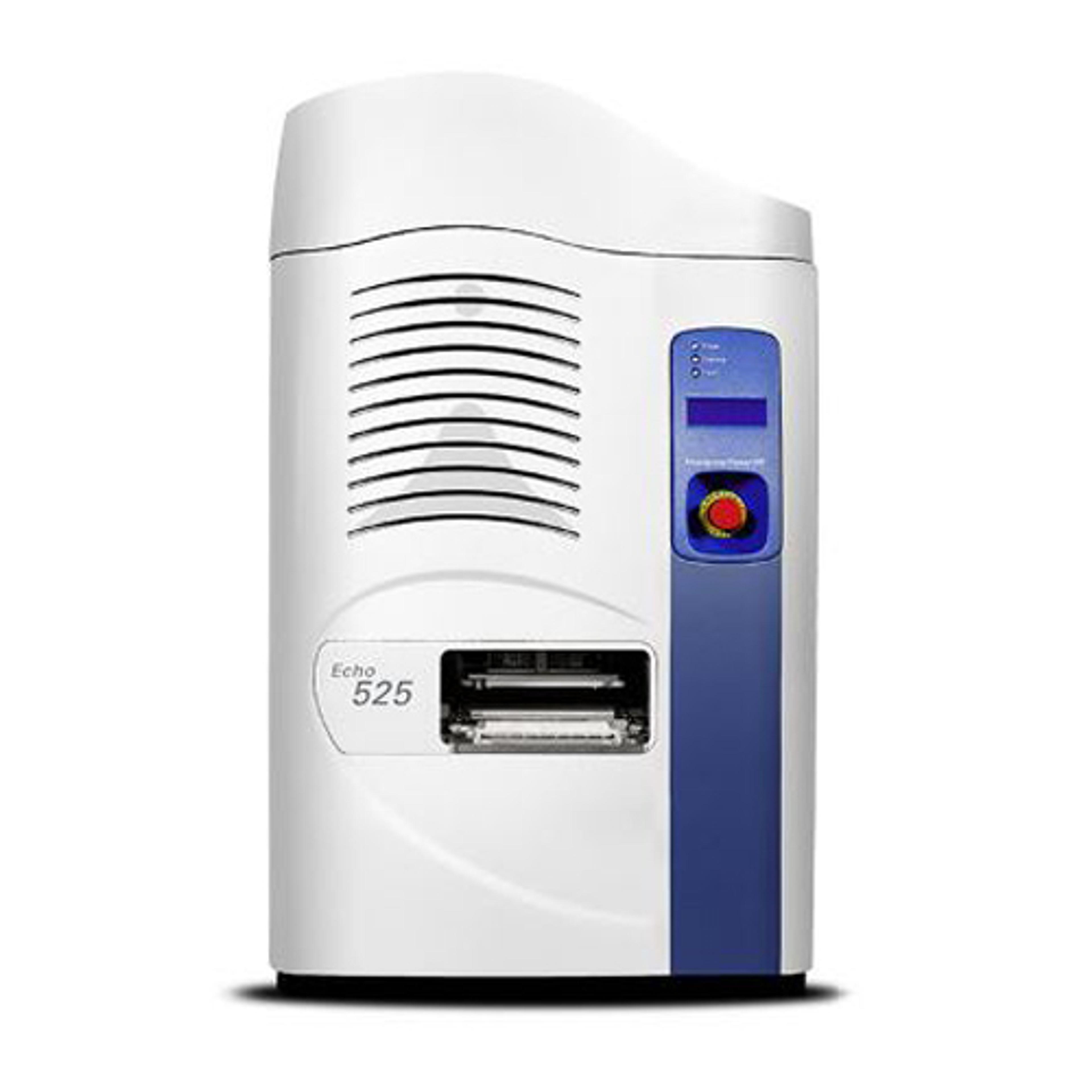
Echo® 525 Liquid Handler
Beckman Coulter Life SciencesThe Echo 525 platform, like the other Echo liquid handler models, is designed to use sound energy to transfer reagents. Unlike the other Echo models, the Echo 525 platform transfers at a larger volume increment (25 nL). This enables the more rapid transfer of aqueous reagents required in biochemical and genomics assays setup.