
Early Stage Improvements – DoE for Bioprocess Development
3 Apr 2014Design of Experiments (DoE) is a structured approach to the development and optimization of pharmaceutical manufacturing processes. Learn how the Eppendorf DASbox® and DASGIP® Parallel Bioreactor Systems make the implementation of DoE in bioprocess development processes easy.
Related products
Request Quote for All Products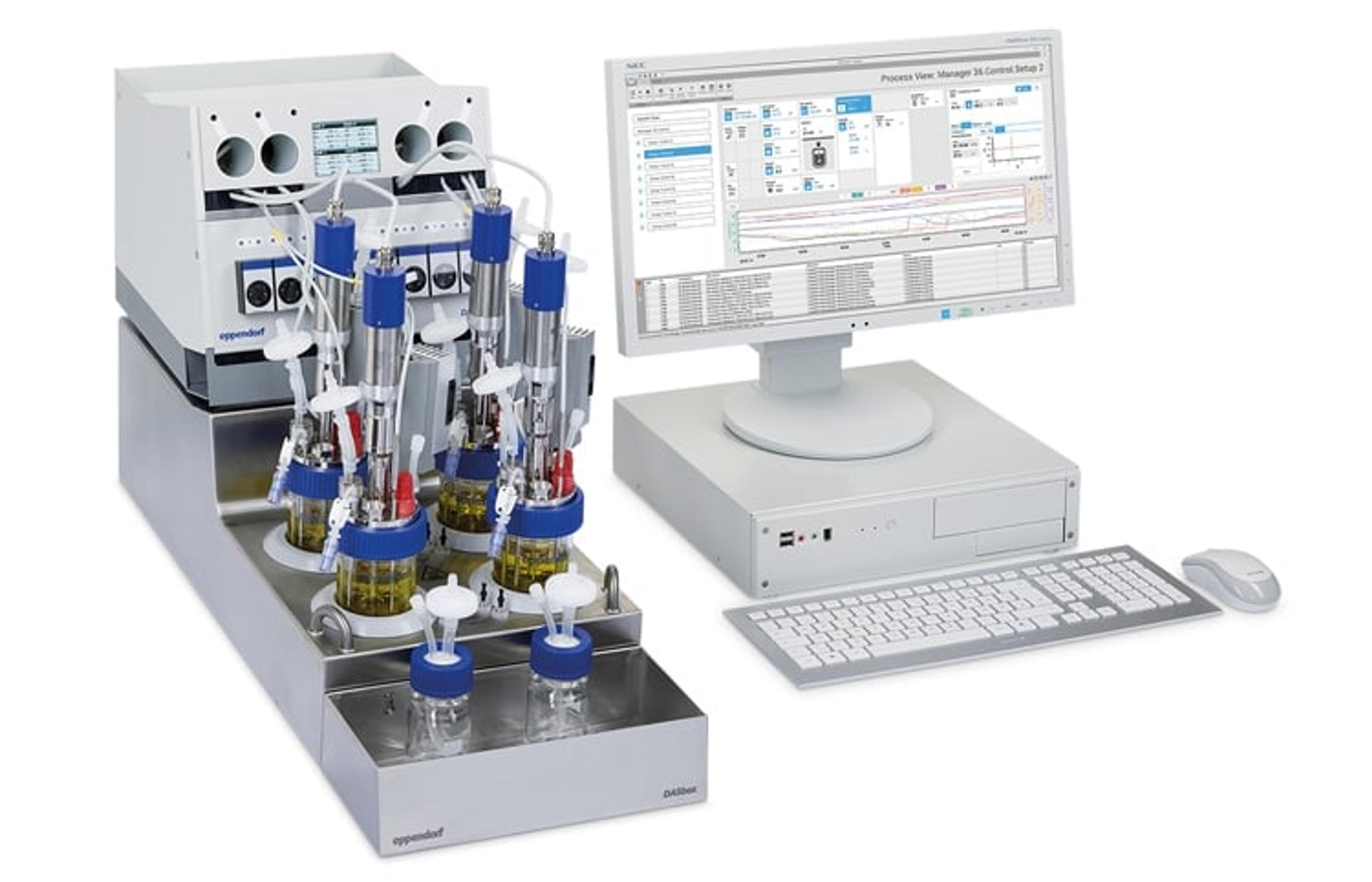
DASbox® Mini Bioreactor System
EppendorfThe DASbox is a unique mini bioreactor system suitable for microbial and cell culture as well as stem cell applications. It is designed as a 4-fold system with up to twenty-four parallel operating bioreactors. With working volumes of 60 – 250 mL the DASbox is the optimal tool for advanced process development and Design of Experiments (DoE) applications. All critical process parameters can be precisely controlled. Liquid-free temperature control and exhaust condensation satisfy users with easy handling. In addition to using industry standard glass bioreactors the DASbox can be equipped with Eppendorf BioBLU® 0.3 vessels, all fully instrumented single-use mini bioreactors. Eppendorf DASbox® Mini Bioreactor System Features: Parallel set-up of up to 24 bioreactors; Excellent scalability and reproducibility in both microbial and cell culture applications; Supports industry standard glass bioreactors (DASbox Mini Bioreactor) as well as the BioBLU 0.3 Single-Use Vessels; Small working volumes save on the amount of cell material, media and supplements required; Extremely compact system with a footprint of only 7.5 cm (3 in) benchspace per vessel; Individual temperature control with liquid-free heating and cooling (Peltier); Liquid-free Peltier exhaust condenser with easy handling by automatic slide in activation and slide out deactivation mode; LC display with key process parameters and integrated alarm function simplifies monitoring; Fully mass flow-controlled gas mixing with individual gas mixture from Air, O2, CO2 and N2, each directable either to headspace or sparger; Standard sensors for precise measurement and control of temperature, pH, DO, level and ORP (redox potential); optical pH sensors available; Precise miniature variable speed pumps, continuous flow rates down to 0.3 mL/h; Sealed magnetic overhead drives for single-use vessels and direct overhead drives for autoclavable vessels; up- or downflow selectable; Optional pull-out system for enhanced accessibility of bioreactors and control unit. Applications: Process development in cell culture and microbiology; Design of Experiments (DoE) Media optimization Clone and cell line screening, strain characterization.
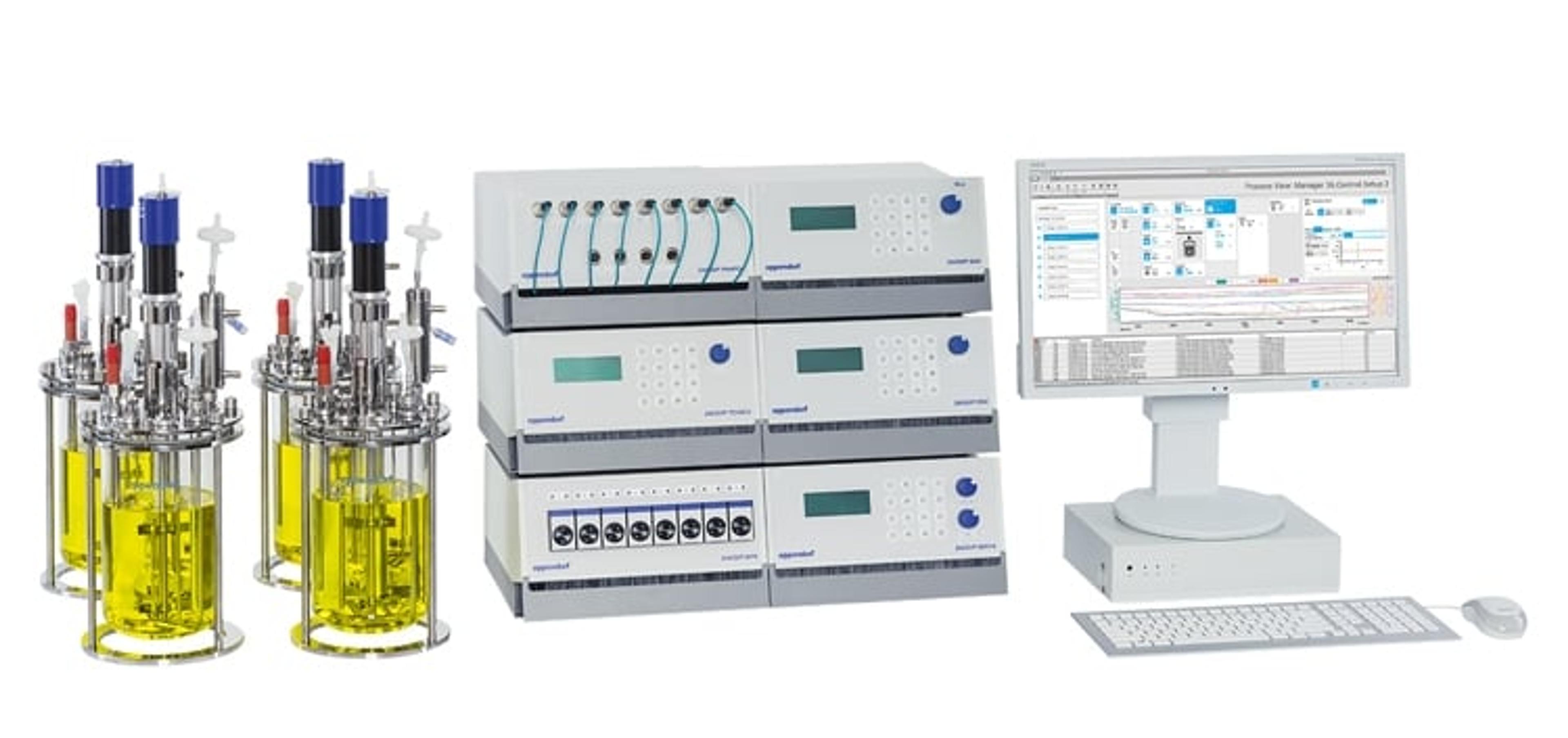
Eppendorf DASGIP® Parallel Bioreactor System
EppendorfDASGIP Parallel Bioreactor Systems for R&D and process development in both cell culture and microbiology allow for advanced bioprocess control and automation. Parallel processing, precise control of all relevant parameters, user-defined profiles and innumerable automation features result in accelerated and highly efficient process development. Our DASware software solutions support DoE, process historians and comprehensive data management. Configurable solutions address the unique requirements of microbial, phototrophic, mammalian and human cells, stem cell applications, as well as biofuel and biopolymer processes. Eppendorf DASGIP® Parallel Bioreactor System Features: Advanced process control and parallel operation of up to 16 glass or single-use bioreactors; DASGIP Bioblock for advanced and user-friendly temperature control; Modular design of control units allows for flexible system configurations that meet the demands of specific applications; Control of agitation, pH, level and DO (including customizable cascade modes) in each bioreactor; Variable speed pumps for accurate liquid addition and operation in batch, fed-batch, continuous and cyclic perfusion mode; Optical absorbance measurement for online calculation of e.g. OD600 or cell dry weight; TMFC individual gas mixing of air, N2, O2 and CO2; Online calculation of OTR, CTR and RQ; DASware control Software for advanced process control; Compatible with DASware Software Suite for interconnectivity and bioprocess information management. Applications: Research and development in cell culture and microbiology as well as phototrophic applications; Lab scale fermentation of aerobe and anaerobe bacteria, yeasts and fungi; Cultivation of mammalian, insect and human cell lines; Special applications such as stem cell culture or biofuel/biopolymer development.
Eppendorf DASware® design
EppendorfDASGIP bioreactor systems serve as an ideal platform to carry out Design of Experiments (DoE) on bioreactors in parallel. There is a multitude of 3rd party DoE software tools available on the market – DASware design automatically compiles DoE information from such tools into recipes and feedback response information into DoE and multivariate analysis and reporting tools.DASware design comes with a full factorial DoE builder. Alternatively, a large variety of DoE designs for screening, process development and optimization can be automatically imported from the most powerful 3rd party DoE tools like JMP®, MODDE® (Umetrics), Minitab®, and Design-Expert® (Stat-Ease®). Parallel recipes incorporating the DoE factor variations (i.e. pH, DO, temperature set-points or feed rates) are automatically populated. Following DASGIP‘s Point-Click-Grow concept they can be carried out on a set of bioreactors with a single mouse-click. Features: Built-in full factorial DoE: easy definition of experimental factors and responses; center points and randomized positioning of runs Integration of 3rd party DoE tools like JMP and others Recipe generator supporting multiple system layouts Applications: DoE with parallel bioreactor systems such as the DASbox Mini Bioreactor System Screening, process development and optimization