ResourceSpectroscopy

Compliance and Workflows: European Water Framework Directive

Compliance and Workflows: European Water Framework Directive

19 May 2016

Many chemicals produced by human industrial activities have a negative impact on the aquatic environment, even at extremely low concentrations. To measure such an effect, many environmental chemists aim to develop analytical methodologies that can identify a substance at the intended Environmental Quality Standard (EQS) level in complex environmental matrices, including biota. For this reason, the directive 2013/39/EU introduced in August 2013 provides a strategy to monitor pollution of water and biota for European Union member states. This strategy involves the identification of priority substances that pose a significant risk to the aquatic environment. This guide provides an overview of the different compounds to be monitored as well as potential analysis methods.

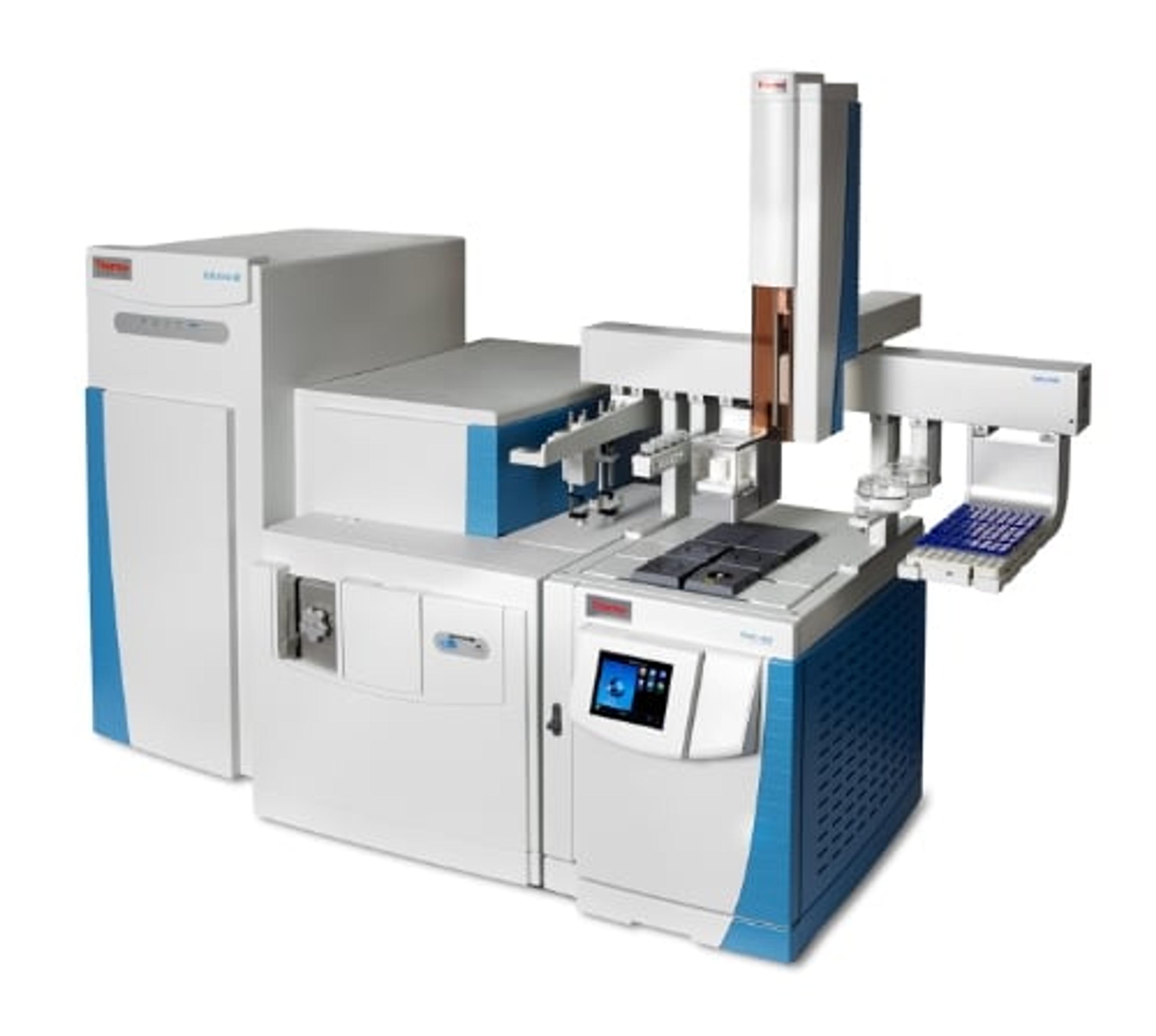
Thermo Scientific™ Q Exactive™ GC Orbitrap™ GC-MS/MS System

Thermo Fisher Scientific

The Thermo Scientific™ Q Exactive™ GC system is the first-ever combination of high resolution gas chromatography with high-resolution/accurate-mass (HR/AM) Orbitrap detection for the most comprehensive sample characterization. This easy-to-use system provides the most comprehensive characterization of samples in a single analysis for the highest confidence in compound discovery, identification, and quantitation. Building upon the flexible modularity of the Thermo Scientific™ TRACE™ 1300 Series GC, including user-exchangeable injectors and detectors, the Q Exactive GC system has the quantitative power of a GC triple quadrupole MS combined with the high precision, full scan high-resolution/accurate-mass capability that only Orbitrap technology can offer.   Key Features: Advanced quadrupole technology (AQT) for high transmission of selected masses Resolving power up to 120,000 at m/z 200 Part-per-trillion-level sensitivity Thermo Scientific™ Extractabrite™ ion source for robust, rugged electron impact (EI) and chemical ionization (CI) performance Curved linear C-trap for precise ion injection HCD collision cell for higher energy collisional dissociation provides MS/MS ion characterization Intelligent identification software elucidates the nature of each injected sample. Applications: Untargeted and targeted metabolomics Food and beverage Industrial analyses Environmental Pharmaceutical Clinical and toxicology
(9)

Tags

Sample PreparationSample preparation can improve the quality and speed of separation techniques. Products to assist sample preparation include filtration equipment, evaporators, membranes and sieves.Atomic Absorption / Emission SpectroscopyAtomic absorption spectroscopy (AAS) and atomic emission spectroscopy (AES) — also called optical emission spectroscopy (OES) — are used to detect the elemental constituents in samples. Both techniques involve the atomization of a sample. Atomic absorption spectrometers may use a flame or furnace to create an atomic vapor of the sample before irradiation with spectral light. Optical emission spectrometers may use a flame, inductively coupled plasma (ICP), microwave plasma (MP) or spark arcs to atomize and excite the sample. At higher excitation energies, electrons can be emitted instead of photons, which can be useful for samples that can’t be atomized and for surface analysis. Explore electron spectroscopy equipment such as Auger spectrometers and photoelectron spectrometers for surface elemental analysis of samples. Find the best atomic absorption, photoelectron and optical emission spectrometers in our peer-reviewed product directory: compare products, check customer reviews and receive pricing direct from manufacturers.LC-MSLC-MS (liquid chromatography-mass spectrometry) systems and equipment are used for separation and quantitative analysis of complex mixtures, combining liquid chromatography and mass spectrometry. Quantify proteins, contaminants, pesticides or screen for drug metabolites with a high level of sensitivity. LC-MS systems and equipment include reverse phase, normal phase and specialized columns integrated with various MS detectors such as time-of-flight (TOF), quadrupole, orbitrap or ion trap mass analyzers. LC-MS/MS instruments equipped with a qTOF or triple quadrupole analyzer give greater sensitivity and resolving power to your analysis. Find the best LC-MS equipment in our peer-reviewed product directory: compare products, check customer reviews and receive pricing direct from manufacturers.Mass SpectrometryMass spectrometry (MS) is a powerful analytical technique used to identify and quantify molecules based on the mass-to-charge ratio of gas-phase ions. It provides detailed information about the structure, composition, and properties of compounds and is widely used across fields such as environmental monitoring, materials science, drug discovery and development, food and beverage testing, and wider chemical research. Key MS techniques include tandem mass spectrometry (MS/MS), liquid chromatography–mass spectrometry (LS-MS) and inductively coupled plasma (ICP-MS). Choosing from these wide range of techniques and technologies can be a daunting task, so keep up to date with scientific applications, performance expectations, and customer reviews here all in one place. Visit our product directory to receive quotes direct from the manufacturer. Environmental Monitoring and TestingEnvironmental monitoring and testing uses handheld portable analyzers, kits, spectrometers or chromatography systems for air, water, soil, food and other sample testing. Useful features of analyzers such as BOD and COD include portability, easy calibration, automation and sensitivity.  Environmental test kits for pH, water, moisture, etc, should be accurate, sensitive, reliable, fast and easy to use.GC-MS GC-MS (gas chromatography-mass spectrometry) instruments and equipment are used to separate, quantify and identify mixtures of small and volatile compounds, such as polycyclic aromatics, fatty acids and alcohols. Often used in drug detection, forensic investigation and environmental analysis for pesticides and contaminants, GC-MS is a powerful addition to your lab’s analytical capabilities. GC-MS/MS instruments equipped with a qTOF or triple quadrupole analyzers can give greater sensitivity and resolution to your analysis. Find the best GC-MS instruments and equipment in our peer-reviewed product directory: compare products, check customer reviews and receive pricing direct from manufacturers.Water PurificationThere are a number of water purification methods available to remove contamination from laboratory water. These systems include demineralization, reverse osmosis, filtration and ultrafiltration. A combination of methods is sometimes necessary to achieve purified water suitable for use in experiments.Water AnalysisAnalytical methods used to test the purity of drinking water include determining the level of contaminants abides to the level set by the Environmental Protection Agency (EPA).Environmental ContaminationContaminants in the environment are harmful chemicals that are present in the air, land and water. These include pesticides, pharmaceuticals, persistent organic pollutants (POPs) and many more.Environmental AnalysisEnvironmental analysis describes a variety of tests that determine the effect of chemicals, processes and particulates such as persistent organic pollutants (POPs) have on the environment.Persistent Organic Pollutants